Heavy-Duty Industrial Pallet Racking Systems
Certified structural steel storage systems engineered for maximum load capacity, seismic safety, and operational throughput.
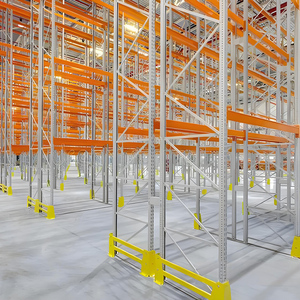
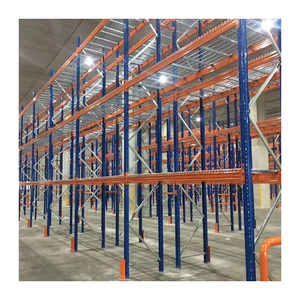
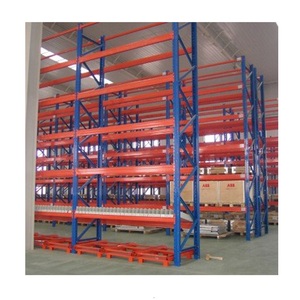
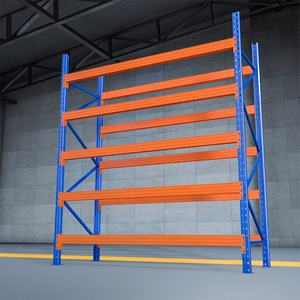
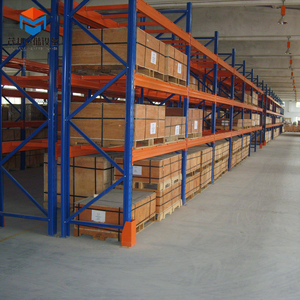
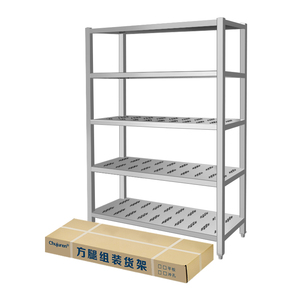
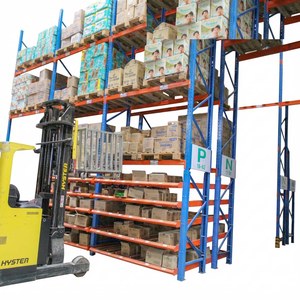
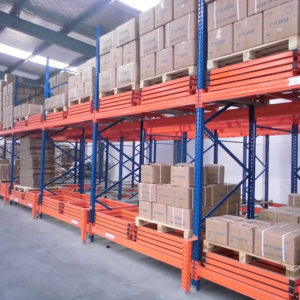
Navigating Modern Pallet Racking Selection: Structural Mechanics, E-E-A-T Compliance, and Procurement Dynamics
In the contemporary era of globalized supply chains, rapid e-commerce expansion, and aggressive urban land monetization, selecting a trusted pallet warehouse racking supplier is no longer a simple transactional procurement task. It has evolved into a high-stakes structural engineering decision. Facilities managers, supply chain directors, and industrial procurement executives must evaluate warehouse storage infrastructure not merely on raw unit cost per pallet position, but on total cost of ownership (TCO), structural resilience, compliance with international load standards, and long-term adaptation to automation.
Core Procurement Insight: The efficiency of an industrial warehouse is fundamentally constrained by its racking architecture. Structural frame deflection, column upright profiling, baseplate anchoring shear strength, and steel grade selection directly govern operational safety, warehouse throughput velocity, and insurance risk profiles across high-density distribution hubs.
1. Structural Engineering & Metallurgical Integrity
Top-tier industrial rack manufacturing demands rigorous steel metallurgy standards. Premier racking suppliers utilize structural cold-rolled coil steel conforming to high-tensile yield standards (such as Q355B, S355JR, or structural grade 50). The structural framework must withstand dynamic impact loads from material handling equipment (MHE) like reach trucks, counterbalanced forklifts, and Very Narrow Aisle (VNA) turret trucks.
Structural integrity is certified under internationally recognized engineering frameworks including European Standard EN 15512 (Structural steel rack design principles), FEM 10.2.02, Rack Manufacturers Institute (RMI) standards, and regional seismic codes such as Colombia's NSR-10 building code. Upright columns feature multi-point teardrop or keyhole beam connection slots engineered with safety locking pins that resist accidental vertical displacement during high-speed pallet extraction.

Key Structural Safeguards in Heavy-Duty Systems:
- Continuous Frame Bracing: Alternating diagonal and horizontal tubular bracing welded or bolted to dissipate concentrated localized point loads.
- Heavy-Duty Column Protectors: Floor-anchored steel guards shielding vulnerable upright bases against direct forklift collision shocks.
- High-Moment Beam Connectors: Multi-claw structural connectors that transfer horizontal beam bending moments into vertical frame axial force efficiently.
- Durable Surface Treatments: Automated electrostatic epoxy powder coating (60-80 microns) and Hot-Dip Galvanizing (HDG) for severe, humid, or sub-zero cold storage environments.
2. Strategic Future Procurement Trends (2025–2030)
The industrial storage sector is undergoing a massive architectural shift driven by automation, energy costs, land scarcity, and environmental sustainability mandates. Procurement teams must anticipate four core trends before committing capital expenditure to legacy pallet rack layouts:
Vertical High-Bay & AS/RS Dominance
As industrial floor rates skyrocket in logistics corridors, facility designs are extending vertically upward to 30–45 meters. High-Bay Racks integrated with Automated Storage and Retrieval Systems (AS/RS) replace human forklift travel with high-speed automated cranes, maximizing cubic air space utilization.
Pallet Shuttle & AMR Grid Integration
Standard static storage is increasingly retrofitted with 2D/4D radio-controlled Pallet Shuttle cars and Autonomous Mobile Robots (AMRs). Deep-lane storage density combined with robotic flexibility eliminates aisle space overhead while dramatically accelerating SKU throughput.
Cold-Chain & Energy Densification
With sub-zero energy consumption comprising up to 60% of cold storage operational budgets, dynamic push-back racking and shuttle platforms double pallet density, reducing refrigerated air volume loss per unit stored.
Decarbonized & Circular Steel Racking
Enterprise procurement now explicitly requires Environmental Product Declarations (EPDs). Leading suppliers are adopting green-steel smelting, solar-powered fabrication factories, and localized distribution hubs to minimize Scope 3 carbon metrics.
Comparing Pallet Storage Systems: Density vs. Selectivity
Use this structural evaluation matrix to determine the optimal racking architecture for your distribution profile.
| Racking Architecture | Storage Density | SKU Selectivity | Handling Equipment Required | Ideal Operational Profile |
|---|---|---|---|---|
| Selective Pallet Racking | Moderate (40–50%) | 100% Direct Access | Standard Reach Truck / Forklift | High SKU variety, fast picking, 3PL logistics hubs. |
| Pallet Shuttle Racking | Ultra-High (80–90%) | Low to Moderate (FILO/FIFO) | Automated Radio Shuttle + Forklift | Cold storage, food & beverage, high-volume limited SKUs. |
| Push-Back Pallet Racking | High (65–75%) | Moderate (FILO per lane) | Counterbalance / Reach Truck | Medium SKU count, 2-to-6 deep lane gravity storage. |
| VNA (Very Narrow Aisle) | High (70–80%) | 100% Direct Access | Guided VNA Turret Truck / Wire Guidance | High clear-height facilities, max volume mixed picking. |
| Cantilever Racking Systems | Variable (Linear) | High (Open Face) | Side Loader / Standard Forklift | Long, bulky structural items (pipes, timber, steel profiles). |
| Mezzanine Floor Platforms | Area Multiplier (2x-3x) | 100% Floor Access | Hand pallet jacks, conveyors, manual picking | E-commerce order fulfillment, spare parts, vertical expansion. |
Global Manufacturing Scale Meets Rigorous Local Execution
Backing every single structural upright and cross beam is a international enterprise engineering ecosystem. With over 45 years of continuous research and development, an expansive manufacturing network encompassing 8 state-of-the-art production plants, and over €1.0 billion in global turnover, our organizational footprint delivers unmatched supply chain reliability.
Whether retrofitting an existing distribution facility in complex urban logistics centers or executing a greenfield high-bay warehouse project in intermediate-to-high seismic zones (compliant with EN 15512 and NSR-10 standards), our engineering teams perform full finite element analysis (FEA) stress modeling, dynamic seismic load calculation, and custom slab anchor shear analysis prior to steel fabrication.

Frequently Asked Questions: Technical Procurement & Compliance
What critical structural parameters are required to calculate pallet rack capacity? +
Why is seismic engineering (such as NSR-10 or FEM codes) essential for industrial racking? +
How does surface coating selection impact long-term pallet racking durability? +
Selective Racking vs. Pallet Shuttle Racking: Which delivers better ROI? +
What are the mandatory inspection and maintenance cycles for enterprise warehouse racks? +
Request a Custom Warehouse Structural Study & Quotation
Transform your warehouse storage layout into a high-density, automated, and seismic-certified operation. Contact our senior industrial racking engineering team today for layout optimization, CAD modeling, and budget estimates.