High-Performance Storage Racking Systems
Engineered with Q235B/Q355B structural steel, conforming to EN 15512, FEM 10.2.02, and ANSI MH16.1 standards for maximum structural integrity.
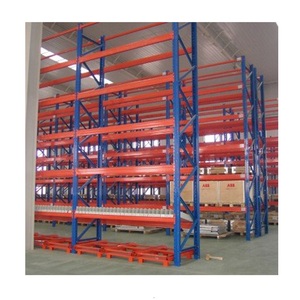
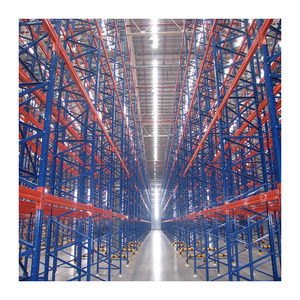
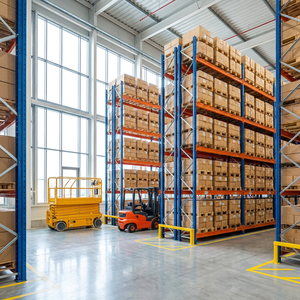
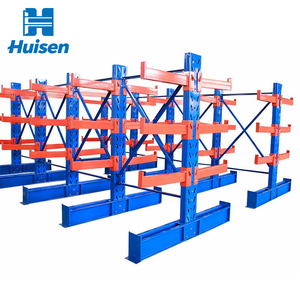
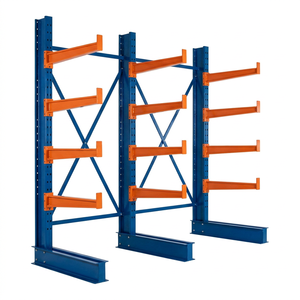
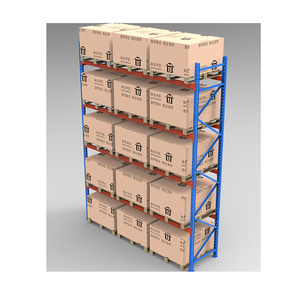
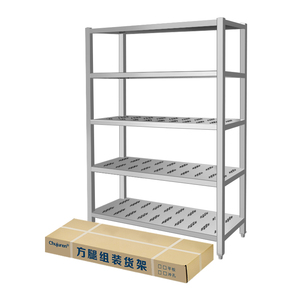

Structural Engineering & Metallurgical Standards of Chinese Industrial Racking
When procuring enterprise-scale warehouse shelving and selective pallet racks from China, supply chain directors and structural engineering consultants must evaluate core mechanical properties rather than relying solely on superficial price per kilogram. Premium manufacturing protocols utilize structural carbon steel grades Q235B and Q355B (conforming to GB/T 700 and GB/T 1591), engineered via automated continuous roll-forming mills to maintain cross-sectional profile tolerances within ±0.5mm.
Cold-formed upright profiles feature specialized multi-rib geometry (such as 80×60mm, 90×70mm, 100×70mm, and 120×95mm profiles with material thickness ranging from 1.5mm to 2.5mm). These profiles maximize section modulus ($Z_x, Z_y$) while minimizing self-weight. Beams utilize interlocked box-beam or step-beam profiles, robotically seam-welded to forged 3-hook or 4-hook connectors. Safety lock pins ensure anti-dislodgement protection against upward forklift impacts up to 5 kN.
| Structural Component | Material Specification | Profile / Section Geometry | Surface Treatment | Load Limit Range |
|---|---|---|---|---|
| Selective Upright Frames | Q235B / Q355B Cold Rolled Steel | Omega / 11-Fold Closed Rib Profile | Electrostatic Epoxy Powder (80-120μm) | Up to 24,000 kg / Frame |
| Heavy Duty Box Beams | Q235B High-Tensile Steel | Twin C-Channel Interlocked Box Section | Thermosetting Polyester Coating | 1,000 to 4,500 kg / Beam Level |
| Cantilever Arms | Q235B Tapered / H-Beam Structural Steel | Variable Height Tapered Arms with Pin Lock | Hot-Dip Galvanized / Epoxy Coating | 500 to 1,800 kg / Arm |
| Mezzanine Decking | Q235B Solid / Perforated Steel Plate | High-Rib Bended Floor Panel | Pre-Galvanized / Powder Coated | 300 to 1,500 kg / m² |
Industrial Racking Development & Technological Evolution Trends
The global warehousing and logistics ecosystem is transitioning rapidly from static inventory holding setups toward high-density automated infrastructure. As land acquisition costs in primary logistics corridors climb, enterprise buyers are prioritizing vertical optimization and robotic integration. Key technological evolution vectors include:
1. AS/RS & Shuttle Grid Compatibility
Traditional static pallet racking is being upgraded with high-precision tolerance manufacturing (±1.0mm cumulative over 10m height) to interface seamlessly with 2D/4D Radio Pallet Shuttles and Autonomous Mobile Robots (AMR).
2. High-Strength Low-Alloy (HSLA) Steels
Adoption of HSLA steel micro-alloyed with Vanadium or Niobium enables lighter structural member weight while elevating yield thresholds, reducing international freight costs without sacrificing structural stiffness.
3. IoT Structural Health Sensing
Integration of strain gauges and optical sensors into upright baseplates provides real-time deflection monitoring, logging forklift collision impacts and alerting facility operators before structural fatigue triggers racking collapse.
Strategic Global Procurement Trends & TCO Optimization
Modern procurement executives evaluate China-based warehouse rack suppliers on total cost of ownership (TCO), lead-time reliability, ESG metrics, and site-specific seismic engineering compliance rather than localized piece-rate cost.
Furthermore, coastal distribution facilities in regions like Barranquilla, Houston, or Dubai require upgraded surface protection. Standard indoor powder coatings (60μm) are prone to premature oxidation under high ambient salinity. Forward-thinking procurement mandates Hot-Dip Galvanizing (HDG) to ASTM A123 standard or dual-layer zinc-rich epoxy primers, providing up to 1,000 hours of salt spray resistance (ISO 9227).
Enterprise Advantages & Manufacturing Supremacy
As a leading tier-1 warehouse shelving rack manufacturer and supplier in China, our operations synthesize over four decades of engineering heritage with state-of-the-art robotic production infrastructure:
Automated Welding Precision
Utilizing 6-axis Panasonic and Yaskawa robotic welding cells to execute 100% full-penetration beam connector welds, eliminating human structural error and ensuring consistent weld seam integrity across tens of thousands of beams daily.
Certified Testing Laboratory
In-house structural testing facilities perform 4-point bending tests on beams, column axial compression tests, and destructive hook connection testing in full compliance with EN 15512 and FEM standard test methods.
Knockdown Freight Optimization
Precision-nested frame and beam component packing designs yield up to 35% higher container volumetric efficiency, significantly dampening sea freight costs per pallet position shipped globally.
Warehouse Shelving & Racking Procurement FAQ
Technical guidance provided by senior engineering experts to assist procurement teams during solution specification and supplier qualification.
What is the maximum allowable beam deflection under full design load according to international standards?
How do structural engineers determine whether Q235B or Q355B steel should be specified for a warehouse project?
Are seismic engineering load calculations required for industrial racking installed outside high-risk zone regions?
What key documentation should be requested from a Chinese racking factory during technical evaluation?
How does hot-dip galvanizing compare to electrostatic powder coating for coastal or cold-chain storage applications?
What information is needed to receive a turnkey engineering design layout and quotation?
Optimize Your Warehouse Density & Storage Efficiency Today
Partner with China's premier industrial racking manufacturer. Direct factory pricing, certified engineering calculations, and reliable global container delivery.
Get Catalog