High Bay Racking Systems in Medellín & Aburrá Valley Logistics Networks
A comprehensive structural engineering report on seismic compliance (NSR-10), high-density vertical storage optimization, and automated system integration across Antioquia.
1. The Strategic Imperative of High Bay Storage in Medellín's Topography
Medellín, as the industrial heartland of the Department of Antioquia and Colombia’s second-largest economic metroplex, faces a unique geographical constraint: the Aburrá Valley (Valle de Aburrá). Constrained by mountainous terrain spanning from Caldas in the south through Sabaneta, Envigado, Itagüí, Medellín, Bello, and up to Girardota and Barbosa in the north, industrial land availability is exceptionally scarce and highly priced. Industrial real estate values in key logistics corridors—such as the Autopista Sur, Avenida Guayabal, and the rapidly growing Rionegro / Near Oriente hub (adjacent to Jose María Córdova International Airport)—demand maximum volumetric utilization per square meter of concrete footprint.
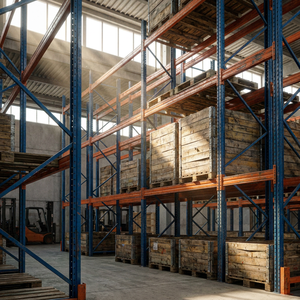
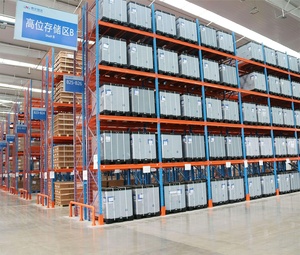
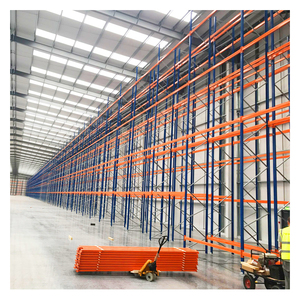
For warehouse operations directors, supply chain managers, and 3PL fulfillment hubs operating serving Medellín, horizontal expansion is rarely a viable financial option. The strategic solution lies in High Bay Racking Systems—structural rack systems extending vertically from 10 meters up to 30+ meters in height. By shifting warehouse architecture from standard 6-meter floor layouts to high-bay vertical storage, enterprise operators multiply their pallet position capacity by 200% to 400% without acquiring additional industrial real estate.
Information Gain: Volumetric Footprint Density Factor (VFDF)
In the Aburrá Valley, standard ground-level storage yields an average storage coefficient of 1.2 pallets per m². Implementing high-bay automated pallet shuttle racking (18m elevation) increases the yield to 5.8 pallets per m²—effectively slashing structural facility overhead per pallet stored by over 62% annually when amortized over a 10-year facility lifespan.
2. Structural Engineering & Seismic Design Standards: NSR-10 Compliance
Colombia is located along the Pacific "Ring of Fire," subject to complex tectonic interactions between the Nazca, South American, and Caribbean plates. Medellín and the surrounding Antioquia province are officially classified under Intermediate Seismic Hazard Zone under the Colombian National Building and Structural Code: NSR-10 (Norma Sostenible y Sismo Resistente de Colombia).
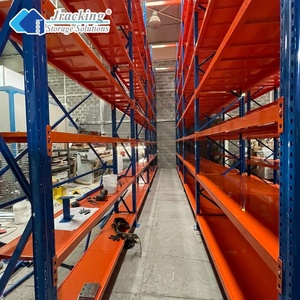
Installing standard, generic catalog pallet racking designed for low-seismic regions (such as central Europe or flat continental zones) poses catastrophic structural failure risks in Medellín. A fully loaded high-bay rack reaching 15 to 24 meters acts as an inverted dynamic pendulum during a seismic event. Our engineering teams design high-bay systems according to strict finite element analysis (FEA) compliant with both European standard EN 15512 / FEM 10.2.02 and Colombian NSR-10 Title B & C requirements.
Heavy-Duty Upright Profiles
Fabricated using high-tensile steel (Q355B / S350GD), engineered with multi-flange cold-rolled geometry to resist torsional buckling under high dynamic sway loads during tremors.
Ductile Baseplate Anchoring
Engineered footplates featuring thick-gauge seismic shear keys and chemical anchor bolts calculated specifically for concrete slab compressive strength (f'c ≥ 28 MPa / 4,000 PSI).
X-Bracing & Beam Connectors
Vertical spine bracing and horizontal plane bracing combined with 4-to-5 tooth forged beam connectors with safety locking pins, ensuring continuous load path dissipation.
3. Specialized Application Scenarios for High Bay Racking in Medellín's Key Sectors
Scenario A: Textile, Apparel & Fashion Supply Chains (Itagüí & Central Medellín)
Medellín is widely recognized as the fashion and textile capital of Colombia, home to major apparel manufacturers, fabric distributors, and e-commerce brand fulfillment centers. Textile logistics involves handling both raw fabric rolls (heavy, dense, cylindrical loads) and thousands of fast-moving garment SKUs. High-bay selective racking combined with multi-tier mezzanine picking structures allows apparel operators to maintain raw material storage on upper heavy-duty beam levels while utilizing lower levels for high-speed piece picking.
Scenario B: Temperature-Controlled Cold Chains & Food Processing (Rionegro & Guarne)
The eastern logistics corridor around the Jose María Córdova Airport (Rionegro, Marinilla, Guarne) has become the regional hub for fresh cut-flower exports, dairy processors, processed foods, and pharmaceutical cold storage. Refrigerated and frozen warehouse space (-18°C to -25°C) carries exorbitant construction and energy operational costs per cubic meter. Implementing High-Bay Automated Pallet Shuttle Racking in cold rooms minimizes wasted aisle space, increases payload volume by up to 85% compared to selective racking, and substantially reduces thermal losses by minimizing door-open automated shuttle cycles.
Scenario C: Industrial Manufacturing & Hardware Wholesaling (Girardota & Bello)
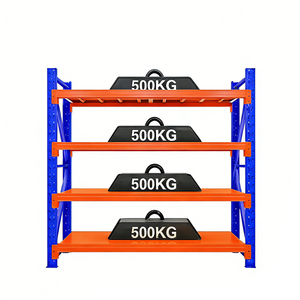
Heavy manufacturing, metalworking, plastics, and building materials wholesalers located along the northern Aburrá corridor require high-capacity beam racking capable of sustaining non-standard pallet weights (up to 2,500 kg per pallet position). High bay racking engineered with structural hot-rolled channels or heavy cold-formed box beams provides maximum impact resistance against forklift movements, accommodating heavy raw materials, steel coils, and industrial machinery components.
4. Comparative Structural Architecture Matrix
When selecting a high bay racking configuration for Medellín operations, procurement teams must evaluate accessibility versus storage density against total cost of ownership (TCO):
| Racking Architecture System | Max Vertical Height | Storage Density Yield | SKU Direct Selectivity | Primary Industrial Fit in Medellín |
|---|---|---|---|---|
| High Bay Selective Pallet Racking | Up to 15 Meters | Medium (60% Footprint) | 100% Direct Access | General 3PL, FMCG Distributors, Automotive Parts |
| Very Narrow Aisle (VNA) Racking | Up to 18+ Meters | High (75% Footprint) | 100% Direct Access | Pharma Distribution, High-Density Retail Wholesalers |
| Radio Pallet Shuttle System | Up to 24+ Meters | Very High (85% Footprint) | Deep-Lane LIFO/FIFO | Cold Storage, Frozen Foods, Beverage Bottlers |
| Automated High-Bay AS/RS (Clad-Rack) | Up to 40+ Meters | Maximum (92% Footprint) | 100% Automated Access | Mega Fulfillment Hubs, Large Scale Manufacturing |
5. Regional Development & Supply Chain Trends in Antioquia
Several macro-economic shifts are reshaping warehouse strategy in Medellín and the wider Antioquia department:
- Infrastructure Integration (Autopista Mar 1 & Mar 2, Puerto Antioquia): With the completion of major highway tunnels and the development of Puerto Antioquia in Urabá, Medellín is evolving from an inland industrial center into a prime intermodal bridge between the Atlantic trade channels and interior Colombian consumption centers. Wholesalers are building high-capacity distribution hubs to manage higher inventory velocities.
- Convergence of Automation & Robotics: Rising labor costs and the demand for same-day delivery are driving adoption of hybrid racking setups—where heavy-duty high bay steel framing operates seamlessly with Autonomous Mobile Robots (AMRs), automated goods-to-person bin shuttles, and WMS software integration.
- Sustainability & ESG Engineering: Enterprise logistics operators in Colombia increasingly prioritize low-carbon steel components, non-toxic lead-free powder coatings, and energy-efficient automated shuttles to satisfy corporate ESG disclosures and ISO 14001 environmental standards.
6. Enterprise Brand Advantages & Global Manufacturing Footprint
As part of a global industrial leadership lineage spanning back to 1977, our organization brings unrivaled engineering pedigree and manufacturing scale to Colombian logistics projects:
8 Global Manufacturing Facilities
Our production network includes state-of-the-art automated steel fabrication facilities worldwide—including our new 240,000 sq ft production plant in Calhoun, Georgia (USA)—ensuring rapid lead times, continuous steel supply, and competitive ocean freight routing directly to Colombian ports (Buenaventura & Cartagena).
Rigorous Structural Certifications
All high-bay beam and upright components undergo rigorous mechanical stress testing, compliance validation under European EN 15512, RMI (Rack Manufacturers Institute) standards, and site-specific NSR-10 structural engineering stamps for local municipal permitting.
2,000+ Dedicated Professionals
Supported by over two thousand specialized structural engineers, project managers, logistics consultants, and certified installation teams capable of delivering end-to-end turnkey project execution across Colombia.
ESG & Sustainability Program
Committed to green logistics: utilizing 7,000+ solar panels at our primary fabrication hubs, zero-VOC electrostatic powder coating lines, and targeting a fully electrified company service fleet by 2028.
7. Frequently Asked Questions by Medellín Logistics Buyers
Why is seismic calculation (NSR-10) critical for high bay racking in Medellín? +
Medellín and the Aburrá Valley are located in Colombia’s Intermediate Seismic Zone under building code NSR-10. High-bay racking systems (over 8 to 10 meters tall) bear immense concentrated vertical loads. During seismic activity, lateral forces can induce severe sway, structural deflection, or catastrophic column buckling if upright profiles, footplates, and floor anchorages are not calculated based on site-specific ground acceleration parameters (Aa and Av coefficients).
What slab floor specifications are required for installing 12m+ high bay selective racking? +
High bay systems require slab flatnesses compliant with DIN 15185 or TR34 standards (Superflat classification for VNA installations). Structurally, the concrete slab must typically exhibit a minimum compressive strength of 28 MPa (4,000 PSI) and a thickness of 200mm to 250mm, reinforced with mesh or steel fibers to withstand concentrated point loads exerted by footplates (often exceeding 8 to 14 metric tons per post).
How does high bay racking compare to warehouse mezzanine platforms for e-commerce hubs? +
High bay racking maximizes vertical space for palletized bulk goods and reserve stock utilizing forklifts or automated reach cranes. Mezzanines, on the other hand, create elevated physical floor levels for human-accessible piece picking, packing tables, and light carton sorting. Many modern Medellín logistics centers implement a hybrid architecture: high bay pallet racking on the perimeter with multi-tier structural mezzanines in the central picking zone.
What corrosion protection is recommended for racking near high humidity or cold rooms in Antioquia? +
For standard ambient warehouses in Medellín, high-durability epoxy-polyester powder coating provides superior scratch resistance and aesthetic longevity. However, for cold storage facilities in Rionegro (-25°C) or humid environment applications, pre-galvanized or hot-dip galvanized steel components (uprights, diagonal bracing, baseplates) are essential to prevent oxidation and structural degradation caused by condensation.
What data is required from our engineering team to request a custom site study and layout design? +
To prepare an engineered proposal, our technical team requires: (1) Warehouse CAD layout drawings indicating clear height under joists and column grids; (2) Concrete slab specifications; (3) Pallet dimensions (W x D x H) including load overhang; (4) Maximum and average gross pallet weights; (5) SKU counts and required daily throughput velocity; and (6) Material handling equipment specs (forklift lift height, aisle turn radii).