Engineered Industrial Storage Systems & Racking
Explore certified heavy-duty selective, automated shuttle, cantilever, and mezzanine structural systems designed for rigorous industrial, cold-chain, and logistics hubs globally.
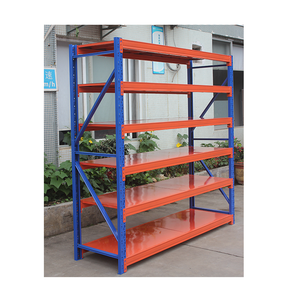
Certified Safe & Stable Industrial Steel Warehouse Pallet Rack Shelving Heavy Duty Selective Bolted Assembly
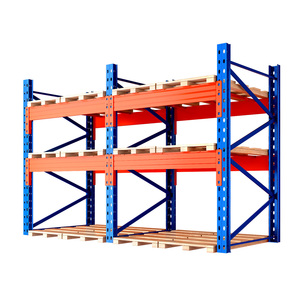
Industrial Heavy Duty Storage Shelves System Metal Rack Stacking Units Warehouse Pallet Racking
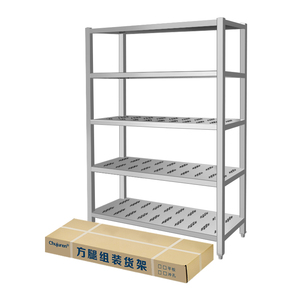
Customizable Stainless Steel Storage Shelving Rack Shelf Factory Square Legs Strong and Durable
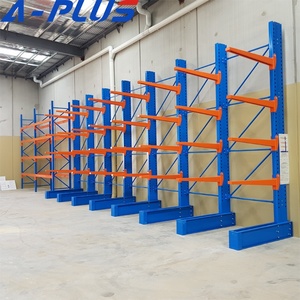
Heavy Duty 5-Layer Industrial Warehouse Shelving Steel Cantilever Rack for Pallet & Long Stock
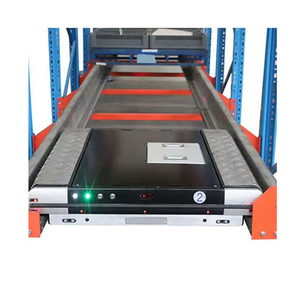
One Stop AGV & Radio Shuttle Dense Warehouse Racking Infrastructure System
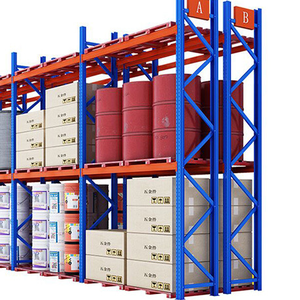
Metal Pallet Racking Warehouse Storage System Heavy Duty Structural Steel Beam Rack Unit
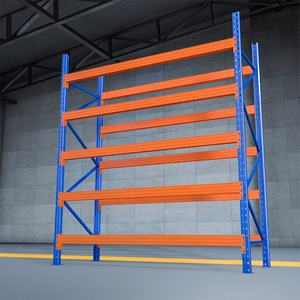
Easy Install Height Adjustable Heavy Duty Industrial Pallet Storage System
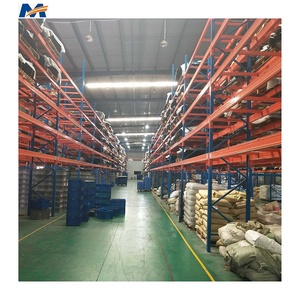
High-Strength Box Beam & Upright Frame Heavy Duty Steel Shelving Racks
Engineering Rigor in Modern Heavy-Duty Pallet Racking Manufacturing
In global supply chain management, selecting top-tier pallet storage systems is a structural integrity decision, directly governing warehouse safety, inventory throughput efficiency, and long-term asset amortization. As premier warehouse pallet storage factories and global exporters, our engineering methodology relies on strict finite element analysis (FEA), adherence to European Standard EN 15512:2019, ANSI/RMI MH16.1 specs, and global building seismic codes (including South America's NSR-10 and US ASCE 7 standards).
Industrial pallet storage must endure dynamic forklift impacts, non-uniform vertical loading, thermal fluctuations in cold storage environments, and horizontal shear stresses induced by seismic activity. Factory-direct procurement requires evaluating not merely raw steel price per ton, but structural performance metrics: profile geometry design, cold-roll forming precision tolerances, structural grade yield strengths ($f_y$), frame stability coefficients, and surface finishing integrity.
Core Metallurgical Benchmark
We utilize certified high-tensile cold-rolled steel (predominantly Q355B / S355MC structural steel), providing a yield strength exceeding 355 MPa. Compared to standard Q235 steel, Q355B delivers a 50% increase in structural load capacity while reducing dead weight on warehouse floor slabs, significantly mitigating dynamic deflection risk under full loading.
Enterprise Factory Capabilities & Exporter Advantages
Why leading multinational distribution centers, 3PL providers, and industrial facilities partner with our global manufacturing footprint.
Automated Roll-Forming Precision
Our 8 global manufacturing units utilize continuous multi-stage cold-roll forming lines with laser punch indexing, maintaining a tolerance of ±0.3mm across profile lengths up to 15 meters for seamless beam-to-column locking alignment.
Seismic Engineering (NSR-10 / FEM)
Every racking system deployed in active seismic zones undergoes dynamic spectral calculations. Upright baseplates, anchor embedment depths, and horizontal bracing matrices are custom engineered based on site-specific soil coefficients.
Electrostatic Powder & Galvanizing
Automatic 9-stage pre-treatment washing followed by thermo-cured epoxy-polyester powder coating (65–85μm) or hot-dip galvanizing for coastal marine and sub-zero cold-storage (-30°C) environments against salt corrosion.
Automation & AGV Integration
Fully compatible with 2D Pallet Radio Shuttles, Automated Guided Vehicles (AGV), and Autonomous Mobile Robots (AMR). Engineered rack guidance rails maintain ultra-tight tolerances for automated picking machinery.
Global Export Freight Optimization
Direct export loading management engineered for high container space utilization. Components are bundled with heavy-duty steel strapping, edge protectors, and VCI anti-moisture wrapping for ocean freight integrity.
Full Regulatory Traceability
All mill test certificates (MTC per EN 10204 3.1), weld inspection records, and load testing reports are provided with every export shipment, satisfying stringent local municipal building safety permits.
Structural Engineering Comparison Matrix
A technical side-by-side evaluation of structural steel properties, beam design physics, and protective surface treatments used in factory manufacturing.
| Engineering Parameter | Standard Commercial Racking (Q235) | High-Performance Export Grade (Q355B / S355) | Heavy Industrial / Cold Chain Grade |
|---|---|---|---|
| Yield Strength ($f_y$) | 235 MPa | 355 MPa (51% Higher Capacity) | 355 - 420 MPa High Yield |
| Tensile Strength ($f_u$) | 370 - 500 MPa | 470 - 630 MPa | 520 - 680 MPa |
| Upright Column Profile | 80mm x 60mm x 1.5mm Open C | 90mm - 120mm Omega (Ω) 11-Fold Profile | Structural Box / Hot Rolled Channel |
| Beam Connector Locks | 2 or 3-Claw Standard Lug | 4 or 5-Claw Heavy Lug with Auto-Pin | Bolted Structural Gusset Plate |
| Seismic Acceleration ($a_g$) | < 0.05g Non-Seismic | 0.15g - 0.35g Medium-High Zone (EN 16681) | > 0.40g Severe Dynamic Zone (NSR-10) |
| Surface Protection | Single Spray Paint (25-35μm) | Thermoset Epoxy Powder (65-85μm) | Hot-Dip Galvanized (>60-80μm) |
| Deflection Limit ($\delta$) | $L / 200$ | $L / 200$ to $L / 300$ (Strict Deflection) | $L / 350$ (High-Precision AS/RS) |
Future Procurement Trends in Warehouse Storage Systems
Global warehouse operations are undergoing structural transformations driven by rising industrial land costs, supply chain volatility, labor constraints, and green building regulations.
1. Convergence of Racking & High-Density Automation (Radio Shuttle & AMR)
Procurement is rapidly shifting away from low-density conventional selective racking toward Automated High-Density Pallet Systems. Integrating 2D Radio Shuttles and Autonomous Mobile Robots (AMR) directly inside cold-formed steel racking channels enables operations to double pallet position density without expanding the physical footprint.
Key Metric: 75% to 85% cubic space utilization efficiency vs 40% in selective racking.
2. Green Steel Manufacturing & ESG Scope 3 Compliance
Enterprise procurement officers now require verified ESG metrics from racking suppliers. Modern export factories are adopting zero-solvent electrostatic powder coating systems, scrap steel recycling closed-loops, and direct solar-powered manufacturing, enabling multinational buyers to lower carbon footprints across their scope 3 upstream supply chain.
Focus: Low-VOC powders and EPD (Environmental Product Declaration) certificates.
3. IoT Structural Telemetry & Digital Twin Monitoring
The introduction of smart strain-gauge sensors integrated within upright frames allows real-time structural health monitoring. Warehouse managers receive automated alerts when forklift collisions occur or when safe load limits ($SLL$) are exceeded, drastically reducing warehouse collapse hazards.
Advantage: Predictive maintenance and automated regulatory compliance logging.
4. Rack-Supported Buildings (Clad-Rack Systems)
Instead of constructing a traditional building shell and placing racking inside, clad-rack construction utilizes the racking structure itself as the supporting skeleton for building roof and side wall cladding, significantly shortening construction timelines and saving up to 25% on total structural capital expenditure.
Application: High-bay distribution centers up to 45 meters clear height.
Enterprise Sourcing Checklist for Warehouse Pallet Racking
When issuing an RFP/RFQ to international pallet storage factories and exporters, operational and procurement executives must evaluate criteria beyond basic pricing. Below is an engineering-driven checklist designed to prevent structural failures, scope creep, and logistics delays:
1. Steel Quality Verification
Require structural mill certificates (EN 10204 3.1) proving chemical composition ($C, Mn, Si$) and tensile properties. Avoid uncertified re-melt steel lacking uniform yield strength parameters.
2. Beam Deflection Criteria
Ensure beam deflection calculations adhere strictly to $L/200$ under maximum load capacity. Overly flexible beams strain connector lugs and increase pallet dislodgement risk.
3. Upright Profile Geometry
Examine column cross-sections. Multi-ribbed, 11-fold Omega profiles distribute compressive loads significantly better than simple 5-fold channels under heavy vertical loads.
4. Floor Slab & Anchor Design
Verify baseplate surface area and expansion anchor specs against your concrete slab strength ($f'c \ge 28 \text{ MPa}$). High-seismic zones require chemical anchor studs.
5. Surface Pre-treatment
Inquire whether the factory utilizes automatic multi-stage iron-phosphate or zinc-phosphate immersion prior to powder coating to ensure long-term paint adhesion without peeling.
6. Export Packaging Standards
Ensure packaging incorporates ISPM-15 compliant fumigated timber runners, heavy plastic film wrapping, and steel banding to protect against ocean shipment humidity and transit handling.
Frequently Asked Procurement & Engineering Questions
Direct answers from our structural engineering and export logistics divisions regarding pallet rack manufacturing, standards, and international delivery.
Why is structural steel grade selection critical in heavy-duty pallet racking?
Steel grade dictates the structural load-bearing threshold and safety factor of racking components. Utilizing high-yield cold-rolled steel like Q355B (yield strength $f_y = 355 \text{ MPa}$) rather than low-grade mild steel allows upright frames and box beams to support significantly heavier loads per level while preventing permanent structural deformation (yielding) under accidental dynamic overloads or forklift impacts.
What structural compliance standards must pallet storage exporters meet?
Reliable exporters engineer racking to international building standards. In Europe and global markets, EN 15512 (Racking Structural Design) and FEM 10.2.02 are standard. In North America, ANSI/RMI MH16.1 governs. In seismic regions like South America, calculations must integrate site-specific peak ground acceleration ($PGA$) parameters aligned with codes such as Colombia's NSR-10 or Chile's NCh2369.
How does hot-dip galvanizing compare to powder coating for cold storage racking?
In ambient indoor warehouses, electrostatic thermoset epoxy powder coating (65-85μm) provides excellent scratch and chemical resistance. However, in sub-zero cold storage facilities (-30°C) or high-humidity coastal ports (e.g., Barranquilla, Cartagena, Houston), continuous condensation accelerates steel oxidation. Hot-dip galvanizing (dipping steel in molten zinc to create an alloy layer >60-80μm per ISO 1461) delivers self-healing corrosion resistance essential for cold chain longevity.
What project parameters are required to calculate a custom factory racking quote?
To produce accurate layout drawings and structural calculations, our engineering team requires: (1) Warehouse CAD floor plan with clear building height, column grids, and floor slab specifications; (2) Pallet dimensions (Width x Depth x Height including cargo); (3) Maximum load weight per pallet; (4) Operating handling equipment specs (forklift aisle turn radius and lift height); (5) Project location for seismic load calculation.
How are international ocean shipping containers optimized for long beams?
Pallet racking uprights and beams present unique shipping length challenges. Heavy-duty box beams are bundled in custom timber cradles matching 40ft High Cube (40HC) container dimensions (11.8 meters internal length). Upright frames can be shipped fully welded for fast installation or knock-down (bolted assembly) to maximize container space, saving up to 35% on international freight costs per pallet position.
What is the expected factory lead time for large-scale enterprise rack orders?
Standard manufacturing lead time across our automated production plants is typically 3 to 4 weeks following final approval of CAD structural engineering drawings. Specialized orders requiring custom color powder coating, automated shuttle integration, or hot-dip galvanizing generally require 4 to 6 weeks prior to factory dispatch and port container loading.
Request a Custom Structural Engineering Study & Quote
Consult with our senior logistics engineers today. We provide 3D CAD layout design, seismic load calculations, structural specs, and factory-direct export pricing tailored to your facility.
Inquire Now