Heavy-Duty Industrial Storage & Racking Solutions
Engineered to FEM 10.2.02 and EN 15512 safety codes. Select high-density storage configurations manufactured for optimal structural strength, safety, and inventory throughput.
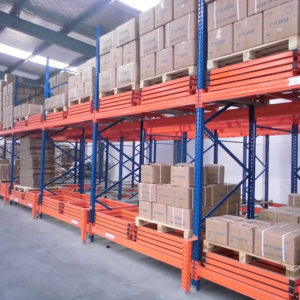
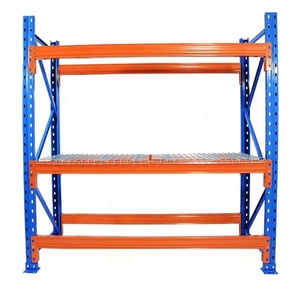
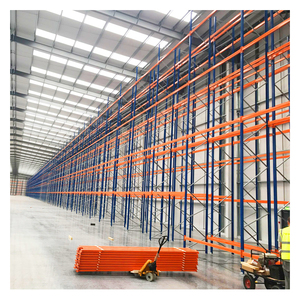
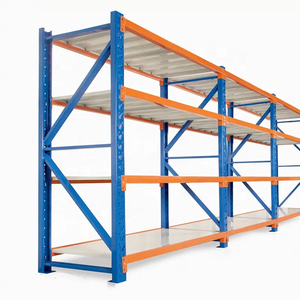
Structural Engineering & Metallurgical Physics of Modern Pallet Racking
Modern industrial storage systems are sophisticated load-bearing steel structures subject to static, dynamic, operational, and environmental stresses. Selecting the correct industrial shelving or pallet rack system requires a rigorous engineering calculation of yield strength, cold-formed structural integrity, beam deflection limits, and sway buckling resistance. As global logistics networks scale upward to maximize volumetric density, structural safety and compliance with international standards such as EN 15512, FEM 10.2.02, RMI (Rack Manufacturers Institute), and local building requirements (including NSR-10 seismic provisions) become mandatory for operational risk mitigation.
Information Gain Insight: Under dynamic forklift loading conditions, upright frames experience localized stress concentrations at point-of-impact zones. Advanced cold-rolled profiles utilizing micro-alloyed Q235B and structural Q355B steel achieve high strength-to-weight ratios, preventing catastrophic plastic deformation while maintaining structural elasticity.
A key differentiator in structural performance is the design of the beam-to-upright connection. Multi-claw connector brackets engineered with tapered locking slots utilize dynamic gravity locking. As pallet weights increase on the beam, the connector locks tighter into the upright teardrop or diamond perforations, suppressing rotational clip flexure and beam twist. Furthermore, beam deflection parameters must strictly obey limits of L/200 (where L is the clear span length between upright columns), ensuring that under maximum operational loads of 4,000 kg per level, automatic retrieval equipment and reach trucks operate without obstruction.
Metallurgical Superiority
Fabricated from high-tensile cold-rolled steel coils with continuous structural ribbing. High elasticity indices guarantee zero residual deformation after maximum stress cycles.
Seismic Engineering (NSR-10)
Calculated for high peak ground acceleration parameters. Custom baseplates, heavy anchor bolts, and K-bracing frames dissipate seismic energy safely during shock events.
Surface Corrosion Defense
High-grade electrostatic powder coating cured at 200°C alongside hot-dip galvanizing protects structural steel in high-humidity (95% RH) and corrosive port-adjacent facilities.
Comprehensive Racking Architecture & System Selection Matrix
Selecting the appropriate rack architecture depends on several operational parameters: SKU density, inventory turnover velocity (FIFO vs. LIFO), vertical building height, floor slab load capacity, and budget capital expenditure. Below is a comparative engineering benchmark detailing how our industrial storage systems solve specific supply chain challenges.
| Racking System Type | Max Load / Level | Volumetric Density | SKU Access Type | Ideal Application Industry | ROI Period |
|---|---|---|---|---|---|
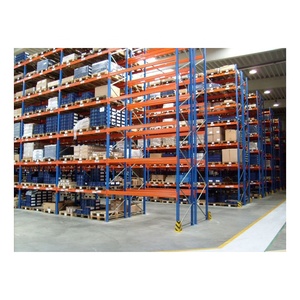
| Selective Pallet Racking | Up to 4,000 kg | 40% - 50% | 100% Direct Access (FIFO) | 3PL Logistics, Retail Distribution, E-Commerce | 12 - 18 Months |
| Push-Back Pallet Rack | Up to 1,500 kg/pallet | 70% - 75% | LIFO (2 to 6 Pallets Deep) | Cold Storage, Food & Beverage, FMCG Bulk Store | 18 - 24 Months |
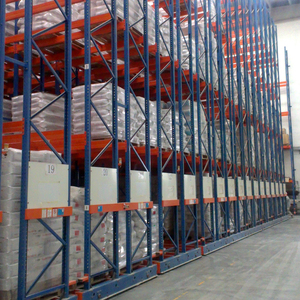
| Electric Movable (MOVO) | Up to 24,000 kg/bay | 85% - 90% | 100% Direct (Mobile Aisles) | Pharmaceutical, Temperature Controlled, High Land Cost | 24 - 36 Months |
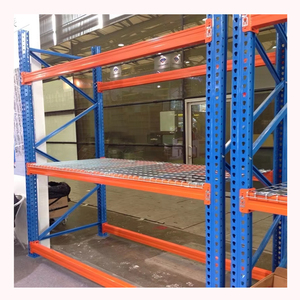
| Heavy Duty Long-Span | Up to 1,000 kg | 60% - 70% | Manual Picking Access | Automotive Parts, Hardware, E-Fulfilment Bins | 6 - 12 Months |
| 2D Pallet Shuttle System | Up to 1,500 kg/shuttle | 90% - 95% | Automated FIFO / LIFO | High-Volume Deep Storage, Automated Cold Chain | 24 - 30 Months |
Direct Manufacturer Advantage & Global Supply Strength
As an established industry pioneer operating since 1977, our manufacturing ecosystem encompasses 8 state-of-the-art automated production facilities worldwide. Every structural beam, upright profile, shelf panel, and locking pin is manufactured under strict ISO 9001, ISO 14001, and ISO 45001 quality, environmental, and occupational safety systems.
Our global logistics capabilities guarantee continuous steel supply chains, fully backed by certified structural calculations, certified material batch mill certificates, and on-site engineering installation teams across 60+ countries.
Strategic Procurement & Future Technology Trends (2025–2030)
The global industrial storage market is undergoing a rapid paradigm shift driven by rising industrial land values, labor constraints, ESG decarbonization mandates, and the explosive growth of automated fulfillment centers. Procurement executives and warehouse directors must plan storage infrastructure that supports long-term technological evolution.
1. AMR & Shuttle Convergence
Traditional static racking is increasingly designed to integrate directly with Autonomous Mobile Robots (AMRs) and 2D Pallet Shuttles. Modern rack uprights now incorporate integrated guidance tracks and power busbars for continuous robot charging.
2. Cold-Chain Volumetric Efficiency
With electricity costs impacting refrigerated distribution centers, procurement is shifting toward ultra-dense automated mobile racking (MOVO) and deep-lane shuttle systems that cut refrigerated air volume requirements by up to 50%.
3. IoT Structural Health Monitoring
Future-proof installations incorporate smart sensor nodes inside upright channels. These IoT impact sensors monitor structural integrity in real-time, instantly flagging fork-truck impacts and seismic stresses before failure occurs.
4. Circular Steel Economy & Low-VOC Coatings
Global ESG standards demand traceable, 100% recyclable steel sourcing. Our manufacturing facilities utilize ultra-low VOC powder coats and automated energy-recovery systems, assisting enterprise clients in meeting Scope 3 carbon neutrality targets.
5. Modular & Scalable Engineering Design
Modern distribution centers require rapid layout reconfigurability. High-precision boltless beam connections allow warehouse managers to adjust beam levels in 50mm or 75mm increments as SKU height profiles evolve over time.
Inaugurating Our 240,000 Sq Ft Advanced Production Facility
Demonstrating our commitment to global supply chain agility, our newly opened 240,000 sq ft manufacturing plant in Calhoun, Georgia represents our eighth international manufacturing site. Featuring automated high-speed roll-forming lines, zero-emission powder coating booths, and robotic welding cells, this facility dramatically reduces order lead times for high-density racking projects across the globe.
Coupled with strategic partnerships in warehouse robotics and software development (including Movu Robotics), we deliver end-to-end industrial storage solutions from initial seismic civil engineering to full automation integration.

Frequently Asked Questions by Industrial Storage Buyers
Expert guidance from our structural engineering and site logistics teams.
How do I determine the correct load capacity for my pallet racking frames?
Load capacity is determined by evaluating maximum unit load weight (pallet + goods), clear beam span length, vertical level spacing (unbraced frame length), and seismic ground motion factors. Our engineering team calculates beam section profiles and column gauges based on FEM 10.2.02 and EN 15512 formulas to guarantee safe operational factors of safety.
Is seismic engineering required for industrial shelving and pallet rack installations?
Yes. In regions with moderate to high seismic risk (such as Andean zones governed by NSR-10 regulations), generic catalog rack designs are unsafe. Racking structures act as unbraced flexible steel frames during earthquakes. Site-specific calculations determine heavy-duty baseplate dimensions, anchor bolt embedment depths, and specialized diagonal bracing patterns.
What steel grade finishes are recommended for humid or coastal facilities?
For coastal facilities (e.g., Barranquilla, Cartagena) or high-humidity cold storage rooms, standard steel can experience micro-corrosion over time. We recommend continuous hot-dip galvanizing (HDG) or high-durability epoxy-polyester powder coats, coupled with stainless steel baseplate anchor bolts to prevent oxidation and structural degradation.
What is the difference between Selective Racking and Push-Back Racking?
Selective Pallet Racking provides 100% immediate accessibility to every single pallet position, making it ideal for high SKU diversity. Push-Back Racking utilizes nested cart systems operating on inclined rails, storing pallets 2 to 6 deep in a LIFO (Last-In, First-Out) format to drastically increase storage density by eliminating operating aisles.
When should a facility upgrade from conventional racking to automated shuttle systems?
Automation upgrades become cost-effective when warehouse clear height exceeds 10–12 meters, labor costs are rising, throughput velocity requires multi-shift operations, or land expansion cost is prohibitive. 2D pallet shuttle systems provide up to 90% space utilization while integrating seamlessly with WMS/WCS software.
What building floor slab requirements are required for high-bay racking?
Floor slabs must handle concentrated point loads exerted by upright baseplates. High-bay systems require smooth slab flatnesses compliant with DIN 18202 or TR34 Superflat classifications, alongside concrete compressive strengths typically exceeding C25/30 or C30/37 to prevent slab cracking under heavy point loadings.
Ready to Optimize Your Warehouse Storage & Density?
Consult with our structural design team. Receive custom AutoCAD CAD layout designs, structural load calculations, and comprehensive factory-direct pricing for your logistics facility.