High-Performance Cantilever Storage Systems
Explore our structural engineered racking configurations built for steel profiles, timber, pipes, and heavy industrial loads.
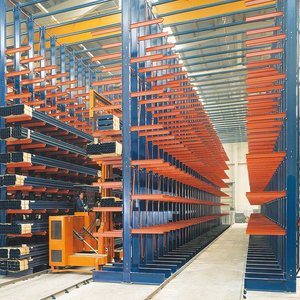
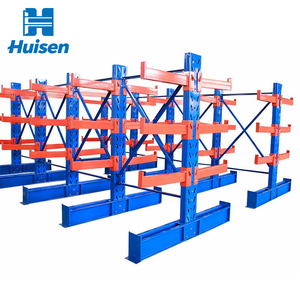
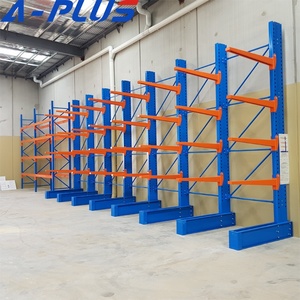
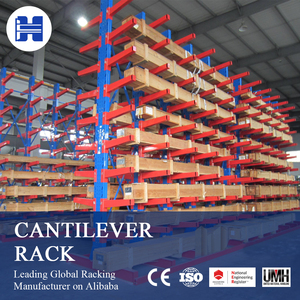
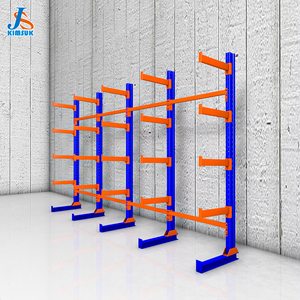
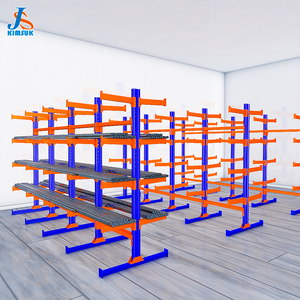
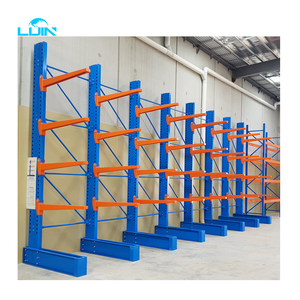
Engineering Standards & Structural Mechanics of Heavy-Duty Cantilever Racking
In modern industrial logistics, managing non-standardized long goods—such as extruded aluminum profiles, structural steel tubing, timber packs, PVC piping, and heavy sheet metal—presents a complex engineering challenge. Standard selective pallet racking with front vertical columns creates physical obstruction, severely restricting handling efficiency and introducing catastrophic collision risks. Cantilever racking systems solve this operational bottleneck by eliminating front uprights, offering completely unobstructed horizontal storage levels engineered for linear material handling.
A true heavy-duty cantilever racking structure is defined by its ability to maintain structural integrity under point loads and asymmetrical cantilever moment forces. Engineering compliance requires strict adherence to international structural steel design codes, including EN 15662 (European Standard for Steel Static Storage Systems), ANSI MH16.2 (American National Standard for Industrial Cantilever Racks), and local seismic parameters such as NSR-10, ASCE 7, or Eurocode 3.
Key Structural Advantage: Unlike roll-formed light-duty racks, premium industrial cantilever systems utilize hot-rolled structural steel I-beams (such as IPE or H-sections) for both vertical columns and horizontal bases. This structural profile provides exceptional resistance to torsional twisting and impact forces generated by heavy side-loading forklifts, side-loaders, and overhead cranes.
Column-to-arm connection mechanics dictate the overall safety coefficient of the storage field. Modern high-capacity systems feature precision-engineered keyhole, wedge, or heavy-duty pin connections that allow vertical height adjustments in increments of 50mm to 100mm while preventing arm dislodgement during crane or forklift hoist movement. Furthermore, mathematical deflection limits (L/300 deflection allowance under nominal static load) are strictly calculated during the Finite Element Analysis (FEA) stage to eliminate systemic sag across extended arm spans.
Standard Technical Specifications Matrix
The following engineering data highlights standard manufacturing tolerances and material specifications for heavy-duty industrial cantilever structures.
| Parameter / Specification | Hot-Rolled Structural Steel System | Roll-Formed Heavy Duty System | Automated Telescopic System |
|---|---|---|---|
| Primary Raw Material | Q355B / S355JR Structural Steel (IPE/H-Beams) | Q235B / S235 Cold-Rolled High-Tensile Steel | Heavy Structural Beam + Linear Guide Rails |
| Column Height Capability | Up to 12,000 mm (12 Meters) | Up to 6,000 mm (6 Meters) | Up to 8,000 mm (8 Meters) |
| Arm Load Capacity Range | 500 kg to 3,000 kg per arm | 200 kg to 800 kg per arm | 1,000 kg to 5,000 kg per tray/arm level |
| Arm Length Range | 600 mm to 2,500 mm | 500 mm to 1,500 mm | 800 mm to 2,000 mm (Full Extension) |
| Surface Corrosion Protection | Hot-Dip Galvanized (ISO 1461) or Epoxy Powder Coating (80-120 µm) | Electro-Galvanized or Standard Powder Coating | Multi-Layer Anti-Corrosion Industrial Coating |
| Safety Connection Factor | 1.50 Safety Factor against Yielding | 1.40 Safety Factor against Yielding | Integrated Mechanical & Electrical Safety Interlocks |
Global Manufacturing Strength & Quality Assurance
With decades of continuous structural engineering innovation, our global manufacturing network delivers certified high-density racking to tier-1 logistics hubs worldwide.
Traceable Structural Steel Sourcing
Every cantilever column and arm is fabricated from prime steel mill billets accompanied by Mill Test Certificates (MTC) conforming to EN 10204 3.1. Full material traceability guarantees structural consistency across high-bay installations.
Robotic Laser Cutting & Welding
Automated robotic welding cells execute continuous fillet welds on arm bases and column connectors. This eliminates micro-fractures, guarantees exact arm perpendicularity, and enhances fatigue resistance under dynamic loading.
Certified Quality & Compliance
Our manufacturing lines operate under ISO 9001 quality, ISO 14001 environmental, and ISO 45001 safety management systems. Products hold comprehensive CE certifications and comply with FEM 10.2.09 and ANSI MH16.2 standards.
Key Product Development Trends in Cantilever Systems
As warehouse operations push toward higher space utilization and automated picking, cantilever design is undergoing significant technological transformations.
Electromechanical Telescopic Extension
Modern cantilever systems feature 100% powered telescopic arm extension via electrical drive shafts. Over-crane picking becomes 300% faster as arms automatically extend outside the rack face, allowing direct vertical lifting without manual maneuvering.
IoT-Enabled Dynamic Load Sensors
Integration of wireless strain gauges and micro-load sensors along the cantilever arms provides real-time weight reporting to the Warehouse Management System (WMS). Operators receive instant warnings for asymmetric weight distribution or over-capacity conditions.
Integrated Mobile Base Cantilever Racks
Mounting heavy-duty cantilever columns onto electronically driven mobile bases eliminates static aisles. A single moving aisle unlocks up to 85% more cubic storage capacity within existing industrial facility footprints.
Future Procurement Trends for Warehouse Equipment Buyers
Procurement directors and supply chain leaders are shifting focus from simple initial capital expenditure (CapEx) to holistic total cost of ownership (TCO) and long-term sustainability metrics.
Pre-Calculated Seismic Site Verification
Global logistics buyers now demand site-specific structural calculations (such as NSR-10 in South America or ASCE 7 in North America) pre-integrated into the RFP phase. Racks must be customized to concrete slab compressive strength and local peak ground acceleration (PGA).
Green Steel & Low-Carbon Surface Coatings
Enterprise procurement departments are prioritizing manufacturers using electric arc furnace (EAF) steel with lower embodied carbon. Solvent-free powder coating technology and zero-VOC pre-treatment lines are becoming strict vendor qualification requirements.
Modular Re-Configurability & Add-On Speed
Unpredictable product SKU shifts require storage infrastructure that can be resized without hot-work permits. Procurement policies favor standardized pin-lock arm systems that allow safe in-house beam adjustments by trained warehouse staff.
Frequently Asked Questions by Industrial Buyers
Direct technical answers from our senior structural engineering team regarding cantilever design, installation safety, and capacity planning.
Ready to Optimize Your Structural Storage Space?
Connect directly with our structural engineering team to receive custom CAD floor layouts, FEA load calculations, and competitive factory-direct pricing for your warehouse facility.