Industrial Pallet Racking Systems Catalog
Heavy-duty, precision-engineered storage solutions directly supplied from China's leading automated manufacturing plants.
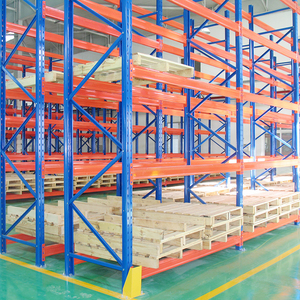
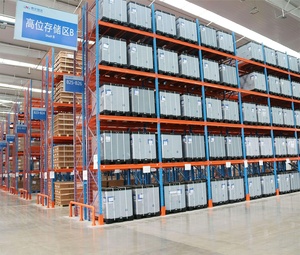
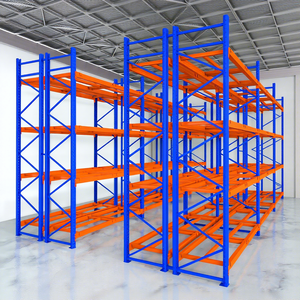
Enterprise Engineering Authority & E-E-A-T Quality Framework
As a global tier-one manufacturer and factory wholesaler of industrial pallet racking systems, our production ecosystem represents over four decades of metallurgical engineering, structural design innovation, and international compliance. Operating eight state-of-the-art manufacturing plants with an annual capacity exceeding tens of thousands of structural steel tons, our facilities supply logistics hubs, cold-chain freezers, retail fulfillment centers, and heavy manufacturing sites across North America, South America, Europe, and Asia.
Modern warehouse logistics demand far more than static steel shelves. Structural integrity requires strict adherence to finite element analysis (FEA), yield strength verification of cold-rolled steel coils, precise beam-to-upright locking mechanics, and site-specific seismic engineering. Every racking structure produced in our facilities is backed by rigorous static and dynamic load testing conducted under international testing protocols.
Raw Material Metallurgy
We source certified high-strength cold-rolled steel (Q235B, Q355B, and SS400 grades) guaranteeing uniform thickness, micro-alloy consistency, and optimal ductility for severe industrial environments.
Structural Compliance
Fully compliant with European EN 15512, FEM 10.2.02, American RMI (ANSI MH16.1), and Australian AS4084 regulations to guarantee global building code sign-offs.
Advanced Surface Treatment
Automated 9-stage pre-treatment featuring phosphating and eco-friendly electrostatic epoxy-polyester powder coating for high corrosion resistance, UV stability, and scratch tolerance.
Information Gain Technical Note: The structural load capacity of selective pallet racking depends directly on beam profile geometry and upright section modulus. Our patented 5-hook connector design distributes shear forces evenly across the column axis, mitigating connection rotation and increasing overall frame stability by up to 18% compared to standard 3-hook commercial designs.
Technical Matrix: Structural Storage Systems Breakdown
Choosing the correct pallet racking layout requires balancing pallet accessibility against cubic volumetric utilization. Below is an engineering comparison matrix designed for warehouse operations managers, procurement officers, and supply chain directors.
| Storage System Type | Selectivity (%) | Volumetric Efficiency | Optimal SKU Density | Handling Equipment Required | Typical Applications |
|---|---|---|---|---|---|
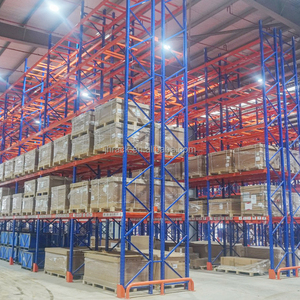
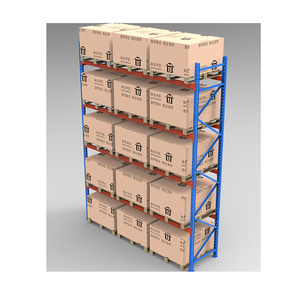
| Selective Pallet Racking | 100% | 40% - 50% | High SKU variety / Low volume per SKU | Standard Counterbalance / Reach Truck | FMCG, 3PL Distribution, E-commerce hubs |
| Double-Deep Selective | 50% | 60% - 65% | Medium SKU variety / Medium volume | Deep-Reach Forklift / Pantograph Truck | Cold Storage, Dry Grocery Wholesalers |
| Drive-In / Drive-Thru | 15% - 20% | 75% - 85% | Low SKU variety / High volume per SKU | Counterbalance (Narrow frame) | Seasonal goods, Bulk raw materials, Beverage |
| 2D / 4D Radio Shuttle (Semi-Auto) | 20% - 30% | 85% - 92% | High volume / Strict LIFO or FIFO control | Standard Reach Truck + Smart Shuttle Car | Deep-freeze logistics, Food & Beverage processing |
| Automated Storage & Retrieval (AS/RS) | 90% - 100% | 90% - 98% | Ultra-high density / High-speed throughput | Stacker Cranes / Automated AMR System | Pharmaceutical, High-bay automated fulfillment |
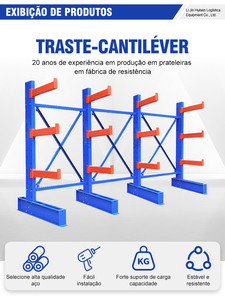
| Heavy Duty Cantilever | 100% (Long loads) | Custom Vertical | Long, continuous, or irregular loads | Side Loader / Specialized Forklift | Steel pipes, PVC tubing, Timber, Sheet metal |
Our engineering team performs custom Finite Element Analysis (FEA) simulations and site-specific seismic calculations (in accordance with local regulations such as US ASCE 7, Latin American NSR-10, or Eurocode 8) to prevent structural deflection, buckling, or baseplate anchor shear during seismic events or accidental forklift impacts.
Strategic Industry Forecast: Procurement Trends (2025–2030)
As global supply chains adapt to rising land acquisition costs, labor shortages, and stringent ESG sustainability mandates, procurement strategies for warehouse pallet racking are undergoing a paradigm shift. Enterprise buyers are shifting from purchasing simple commodity steel toward investing in intelligent, scalable, and environmentally sustainable storage architecture.
1. Hybrid Integration of Racking Infrastructure with Autonomous Mobile Robots (AMRs)
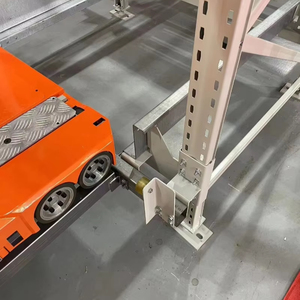
Traditional static pallet racking is rapidly adapting to accommodate flexible robotics. Modern factories are designing upright frame footings, rack aisle tolerances, and deck bracing specifically for seamless navigation by Autonomous Mobile Robots (AMRs), Automated Guided Vehicles (AGVs), and 4-Way Intelligent Radio Shuttles. This hybrid approach enables logistics operators to transition from manual forklift handling to fully automated 24/7 warehouse operation in phases, significantly lowering initial CAPEX while securing future operational scalability.
2. Transition to Ultra-High Density & High-Bay Vertical Warehousing
With industrial real estate lease rates climbing globally, industrial developers are expanding vertically. Racking systems are increasing in vertical height from conventional 8–10 meter limits to 24–40 meter High-Bay Clad-Rack structures (where the racking system itself forms the structural framework of the warehouse building). Implementing these high-bay structures requires cold-formed steel profiles engineered with tighter manufacturing tolerances (within ±0.5mm structural straightness) and high-yield cold-rolled steel grades like Q355B to withstand severe wind loads and heavy structural dead loads.
3. ESG, Carbon Footprint Auditing, and Circular Steel Procurement
Enterprise procurement teams are demanding transparent Environmental Product Declarations (EPDs) from China manufacturers. Factory practices are transitioning to green manufacturing powered by rooftop solar photovoltaic arrays, closed-loop water recovery systems during chemical washing, and VOC-free powder coatings. Furthermore, the structural design process now incorporates circular economy principles—specifying modular, boltless beam connections and standard pitch profiles (e.g., 50mm, 75mm, 76.2mm) that allow easy disassembly, reconfiguration, and 100% steel recyclability at end-of-life.
Why Global Buyers Partner with Our Factory
Navigating international warehouse procurement requires a manufacturing partner who delivers technical precision, regulatory compliance, and reliable supply chain logistics. Our factory operates as a direct manufacturer and OEM supplier, eliminating intermediary markup while maintaining rigorous factory-gate quality assurance.
Global Footprint & Export Logistics
Exporting to over 60 countries, we provide complete export documentation, heavy-duty container packing optimization (maximizing metric ton limits per 40ft HQ), and DAP/DDP delivery terms to major international seaports.
In-House Engineering & BIM Design
Our team of 50+ structural engineers provides complimentary CAD layouts, 3D Building Information Modeling (BIM) integration, structural calculations, and seismic feasibility reports within 48 hours of initial inquiry.
Turnkey OEM / ODM Customization
From custom beam profile tooling and specialized upright punch patterns to anti-corrosive hot-dip galvanizing (HDG) for coastal ports or cold rooms down to -30°C, we manufacture strictly to client specifications.
Frequently Asked Questions: Industrial Racking Procurement
Comprehensive technical and operational answers curated by our senior structural engineering team to assist industrial buyers, facility planners, and procurement directors.
What steel standards and mill certifications are provided with orders?
Every shipment is accompanied by official Mill Test Certificates (MTC) verifying yield strength, tensile strength, and chemical composition according to EN 10204 3.1 standards. We utilize prime certified cold-rolled steel coils (Q235B / Q355B grade) sourced exclusively from top-tier steel manufacturers.
How does the factory handle seismic load calculations for overseas installations?
Our engineers perform finite element static and dynamic analyses based on the client’s exact geographic coordinates, local building codes (such as NSR-10, ASCE 7-16, Eurocode 8, or AS4084), concrete slab thickness, and anchor bolt expansion shear tolerances.
What surface finishing option is recommended for high humidity or coastal locations?
For high humidity environments, saline coastal zones, or cold storage facilities, we recommend Hot-Dip Galvanizing (HDG) compliant with ISO 1461. This process coats components inside and out with a durable zinc layer (minimum 65–85 microns) preventing red rust for over 25 years.
Can your pallet racking integrate with third-party WMS and automated shuttle systems?
Yes. Our 2D and 4D Radio Shuttle Racking systems, as well as our AS/RS structural frameworks, are engineered with precise mechanical tolerances to interface seamlessly with all standard industrial shuttle cars, AMR robots, stacker cranes, and Warehouse Management System (WMS) control software.
What is the standard manufacturing lead time for container load orders?
Standard production lead times for standard selective pallet racking orders (up to 5x 40ft HQ containers) are typically 15 to 21 working days. Custom roll-formed profiles, specialized powder coating colors, or large-scale project orders (50+ containers) are scheduled according to phased project delivery plans.
Do you provide installation support or supervisor dispatch for overseas projects?
We provide comprehensive 3D installation manuals, exploded structural assembly diagrams, and step-by-step video instructions with every project. Additionally, we can dispatch experienced installation supervisors or provide full turnkey installation engineering teams on-site globally upon request.