Export Portfolio
High-Performance Heavy-Duty Racking Systems
Precision-engineered industrial rack systems manufactured under strict ISO 9001, FEM 10.2.02, RMI, and AS4084 quality standards for maximum load integrity.
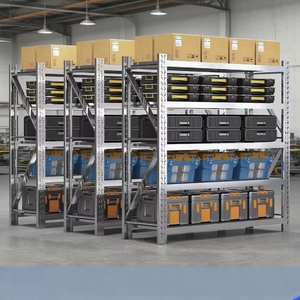
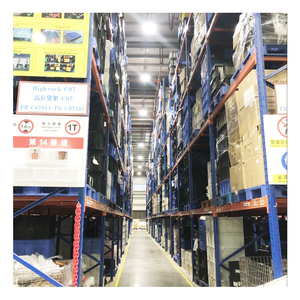
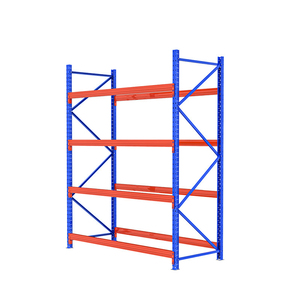
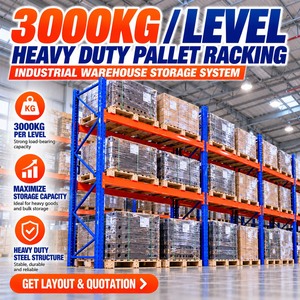
50,000+
Tons Annual Output
60+
Export Countries
100%
Q235B/Q355B Steel Quality
15+
Years Industry Authority
Industry Whitepaper
China's Dominance in Industrial Racking Exporting: Structural Metallurgy and Engineering Mastery
In the evolving global logistics landscape, selecting the right industrial racking supplier is no longer merely a purchasing decision; it is a critical structural engineering requirement. Modern distribution centers, automated cold-storage facilities, and high-density fulfillment hubs demand heavy-duty steel rack architecture engineered to withstand rigorous dynamic loads, seismic activity, and constant mechanical impacts. As the leading China industrial racking exporter, our manufacturing processes synthesize high-grade steel metallurgy, cold-roll forming precision, and strict adherence to international safety frameworks.
China's industrial storage export infrastructure has undergone a massive technological shift over the past decade. Advanced facilities no longer rely on manual fabrication; instead, fully automated continuous cold-roll forming lines, robotic laser-welding systems, and automated electrostatic powder coating lines ensure microscopic accuracy across every upright column, load beam, and diagonal brace. For procurement directors, supply chain architects, and facility engineering teams in North America, Europe, Latin America, and Southeast Asia, sourcing directly from top tier Chinese manufacturers delivers significant Total Cost of Ownership (TCO) efficiency without compromising structural safety.
Metallurgical Precision: Q235B vs. Q355B Structural Steel Alloys
The foundation of structural rack reliability lies in material selection. Cheap steel alloys suffer from unpredictable yield strength and poor ductility under stress. Premier Chinese rack manufacturers utilize premium structural carbon steel profiles, primarily Q235B and high-strength Q355B (equivalent to European S235JR and S355JR, or ASTM A36 and A572 Grade 50).
| Steel Alloy Grade | Yield Strength ($f_y$) | Tensile Strength ($f_u$) | Primary Application in Racking Architecture |
|---|---|---|---|
| Q235B Mild Steel | $\ge 235 \text{ MPa}$ | $370 - 500 \text{ MPa}$ | Standard racking frames, decking panels, light-to-medium beams, secondary bracing. |
| Q355B High-Tensile Steel | $\ge 355 \text{ MPa}$ | $470 - 630 \text{ MPa}$ | Heavy-duty upright columns (up to 3000kg/level), high-bay shuttle frames, cantilever columns. |
| Pre-Galvanized Coil | $\ge 275 \text{ MPa}$ | $360 - 510 \text{ MPa}$ | High-humidity warehouses, coastal export zones, outdoor rack systems, cold-chain storage. |
By leveraging Q355B steel for primary load-bearing vertical frames, structural engineers can minimize profile thickness while increasing overall load capability by up to 30%, optimizing both material weight and seismic load dissipation capabilities.
Safety & Engineering Standards
International Compliance Frameworks: Navigating FEM, RMI, EN 15512 & AS4084
A frequent concern among global procurement managers importing warehouse racking from China is localized structural code compliance. Leading Chinese racking exporters maintain comprehensive engineering design departments capable of modeling systems according to localized municipal building codes globally.
European Standard: EN 15512 & FEM 10.2.02
Governs the design of steel static storage systems, selective pallet racking, and limit state design principles, incorporating global safety factors for sway resistance and beam deflection limits ($L/200$).
American Standard: RMI (MH16.1)
Specification for the Design, Testing, and Utilization of Industrial Steel Storage Racks certified by the Rack Manufacturers Institute, vital for ANSI compliance across North American projects.
Australian Standard: AS4084-2012
Rigorous structural guidelines requiring specialized baseplate floor anchoring calculations, dynamic impact allowance factors, and rigorous beam-to-upright connector slot testing.
Finite Element Analysis (FEA) and Seismic Dynamic Modeling
Top exporters utilize sophisticated Finite Element Analysis (FEA) software to simulate multi-directional stress loads, frame elastic buckling modes, and dynamic seismic response spectrums. In seismic regions (such as the Pacific Ring of Fire or South American Andes under NSR-10), standard static calculations are insufficient. Rack engineering must account for base shear force, non-linear frame deformation, frame dampening, and ground acceleration coefficients ($A_v$ and $A_a$). Heavy-duty footplates with dual expansion anchors and seismic bracing towers ensure structural integrity during high-magnitude earth movement.
Product System Architecture
Comprehensive Breakdown of Export-Grade Industrial Racking Systems
Every warehouse operation possesses distinct spatial constraints, inventory throughput velocity, and material handling equipment (MHE) constraints. As a premiere Chinese racking manufacturer, our portfolio encompasses both specialized long-span non-pallet solutions and ultra-dense automated structures.
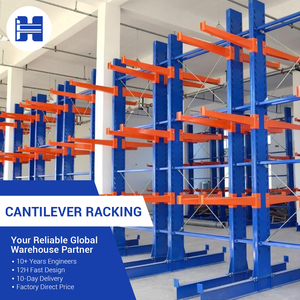
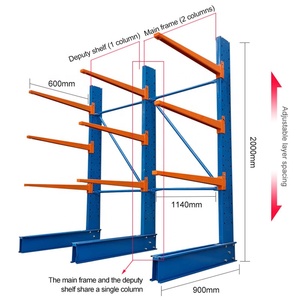
1. Heavy-Duty Cantilever Racking Systems
Designed specifically for non-standard, long-length linear inventory such as steel pipes, timber packs, PVC tubes, aluminum extrusions, and heavy sheet metal. Engineered using freestanding structural columns with adjustable cantilever arms secured via high-tensile locking pins. Available in single-sided and double-sided configurations with arm load capacities exceeding 1,500kg per arm.
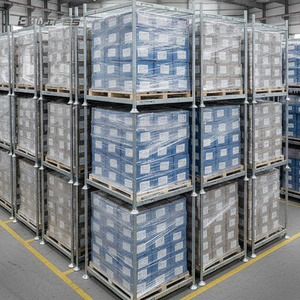
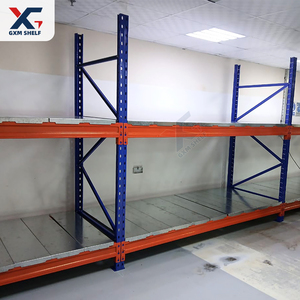
2. Selective Pallet Racking & High-Load Beam Systems
The global benchmark for 100% direct pallet accessibility. Featuring teardrop or European-style profile upright slotting, teardrop beams are roll-formed with 3 or 4-hook connectors featuring safety locks that automatically engage upon beam insertion. Load capacities routinely exceed 3000kg per beam level, engineered with zero permanent deformation under full working load limit (WLL).
3. Detachable Stacking Post Pallet Racks
Ideal for seasonal fulfillment centers and flexible staging areas. Detachable post pallet racks feature mild steel Q235 frames with heavy-duty corner sockets and removable vertical posts. They allow 4 to 5-high vertical stackability when loaded, yet collapse flat when empty, reducing reverse logistics freight costs by up to 75%.
4. Stainless Steel & Galvanized Boltless Racking
For sanitary, chemical, food processing, or high-humidity cold-chain facilities, 304/316 grade stainless steel or hot-dip galvanized boltless shelving provides chemical resistance and rustproofing. Boltless design allows rapid height adjustment at 50mm increments without requiring specialized tools.
Strategic Trends
Future Procurement & Technological Trends in Global Warehouse Infrastructure (2025–2030)
As global supply chains navigate labor shortages, urban land cost inflation, and aggressive ESG carbon reduction targets, industrial racking procurement is experiencing a structural revolution. B2B buyers must align their infrastructure investments with the following critical emerging trends:
1. Shift to High-Density Automated Shuttle Systems (AS/RS & 4D Shuttles)
Traditional forklift-operated drive-in racking is rapidly being replaced by automated 2D and 4D radio pallet shuttle systems. Shuttle systems increase warehouse cube utilization by up to 85% and significantly reduce MHE operator labor cost and rack damage risks.
2. Integration with AMR & Autonomous Mobile Robots
Racking systems are now engineered with widened lower aisle clearances, specialized floor guide rails, and high-precision laser-reflective target plates to allow seamlessly integrated Autonomous Mobile Robots (AMR) and AGVs to perform automated pallet retrieval.
3. IoT Rack Health Sensors & Structural Health Monitoring
Smart racking installations now feature integrated strain gauges, tilt sensors, and impact detection sensors wired into warehouse management software (WMS). Facilities receive real-time alerts if a forklift strikes an upright or if load limits are exceeded.
4. Sustainable "Green Steel" & Carbon Neutral Supply Chains
International buyers under Scope 3 emission mandates require transparency in rack manufacturing. Leading Chinese exporters are adopting electric arc furnace (EAF) steel processing, eco-friendly zero-VOC powder coatings, and rooftop solar power generation across manufacturing plants.
Enterprise Strength
Why Partner with China's Leading Industrial Racking Exporter?
Selecting an established Chinese manufacturing partner provides direct commercial, operational, and structural advantages over sourcing through regional resellers or localized middle-tier fabrics:
1. Unrivaled Scale and Automated Production Lines: Our manufacturing campus operates over 20 continuous cold-roll forming lines, high-speed automated punching presses, and fully enclosed OTC robotic welding stations. This scale guarantees precise manufacturing tolerances ($\pm 0.5\text{mm}$) and unmatched production throughput capable of handling 100+ container export projects per month.
2. Advanced Anti-Corrosion Surface Finishing: Corrosion is the leading cause of structural fatigue in humid warehouses and coastal port distribution hubs. We utilize a 9-stage pre-treatment washing process followed by thermosetting epoxy polyester powder coating (60–80 microns thickness) baked at 200°C, providing superior salt spray resistance and impact durability.
3. End-to-End OEM/ODM Turnkey Engineering: From initial CAD floor layout planning, load profile calculations, export container loading optimization, to third-party SGS/TÜV load testing certificates, we provide global logistics operators with a complete turnkey procurement package.
Request Your Custom Engineering & Storage Calculation Study
Contact our senior structural engineers today to receive CAD layout designs, load capacity analysis, and a comprehensive export price quotation for your warehouse project.
Get Catalog
Procurement Guidance
Frequently Asked Questions (FAQ) for Racking Procurement
Expert answers to common questions asked by international buyers, logistics directors, and structural engineering teams.
1. What technical specifications are required to request an industrial racking design and price quote?
To provide an accurate structural calculation and CAD layout, our engineering team requires: (1) Warehouse CAD layout drawings or dimensions including clear ceiling height and column locations; (2) Pallet dimensions (Length x Width x Height including cargo); (3) Maximum weight per pallet (e.g., 1000kg, 1500kg, 2000kg); (4) Desired aisle widths based on your Material Handling Equipment (e.g., Reach Truck, Counterbalance Forklift, VNA); (5) Ambient temperature requirements (standard ambient vs cold storage); and (6) Seismic zone location parameters.
2. How do Chinese rack manufacturers ensure structural quality and safety compliance with Western standards?
Reputable Chinese rack exporters operate under ISO 9001 quality management systems and manufacture racking profiles directly engineered to comply with FEM 10.2.02, European EN 15512, American RMI (MH16.1), and Australian AS4084-2012 standards. Mill test certificates (MTC) proving steel yield strength (Q235B/Q355B) accompany every batch, and structural components undergo rigorous destructive load testing verified by independent third-party agencies such as SGS, TÜV, or BV.
3. How are heavy racking systems packaged and loaded to prevent damage during ocean freight transit?
Export packaging is critical for long-distance sea container transport. Upright frames and beams are bundled using high-tensile steel strapping, plastic corner protectors, and wrapped in moisture-resistant polyethylene stretch film. Smaller accessories, baseplates, beam safety locks, and bolts are packaged in heavy-duty wooden or steel pallet crates. Bundle dimensions are optimized specifically for 40ft High Cube (40HC) containers to maximize cubic space usage and lower per-unit freight costs.
4. What surface anti-corrosion treatments are available for humid or cold-chain warehouse environments?
For standard ambient warehouses, electrostatic powder coating (60-80μm thickness) provides durable scratch and rust protection. For cold-storage facilities operating at freezing temperatures (-25°C to -30°C) or high-humidity coastal export warehouses, we recommend hot-dip galvanizing (HDG) where steel components are submerged in molten zinc to create an alloy coating (up to 275g/m² or 60-100μm thickness), providing lifelong rust prevention even under severe condensation.
5. What is the typical lead time for an export container order of industrial pallet racking?
Standard production lead time for standard pallet racking or cantilever projects (1 to 5 40HC containers) is typically 15 to 25 days following engineering drawing sign-off and deposit receipt. Custom colors, special structural roll-forming shapes, or massive multi-tier automated shuttle projects may require 30 to 45 days. Ocean shipping transit times vary by destination port (e.g., Southeast Asia 7–12 days, West Coast US 14–20 days, Europe/South America 28–38 days).
6. Can your engineering team provide installation guidance or on-site supervision abroad?
Yes. Every order is supplied with comprehensive 3D assembly manuals, structural elevation drawings, component bill of materials (BOM), and step-by-step video installation guides. For large-scale logistics centers, high-bay shuttle installations, or complex mezzanine projects, we can dispatch experienced installation supervisory engineers on-site to oversee local assembly teams and conduct final safety inspections prior to warehouse commissioning.
Partner With Us
Elevate Your Warehouse Logistics Infrastructure Today
Work with a trusted China industrial racking exporter committed to precision engineering, global safety compliance, and competitive wholesale factory pricing.