Export-Grade Heavy Duty Warehouse Storage Racking Systems
Engineered for extreme structural load capacities, international compliance (EN 15512, RMI MH16.1), and long-term industrial durability. Certified cold-rolled Q235B / Q355B structural steel construction.
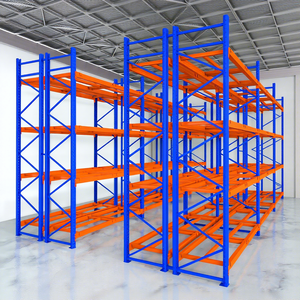
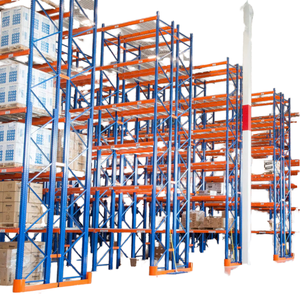
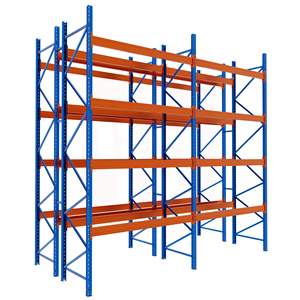
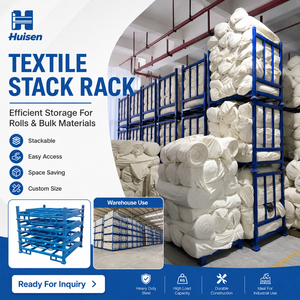
Strategic Evaluation Criteria for Top Warehouse Storage Racks Exporters
Selecting a global exporter for industrial warehouse storage racks is a multi-faceted capital expenditure decision that directly dictates operational throughput, safety compliance, and long-term supply chain resilience. As modern distribution centers evolve toward higher vertical clear heights, tighter aisle tolerances, and automated material handling integration (ASRS and AMR systems), procurement directors must evaluate manufacturers based on rigorous engineering fundamentals rather than baseline steel weight pricing alone.
Leading global racking exporters differentiate themselves through advanced FEA (Finite Element Analysis), certified structural steel metallurgy, precise roll-forming capabilities, and compliance with international structural codes such as the European standard EN 15512, the American RMI (Rack Manufacturers Institute) MH16.1 specification, and FEM 10.2.02 guidelines. Below is an executive breakdown of the key engineering dimensions required when auditing tier-1 export manufacturers.
Metallurgical Standard & Yield Strength
Top-tier exporters utilize certified cold-rolled structural steel coils (Q235B, Q355B, SS400, or S355JR). Yield strength testing verifies minimum yield capabilities exceeding 235 to 355 MPa, ensuring upright columns withstand buckling modes under extreme vertical loads without permanent deformation.
Beam Deflection Ratio (L/200 Limits)
Structural integrity mandates that under maximum design payload (e.g., 4000kg per beam level), horizontal deflection must not exceed L/200 (where L is beam span length). Exporters must provide certified load tables reflecting static and dynamic beam deflection metrics.
Seismic & Wind Damping Design
For installations in earthquake-prone corridors (e.g., Latin America NSR-10, US West Coast ASCE 7), export engineering teams apply dynamic response spectrum analysis to size baseplates, floor anchor bolts, and horizontal/diagonal frame bracing profiles appropriately.
Comparative Benchmark: Global Racking Exporters vs Technical Requirements
The matrix below summarizes the engineering capabilities, manufacturing standards, and export logistics features that procurement executives should demand from top-tier storage rack suppliers.
| Evaluation Parameter | Tier 1 Premium Exporters | Standard Manufacturers | Generic Commodity Suppliers |
|---|---|---|---|
| Steel Grade & Traceability | Q355B / S355JR with Mill Test Certificates (EN 10204 3.1) | Standard Q235B steel with partial batch testing | Uncertified commercial grade scrap-recycled steel |
| Surface Protection | Electrostatic Epoxy Powder Coat (60-80μm) / Hot-Dip Galvanized (ISO 1461) | Standard Spray Painting / Thin Powder Coating (<40μm) | Single-layer primer paint prone to chipping and oxidation |
| Beam Hook Connector Design | 4 to 5-Tooth Cold-Forged Locks with Safety Pins | 3-Tooth Stamped Connectors | 2-Tooth Weld-on Plates without positive locking pins |
| Structural Compliance | FEM 10.2.02, EN 15512, RMI, ANSI MH16.1, ISO 9001 | Local ISO 9001 certification only | No recognized international structural certification |
| Export Packaging | Steel-strapped bundle frames, corrugated protective cornering, moisture barrier film | Basic plastic wrapping | Loose container loading with high transit damage risk |
Why Global Logistics Leaders Partner With Our Export Network
With over four decades of dedicated racking design, robust automated roll-forming production lines, and an established supply chain reaching across North America, Europe, Latin America, and Southeast Asia, our OEM/ODM manufacturing facility delivers end-to-end reliability. From initial layout optimization using spatial 3D CAD/REVIT modeling to custom powder coating chemistry designed for cold storage environments (-30°C), we guarantee high structural integrity and operational uptime.
Future Trends in Industrial Storage Racking & Global Procurement
The industrial storage sector is undergoing a rapid paradigm shift driven by e-commerce fulfillment speed, soaring industrial land costs, and workforce evolution. Procurement officers must align current racking acquisitions with future automation compatibility to prevent premature asset obsolescence.
2D/4D Pallet Shuttle Integration
Traditional drive-in racking is increasingly replaced by radio pallet shuttle systems. Shuttle-ready racking channels allow autonomous shuttles to transport pallets within deep lanes, maximizing storage density by up to 80% over conventional selective setups.
Narrow Aisle (VNA) Verticality
To reduce footprint cost per pallet position, enterprise facilities are pushing rack heights past 15 meters using Very Narrow Aisle (VNA) turret trucks or ASRS stacker cranes. These systems demand millimetric floor alignment and tight upright straightness tolerances.
Green Steel & ESG Manufacturing
Global logistics operators now evaluate carbon footprints across their equipment suppliers. Top exporters are switching to low-emission electric arc furnace (EAF) steel processing and non-toxic, VOC-free powder coats to align with Scope 3 carbon reduction directives.
Frequently Asked Questions (FAQ) - Racking Procurement & Export
Addressing key technical, regulatory, and logistics queries raised by warehouse developers and facility operators.
How do global exporters ensure pallet racking structural safety during seismic events?
Structural engineers evaluate site-specific ground acceleration parameters (Ss and S1 values), soil classes, and concrete slab specifications. Based on these dynamic inputs, exporter engineering departments calculate enlarged seismic baseplates, heavy-duty floor anchor bolt quantities (e.g., Hilti or Fischer chemical anchors), and incorporate vertical diagonal X-bracing along the rear framework.
What is the difference between Q235B and Q355B steel in racking manufacturing?
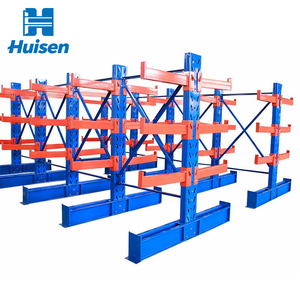
Q235B steel offers a minimum yield strength of 235 MPa, making it ideal for standard selective racking with beam loads under 2000kg/level. Q355B (equivalent to European S355JR) provides a higher yield strength of 355 MPa, allowing for thinner gauge profiles without compromising structural capacity, making it the preferred choice for high-bay upright frames, heavy cantilever arms, and high-capacity beam spans exceeding 3500mm.
How are heavy industrial racking components packaged to prevent ocean freight damage?
Export-grade packaging utilizes heavy-gauge steel banding over wood-cushioned dunnage blocks. Upright frames are nested in interlocking bundles wrapped in heavy-duty polyethylene stretch film with vapor corrosion inhibitor (VCI) additives. Beams are stacked with protective plastic spacers between connector hooks to eliminate paint abrasion during sea container transit.
When should a facility specify hot-dip galvanizing over powder coating?
Hot-dip galvanizing (HDG) per ISO 1461 is essential for outdoor storage racking, coastal high-salinity environments, and sub-zero cold storage facilities where condensation build-up occurs. HDG provides a thick zinc alloy metallurgical bond (usually 55-85μm) that self-heals minor scratches, preventing rust creep, whereas powder coating is ideal for controlled indoor dry warehouses.
What documentation should be supplied for custom clearance and site installation?
A complete export engineering dossier includes detailed CAD layout drawings, assembly sequence diagrams, steel Mill Test Certificates (MTC), structural calculation reports signed by a licensed structural engineer, Certificate of Origin (CO), and ISPM 15 heat-treatment certificates for any timber packing materials.