Engineered Storage Systems & High-Density Racking Solutions
Explore certified structural racking systems designed for heavy-duty industrial storage, seismic resilience, and warehouse automation integration.
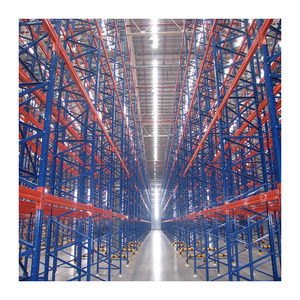
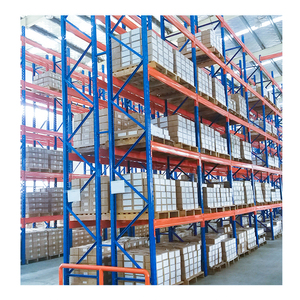
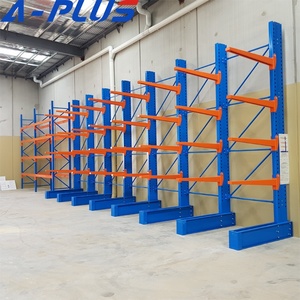
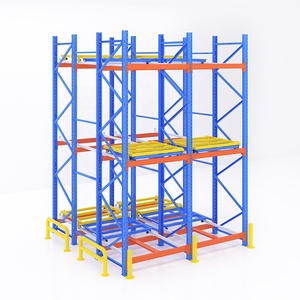
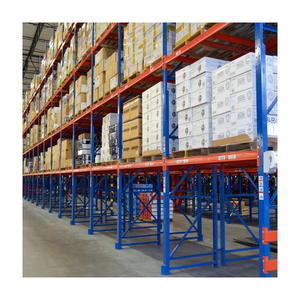
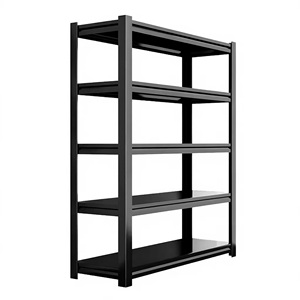
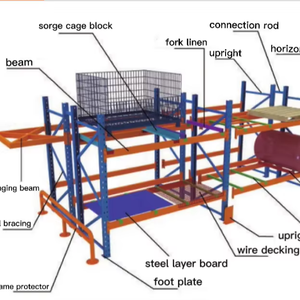
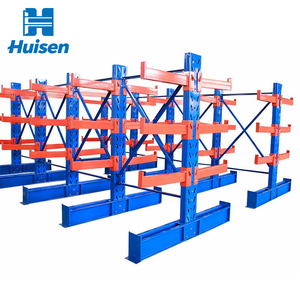
Global Warehouse Racking & Industrial Storage Landscape
A Data-Driven Technical Benchmark for Supply Chain Officers, Warehouse Operations Directors, and Civil Engineering Consultants.
Modern supply chain resilience, rapid e-commerce expansion, and cold-chain operations require ultra-reliable warehouse infrastructure. Selecting the ideal industrial racking manufacturer is no longer merely a matter of comparing steel prices per metric ton. It demands a rigorous evaluation of structural safety factors, Finite Element Analysis (FEA) modeling, seismic dynamic coefficients (such as ANSI/RMI MH16.1, EN 15512, and Colombia's NSR-10), surface coating durability, and seamless integration with Autonomous Mobile Robots (AMRs) and Automated Storage and Retrieval Systems (ASRS).
As logistics hubs transition toward higher vertical clearances (exceeding 14 to 40 meters in Automated High-Bay Warehouses), structural tolerances become paramount. A micro-deflection in an uncalibrated racking upright can lead to robotic shuttle jamming, operational downtime, or catastrophic structural collapse under seismic loads. This report delivers an exhaustive market breakdown of the top 10 global pallet racking factories and suppliers, analyzing structural compliance, manufacturing footprints, steel grades, and technological roadmaps.
Comparative Evaluation: Top 10 Global Pallet Racking Manufacturers
Benchmarking structural design capability, manufacturing capacity, international certification compliance, and automation readiness.
| Manufacturer / Supplier | Primary Global Headquarters | Core Structural Specialization | Structural Standards Compliance | Automation & ASRS Capability |
|---|---|---|---|---|
| 1. Stow Group / AndesRack | Belgium / Colombia / USA | Heavy-Duty Selective, Pallet Shuttle & Mezzanines | EN 15512, RMI MH16.1, NSR-10 Seismic | High (Movu Robotics Integration) |
| 2. SSI Schaefer | Germany | High-Bay ASRS, Automated Miniload & Racking | EN 15512, FEM 10.2.02, DIN ISO 9001 | Fully Integrated Automated Systems |
| 3. Jungheinrich AG | Germany | VNA Pallet Racking & Automated System Integration | EN 15512, ISO 14001, CE Certified | Proprietary Automated Guided Vehicles |
| 4. Mecalux | Spain | Selective Pallet Racking, Shuttle & Warehouse Software | RMI, FEM, EN Standards | High (Automated Warehouses & WMS) |
| 5. Interroll Group | Switzerland | Gravity Pallet Live Flow & Dynamic Conveyor Racking | ISO 9001, EN International Standards | Specialized Flow Module Automation |
| 6. Frazier Industrial Company | United States | Structural Steel Selective & Cantilever Racking | RMI, AISC Structural Code | Medium (Custom Heavy Industrial Integration) |
| 7. Daifuku Co., Ltd. | Japan | Automated High-Bay Pallet Racks & Material Handling | JIS Standards, RMI, ISO 9001 | Global Leader in High-Bay ASRS |
| 8. Kardex Group | Switzerland | Vertical Lift Modules & High-Density Storage Racks | EN Standards, ISO Certified | Automated Storage & Retrieval Modules |
| 9. Dexion (Constructor Group) | Norway / United Kingdom | Industrial Shelving, Selective & Mobile Pallet Racks | FEM 10.2.02, EN 15512 Compliance | Medium to High (MoviSpace Mobile Systems) |
| 10. Mracking / OEM Manufacturing Hubs | China / Asia-Pacific | Wholesale Heavy Duty Pallet Racking & Cantilever | ISO 9001, CE, AS4084 Standard Compliance | Modular Add-on Shuttle Compatibility |
Structural Steel Integrity
Leading factories employ cold-rolled certified high-tensile structural coil steel (e.g., S355, Q345B) engineered to maintain elastic recovery under peak point loads of up to 4,000 kg per beam level.
Precision Roll-Forming
Automated multi-station punch and roll-forming production lines guarantee dimensional tolerances within ±0.5 mm across 12-meter continuous upright columns, eliminating localized stress risers.
Seismic & Wind Resistance
Advanced engineering incorporates non-linear dynamic seismic modeling, heavy-duty baseplates, and high-tensile chemical anchoring systems to prevent structural overturning during seismic events.
Industrial Racking Development Trends (2025–2030)
Emerging structural engineering technologies transforming static storage into intelligent logistics assets.
Modern mega-warehouses are incorporating real-time strain-gauge sensor nodes embedded directly into critical racking uprights and aisle bracing. These IoT sensors continuously stream stress vectors, unexpected forklift impacts, and micro-deflection data to central WMS dashboards. Early detection of structural fatigue prevents unrecorded rack failures and streamlines preventive maintenance.
The industry is rapidly shifting from traditional Drive-In racking to 2D and 3D Autonomous Pallet Shuttle systems (such as Movu atlas shuttle networks). By removing aisles previously dedicated to fork trucks, shuttle-ready racking structures increase volumetric space utilization by up to 80% while dramatically accelerating throughput in deep-lane channels.
Corrosive operational environments—such as port-adjacent free trade zones (e.g., Barranquilla, Cartagena) or blast-freezer cold storage facilities operating at -30°C—demand advanced surface treatments. State-of-the-art factories employ automated multi-stage epoxy powder coating (70–90 microns thickness) and hot-dip galvanizing to resist oxidation, chipping, and chemical degradation for over 25 years.
Next-generation racking components feature standardized, high-precision teardrop or structural beam-to-column connectors with safety locks. This modular boltless architecture reduces installation lead times by up to 45%, allows rapid beam pitch adjustment at 50 mm / 75 mm increments, and simplifies modular aisle expansions as operational volume expands.
Future Procurement Trends: Total Cost of Ownership (TCO) Framework
Strategic purchasing criteria for procurement managers to optimize capital expenditure (CapEx) and operational safety.
When procuring heavy-duty industrial storage racks, evaluating supplier quotations on initial purchase price alone frequently results in hidden secondary expenses. Operational downtime caused by frame damage, inadequate floor anchor depth, or poor load beam deflection ratios can exceed initial rack spending by 300% over a 10-year service life cycle. Modern procurement teams utilize a holistic TCO evaluation framework:
1. Material Standard & Yield Strength
Verify that your supplier utilizes certified structural steel with specified minimum yield strengths (e.g., fy ≥ 355 N/mm²). Low-grade non-certified steel requires thicker profiles, increasing freight costs without offering superior yield performance under dynamic impact loads.
2. Slab & Anchoring Engineering
A racking system is only as stable as the underlying concrete slab. Leading suppliers perform localized slab punch-through calculations, specifying expanding or epoxy chemical anchor studs based on concrete compressive strength (fc' ≥ 28–35 MPa) and local seismic site class.
3. Freight Volume & Packaging (CKD)
International logistics costs represent up to 20% of final rack cost. High-capacity factories optimize Complete Knocked Down (CKD) bundle packaging, maximizing 40ft High-Cube container fill rates up to 26,000 kg without component deformation during sea transits.
Require a Customized Structural Layout & Seismic Study?
Our senior structural engineering team provides complete layout design, load modeling, and compliance documentation per EN 15512 and RMI specifications.
Enterprise Strengths: World-Class Manufacturing & Global Engineering Reach
Combining over 45 years of continuous structural engineering expertise with global production scale and local execution capability.
As part of a global industrial group with over 45 years of racking and automation history (since 1977), our organization operates 8 state-of-the-art production mega-facilities worldwide, generating an annual turnover exceeding €1.0 Billion. Supported by a skilled workforce of more than 2,000 employees, we engineer, manufacture, and deploy high-performance storage solutions across 60+ countries.
Our recent global expansion includes a flagship 240,000 sq ft racking manufacturing plant in Calhoun, Georgia (USA)—the group's eighth global factory—reinforcing rapid lead times, direct component availability, and competitive logistics for major logistics hubs across North America, Latin America, and Europe.
ESG & Sustainability Commitment
We are actively transitioning toward a 100% electric commercial fleet by 2028, backed by over 7,000 solar panels installed across our manufacturing plant roofs and green waterway transport logistics that reduce road transport carbon emissions for global project deliveries.
Seismic Engineering Compliance (NSR-10 / RMI)
In high-hazard seismic regions—such as Cali, Medellín, Bogotá, and the Andean geographical corridors—all rack frames, top bracing, baseplates, and anchor embeds are custom-calculated according to site-specific seismic coefficients, floor slab strength, and exact operational load spectra rather than standard off-the-shelf catalog formulas.
Cold Storage & Saline Environment Coatings
For coastal logistics zones (such as Barranquilla, Cartagena) and food/beverage cold-storage facilities, component specifications include continuous pre-galvanized profiles, high-durability polyester powder coating, and specialized stainless or coated anchoring to guarantee resistance against saline moisture and thermal cycling stress.
Frequently Asked Questions (FAQ) for Pallet Racking Sourcing
Expert engineering insights addressing standard questions faced by logistics buyers and facility managers.
Why is structural seismic calculations mandatory for pallet racking in Colombia and Andean regions?
Much of Colombia and the Andean zone sit within intermediate to high seismic hazard categories governed by building regulations like NSR-10. Static load design alone is insufficient; racking structures must absorb dynamic ground acceleration and lateral sway under full pallet load. Standardized generic rack designs risk joint shear, column buckling, or anchor pull-out during earthquake activity. Our team custom-engineers frame bracing, heavy baseplates, and chemical anchors per site-specific seismic coefficients.
What is the maximum allowable beam deflection limit for selective pallet racking?
Under standard European (EN 15512) and American (RMI) engineering design codes, beam deflection under maximum working load must not exceed L/200 (where L is the clear span length of the beam). For example, a 2,700 mm beam loading level under maximum specified pallet weight must experience a maximum vertical deflection of ≤13.5 mm. Maintaining strict deflection limits ensures smooth forklift pallet placement and prevents permanent plastic deformation of steel profiles.
Which pallet racking configuration is best suited for high-SKU versus high-volume operations?
For operations with high-SKU diversity requiring immediate direct access to every single pallet position (e.g., 3PL, retail fulfilment), Selective Pallet Racking is the most versatile and cost-effective system. Conversely, for high-volume, low-SKU applications (e.g., beverage, cold storage, agricultural export), Pallet Shuttle Systems or Push-Back Racking provide maximum volumetric storage density by dramatically increasing pallet positions per square meter.
How do automated shuttle systems compare with traditional drive-in racking?
While traditional Drive-In racking offers high density, it requires fork trucks to physically enter the rack structure, resulting in higher risk of frame damage, slower pallet handling cycles, and strict LIFO constraints. Automated Pallet Shuttles (such as 2D Movu atlas systems) utilize self-propelled radio-controlled shuttles inside deep storage channels. This drastically speeds up throughput, minimizes forklift collisions, reduces labor requirements, and supports both FIFO and LIFO operational logic.
What documentation and site parameters are required to obtain a racking project proposal?
To request an accurate engineering load study and proposal, buyers should provide: (1) Warehouse CAD floor plan layout and clear ceiling height under roof trusses, (2) Floor slab specification (thickness, reinforcement, concrete compressive strength), (3) Exact pallet dimensions (length × width × height) including overhanging load, (4) Maximum and average weight per pallet, (5) Material handling equipment (MHE) specs including forklift lift height and aisle turning radius, and (6) Warehouse city location to calculate wind/seismic design criteria.