Featured Industrial Racking Systems
Engineered high-density storage hardware certified for international distribution and seismic compliance
Global Pallet Rack Storage System Procurement & Export Landscape
The modern supply chain ecosystem demands unprecedented operational agility, volumetric efficiency, and structural safety compliance. As global supply chains shift toward automated warehousing, high-density storage, and stringent localized building codes (such as EN 15512, ANSI/MH16.1, and regional seismic mandates like NSR-10), choosing the right pallet rack storage system exporter and wholesaler has evolved from a standard equipment purchase into a strategic engineering partnership.
International B2B procurement managers, logistics directors, and warehouse architects face complex structural and logistical challenges. Selecting off-the-shelf, non-certified racking components introduces severe structural risk, payload deflection failures, and legal non-compliance during local site inspections. Top-tier global exporters differentiate themselves by supplying high-tensile structural steel (e.g., S355 / Q355B grades), custom seismic bracing, optimized hot-dip galvanizing or electrostatic powder-coating finishes, and seamless integration capabilities with Autonomous Mobile Robots (AMRs), Automated Guided Vehicles (AGVs), and Radio Shuttle runners.
Deep-Dive: Top 10 Pallet Rack Storage Systems for Exporters & Wholesalers
Understanding the operational design, pallet capacity index, structural load thresholds, and ideal deployment scenarios is essential for global logistics engineering. Below is an authoritative technical breakdown of the 10 standard racking architectures supplied by leading international exporters.
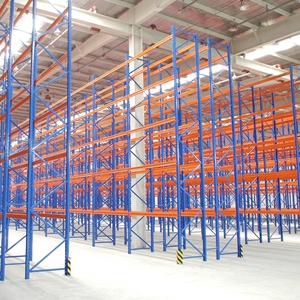
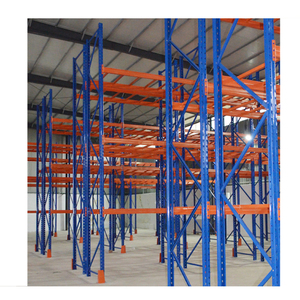
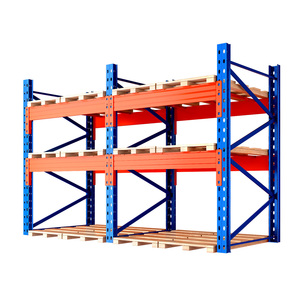
1. Selective Pallet Racking Systems
Operational Profile: 100% direct accessibility to every SKU. It is the most universally deployed industrial storage framework globally.
Technical Specification: Configured using roll-formed teardrop or structural box beam profiles. Adjustable beam levels on 50mm or 75mm pitch increments allow custom beam height setting.
Best For: High-SKU, variable-inventory distribution centers, third-party logistics (3PL) facilities, and retail distribution nodes.
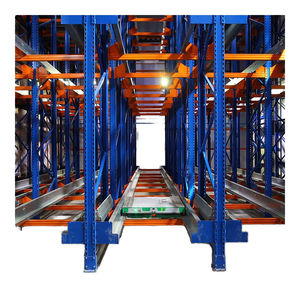
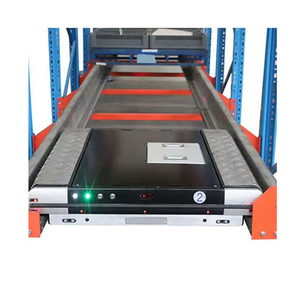
2. Radio Shuttle & Runner Systems
Operational Profile: Semi-automated deep-lane storage operating on either LIFO (Last-In, First-Out) or FIFO (First-In, First-Out) inventory principles.
Technical Specification: Self-powered battery shuttles run along rails inside storage channels, lifting and retrieving pallets controlled via Wi-Fi/RF remotes or WMS API integration.
Best For: High-volume, low-SKU bulk goods, beverage distribution, and space-constrained cold storage environments.
3. Very Narrow Aisle (VNA) Racking
Operational Profile: Maximizes cubic warehouse volume by narrowing floor aisles down to 1.5m – 1.8m while elevating vertical storage up to 17+ meters.
Technical Specification: Utilizes specialized articulated or turret VNA forklifts guided by floor-embedded wire guidance systems or mechanical steel side rails.
Best For: High-density distribution hubs facing elevated industrial land costs or strict building footprint limits.
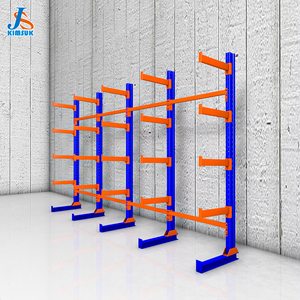
4. Heavy-Duty Cantilever Racking
Operational Profile: Eliminates front vertical columns, providing unobstructed horizontal loading for long, continuous, or awkwardly shaped inventory.
Technical Specification: Heavy-gauge structural steel columns with adjustable cantilever arms secured via high-strength steel pins, capable of supporting multi-ton line loads.
Best For: Steel pipes, extruded aluminum, timber packs, plastic tubing, gypsum boards, and heavy industrial raw materials.
5. Drive-In & Drive-Thru Racking
Operational Profile: Maximum floor space utilization (up to 85% reduction vs standard aisle layouts) by allowing forklifts to drive directly into storage lanes.
Technical Specification: Continuous cantilevered support rails anchored to structural frames eliminate cross-beams between lanes. Formed guide rails protect frames during entry.
Best For: Uniform non-perishable goods, seasonal inventory storage, and high-density warehouse configurations.
6. Push-Back Racking Systems
Operational Profile: Dynamic high-density storage using nested wheel carts that slide along inclined steel rails under gravitational force.
Technical Specification: As a new pallet is loaded from the aisle face, it gently pushes back previously stored pallets. Unloading relies on gravity to bring back inner pallets automatically.
Best For: Medium-density LIFO inventory setups with 2 to 6 pallet-deep lanes requiring faster picking rates than drive-in system options.
7. Automated Storage & Retrieval Systems (ASRS)
Operational Profile: Fully automated high-bay racking systems managed by crane stackers or high-speed vertical lift modules under computer control.
Technical Specification: Precision-engineered racking structures built to millimeter-level tolerances, integrated directly with automated crane runways and conveyor interfaces.
Best For: Mega distribution centers, 24/7 manufacturing hubs, and labor-optimized logistics parks.
8. Mezzanine Supported Racking Platforms
Operational Profile: Multi-tier storage platforms utilizing heavy-duty rack columns as structural uprights to create elevated usable floor space above base storage levels.
Technical Specification: Integrates steel decking, bar grating, safety handrails, staircases, and pallet drop gates engineered to accommodate heavy localized live loads.
Best For: E-commerce fulfillment hubs requiring multi-level hand-picking, packing stations, and office workspace over storage bays.
9. Gravity Pallet Flow Racking
Operational Profile: Dynamic FIFO flow storage utilizing full-width roller beds mounted on a downward pitch slope.
Technical Specification: Pallets loaded at the higher charge end slide down under controlled gravity speed, regulated by internal centrifugal brake rollers and entry separators.
Best For: Perishable food distribution, pharmaceutical manufacturing, and high-turnover fast-moving consumer goods (FMCG).
10. Automated Cold Storage Racking
Operational Profile: Heavy-duty, corrosion-resistant racking specialized for operating continuously in deep-freeze environments down to -30°C.
Technical Specification: Fabricated with low-temperature ductile structural steel alloys, special anti-frost powder coats, and hot-dip galvanizing to prevent hydrogen embrittlement and rust.
Best For: Cold chain logistics, frozen food processing plants, vaccine storage facilities, and refrigerated export-import port terminals.
Technical Comparison Matrix & Data Visualization
Procurement teams must compare systems based on structural capacity, floor footprint efficiency, unit cost index, and automation readiness. The data matrix below provides a clear decision-making model for international warehouse planners:
| Racking System Type | SKU Accessibility | Footprint Utilization | Load Capacity / Beam Level | Relative Cost Index | Automation Compatibility |
|---|---|---|---|---|---|
| Selective Pallet Racking | 100% (Direct) | 40% – 50% | Up to 4,500 kg | Low (Baseline 1.0) | Manual / AGV Forklift |
| Radio Shuttle System | Filtered (FIFO/LIFO) | 75% – 85% | Up to 2,000 kg/pallet | Medium-High (2.4) | High (Integrated Shuttle) |
| Very Narrow Aisle (VNA) | 100% (Direct) | 65% – 75% | Up to 3,500 kg | Medium (1.5) | Semi-Automated (Guided) |
| Drive-In Racking | Low (LIFO) | 60% – 75% | Up to 1,500 kg/pallet | Low-Medium (1.3) | Manual Only |
| Push-Back Racking | Medium (LIFO) | 65% – 75% | Up to 1,500 kg/cart | Medium (1.8) | Manual Forklift |
| Automated High-Bay ASRS | 100% Automated | 85% – 95% | Up to 3,000 kg | High (4.5+) | Fully Autonomous |
| Cold Storage Racking | High / Full Option | 70% – 85% | Up to 4,000 kg | Medium-High (2.1) | Pallet Runner Compatible |
Global Structural Compliance & International Certification Standards
Building codes across North America, Europe, Asia-Pacific, and South America mandate rigorous structural verification for industrial steel storage racks. Exporters must provide full structural calculations rather than generic static loading tables.
Key International Design Codes:
- EN 15512 / FEM 10.2.02: European steel racking structural code specifying safety factor calculations for global buckling, beam end connectors, and floor anchor shear stresses.
- ANSI/MH16.1 (RMI): Specification for the design, testing, and utilization of industrial steel storage racks widely enforced across the United States and Americas.
- Seismic Design Codes (e.g., NSR-10 / ASCE 7): Essential for facilities located in earthquake-prone zones (such as South America's Andean region or the Pacific Ring of Fire). Frame calculations must factor in ground acceleration coefficients, baseplate anchor embedment depth, and dynamic seismic drift.
To protect racking systems in coastal ports (such as Barranquilla, Cartagena, or Houston) or high-humidity cold rooms, top manufacturers utilize multi-stage chemical pretreatment, zinc-phosphate coating, electrostatic powder coating baked at 180°C–200°C, and hot-dip galvanizing complying with ISO 1461 standards.
Future Procurement Trends in Industrial Storage Racking
The global warehousing and logistics industry is undergoing a structural transition toward automation, sustainability, and data-driven material handling. Sourcing decisions made today must accommodate multi-decade technological advancements.
1. AMR & AGV Robotic Integration
Conventional racking layouts are being re-engineered with wider bottom floor openings, specialized magnetic track guides, and reinforced baseplate zones to allow seamless navigation for Autonomous Mobile Robots (AMRs) and automated forklifts.
2. Green Steel & ESG Compliance
Leading exporters are aligning with international ESG programs by sourcing decarbonized recycled steel, installing rooftop solar panel arrays on manufacturing plants, and replacing diesel transport routes with eco-friendly waterway transport.
3. IoT Structural Health Monitoring
Next-generation racking installations incorporate embedded strain gauge sensors and impact detection nodes that alert warehouse managers in real time via WMS dashboards whenever a forklift impact exceeds allowable structural strain thresholds.
4. Scalable Modular Architecture
Modern enterprise buyers demand modular components that can transition from standard selective racking to semi-automated radio shuttle lanes or multi-tier mezzanine picking structures without total tear-down or frame disposal.
Why Enterprise Buyers Trust Our Global Racking Export Infrastructure
Backing our position as a globally leading pallet rack storage system exporter and wholesaler is a proven manufacturing history spanning over 45 years of innovation (established 1977). Operating 8 state-of-the-art production facilities worldwide with annual group revenues exceeding €1.0 Billion, our global supply chain guarantees rapid production turnarounds, exceptional steel batch consistency, and reliable international logistics delivery.
Manufacturing & Engineering Edge:
- Automated Roll-Forming Lines: Precision continuous cold-roll forming ensures uniform beam and upright cross-sectional tolerances, maximizing structural load carrying limits.
- Site-Specific Structural Engineering: Custom finite element analysis (FEA) tailored to site floor slab specifications, clear heights, seismic hazard indices (NSR-10 / AISC), and local wind load requirements.
- Global Export & On-Site Installation: Active supply footprints across 60+ countries with bilingual engineering teams (English & Spanish) overseeing site erection, load testing, and annual racking safety inspections.
Enterprise ESG Commitment:
- Targeting a 100% electric forklift & logistics vehicle fleet by 2028 across manufacturing hubs.
- Over 7,000 solar panels installed across primary factory roof infrastructure to minimize scope 1 and scope 2 operational carbon footprints.
- Strategic utilization of inland waterway transport networks to cut long-haul road diesel transport emissions during global export freight routing.
International Sourcing FAQ for Pallet Rack Buyers
Does pallet racking require site-specific seismic design calculations?
Yes. Major logistics zones—including South America's Andean region (Colombia NSR-10 standards), the US West Coast (ASCE 7), and parts of Southern Europe—lie in intermediate to high seismic hazard zones. Upright frame depth, steel gauge, baseplate surface area, and chemical anchor bolt embedment depths must be engineered against site seismic coefficients, soil classification, and actual pallet payload weight distribution.
How do hot-dip galvanized and powder-coated finishes compare for humid environments?
In high-humidity coastal port locations (such as Barranquilla, Cartagena, or tropical logistics parks) or sub-zero cold storage facilities, hot-dip galvanizing (per ISO 1461) provides metallurgical zinc-alloy barrier protection ideal for aggressive environments. Electrostatic powder coating provides exceptional durability and chemical resistance for standard climate-controlled industrial operations.
What parameters are required to generate an optimized warehouse layout study?
To produce a compliant racking engineering layout, buyers should provide: (1) Architectural CAD floor plans detailing clear warehouse heights and column grids; (2) Concrete floor slab specs including thickness, compressive strength, and rebar positioning; (3) Pallet specifications (W x D x H, gross weight, and bottom runner layout); (4) Total SKU counts and daily inbound/outbound movement metrics; (5) Material handling equipment specs (forklift turning radius, lift height capacity).
When should an enterprise transition from manual selective racking to shuttle automation?
Automation ROI typically becomes advantageous when: warehouse land costs in prime trade zones make vertical expansion essential; operations run multi-shift 24/7 schedules; cold storage energy costs dictate maximum pallet density per cubic meter; or high-throughput batch order fulfillment requires reduced forklift travel distances.
Ready to Engineer Your High-Density Storage Solution?
Speak directly with our structural engineering and global logistics export specialists. Get custom layout designs, finite element analysis structural reports, and factory-direct pricing for your next warehouse project.
Get a Quote