Engineering-Grade Industrial Racking & Shelving Systems
Explore certified heavy-duty storage configurations designed to optimize spatial volumetric efficiency, ensure seismic structural safety, and streamline global B2B procurement.
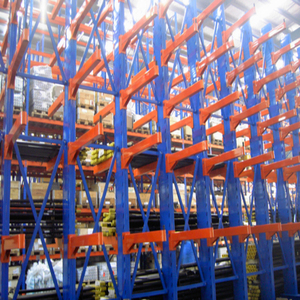
CE Certified Industrial Cantilever Rack System for European Market
Engineered for long, heavy loads such as steel pipes, timber, and profiles. Features unhindered front access with custom arm capacities up to 2,500 kg.
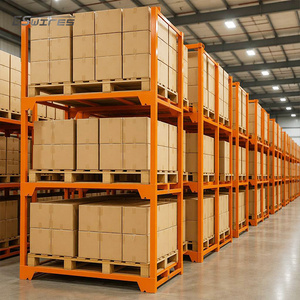
Heavy Duty Warehouse Industrial Storage Nestainer Metal Portable Racks
Stackable and collapsible structural steel nests. Ideal for seasonal dynamic storage, bulk material staging, and bulk cargo logistics footprint savings.
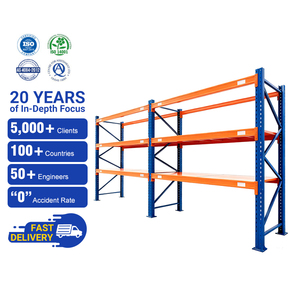
Customized Heavy Duty Industrial Storage Shelves Steel Pallet Racking
High-strength Q235B cold-rolled frame structure. Offers 100% direct SKU selective accessibility with load limits up to 4,500 kg per level.
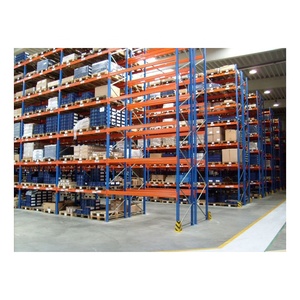
Customized Heavy Duty Selective Pallet Racking System Adjustable Steel
Fully adjustable upright pitch for versatile beam settings. Powder-coated finish provides corrosion protection for FMCG distribution hubs.
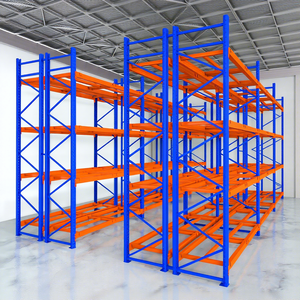
Wholesale Cold Rolled Steel Industrial Pallet Rack Multi Level Stacking Racks
Multi-tiered vertical expansion setup. Designed for high clear-height warehouses seeking maximum vertical space utilization and order picking efficiency.
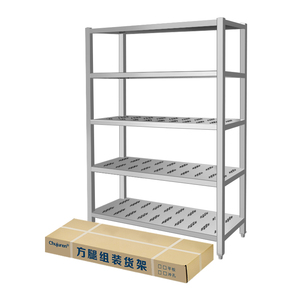
Customizable Stainless Steel Storage Shelving Rack Square Legs Durable
SS304/SS316 sanitary steel shelving modules. Engineered specifically for food production, pharmaceutical cold chains, and cleanroom sterile environments.
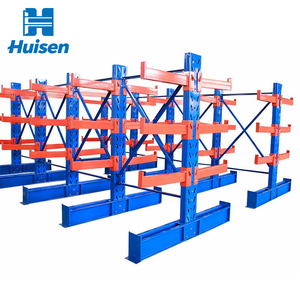
Wholesale High Density Single Double Side Cantilever Rack Shelving
Single and double-sided heavy arm structural columns. Perfectly handles non-standard sheet metal, plastic tubing, and heavy raw material bundles.
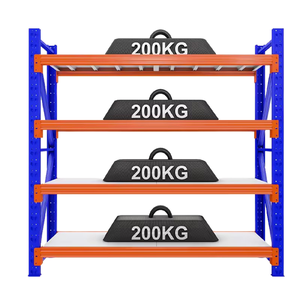
Industrial Heavy Duty Pallet Rack System 1000-5000kg Capacity Steel
Maximum-strength seismic-rated racking matrix. High load limit per beam pair with corrosion-resistant electrostatic protective coating.
Strategic Evaluation of Global Industrial Racking & Shelving Manufacturers
Modern intra-logistics infrastructure demands structural precision, high volumetric throughput, and uncompromising structural integrity. Selecting an industrial racking and shelving supplier requires evaluating structural engineering compliance (such as EN 15512, RMI, and FEM 10.2.02 standards), raw steel metallurgical properties, dynamic load coefficients, and anti-corrosion surface treatments. With modern supply chains shifting toward high-density automated handling and zero-downtime warehousing, global enterprise procurement officers must scrutinize original design calculations and seismic vulnerability profiles prior to capital allocation.
1. Structural Metallurgy and Load-Bearing Calculations
The foundation of any high-bay racking system rests on the tensile yield strength of its structural upright profiles. Premier global manufacturers utilize high-grade Q235B and Q355B cold-rolled steel, engineered into multi-flanged upright sections that maximize the radius of gyration. This geometry dramatically reduces buckling potential under axial loading. Continuous beam-to-upright hook connections with safety lock pins prevent accidental beam dislodgement caused by forklift impact. When specifying systems, engineers must demand Finite Element Analysis (FEA) documentation validating safety stress limits under maximum rated payload.
2. Seismic-Aware Engineering & Floor Slab Integration
High-density racking installations in seismically active zones require custom anchor bolt sizing, baseplate surface contact calculations, and horizontal/vertical bracing truss systems. A generic off-the-shelf rack cannot guarantee structural survival during lateral ground acceleration. Leading exporters conduct floor slab dynamic stress analysis, accounting for slab thickness, concrete compressive strength (psi/MPa), and soil subgrade modulus to properly distribute anchor loads without triggering slab punching shear failure.
Why Global Logistics Enterprises Partner With Us
Combining 45+ years of European structural engineering excellence with high-capacity global manufacturing hubs.
Precision Cold-Formed Steel
State-of-the-art automated roll-forming lines deliver sub-millimeter punching precision across all beam connector hooks and upright profile channels, ensuring absolute installation alignment.
Seismic Compliance (EN 15512 / RMI)
Every structural system is tailored to local site seismic hazard coefficients, utilizing heavy-duty baseplates, expanded expansion anchors, and specialized X-bracing geometries.
Advanced ESG & Clean Production
Committed to zero net-carbon logistics. Our manufacturing plants operate with over 7,000 roof-mounted solar panels, recycled powder-coating systems, and eco-optimized transport routes.
Global Supply Chain Resiliency
With 8 state-of-the-art production facilities spanning North America, Europe, and Asia, we ensure ultra-fast lead times and duty-optimized B2B export shipping logistics worldwide.
Modular Automation Compatibility
Engineered to seamlessly integrate with Autonomous Mobile Robots (AMRs), 2D Pallet Shuttles, and Automated Storage and Retrieval Systems (AS/RS) without structural retrofit.
Lifetime Structural Integrity Guarantee
Rigorous quality testing guarantees long-term durability against impact fatigue, micro-cracking, and chemical corrosion in cold-chain or humid coastal warehouse zones.
Future Trends in Industrial Racking & Warehouse Procurement
The industrial warehouse equipment sector is undergoing a massive transformation driven by e-commerce fulfillment pressures, labor availability limits, and rapid land cost appreciation in industrial corridors. Corporate procurement leaders must align their capital expenditure with long-term technological and economic trends:
1. Convergence of Dynamic Shuttles and Heavy Pallet Racking
Traditional static storage is rapidly yielding market share to 2D Pallet Shuttle systems and automated goods-to-person workflows. Modern heavy-duty pallet racks are now designed with pre-machined guide rails, integrated busbar power channels, and sensor-reflector brackets to host intelligent mobile shuttles. This hybrid model increases pallet position density by up to 80% over standard selective racking while maintaining low labor intensity.
2. Advanced Surface Coatings for Extreme Environments
Cold-chain storage units (-30°C) and coastal port distribution hubs suffer accelerated metal oxidation due to condensation cycles and airborne saline particles. Procurement trends show a sharp move toward high-thickness hot-dip galvanizing (HDG) conforming to ISO 1461 and epoxy-polyester hybrid powder coatings applied via automated electrostatic lines. These coatings protect structural steel from rust creep and micro-fractures over decades of continuous forklift loading.
3. Digital Twin Simulation and Structural Health Monitoring
Next-generation logistics facilities are integrating IoT deformation sensors and strain gauges directly into critical rack uprights. Connected to a digital twin warehouse management system (WMS), these sensors trigger real-time alerts when a structural rack suffers a severe forklift strike or exceeds safe deflection thresholds (L/200 standard), dramatically elevating warehouse safety governance.
Engineering Comparison of Heavy Industrial Racking Architectures
Review the key structural performance specs across standard industrial racking configurations to determine optimal operational alignment:
| Racking Architecture | Max Load Capacity / Tier | Volumetric SKU Density | Direct SKU Accessibility | Optimal Handling Equipment | Seismic Resistance Index |
|---|---|---|---|---|---|
| Selective Pallet Racking | 1,000 kg – 4,500 kg | Moderate (40%-50%) | 100% Direct Access | Standard Counterbalance / Reach Truck | High (Custom Anchor Bracing) |
| Heavy Duty Cantilever Racks | 500 kg – 2,500 kg / arm | High (For Long Goods) | 100% Unobstructed Front | Side Loader / Overhead Crane | Superior (Heavy H-Beam Column) |
| Portable Nestainer Racks | 1,000 kg – 2,000 kg | Flexible Bulk Staging | Block Stacking Access | Standard Forklift Truck | Medium (Requires Flat Level Slab) |
| Multi-Tier Mezzanine Storage | 300 kg – 1,000 kg / sqm | Maximum Floor Multiplication | 100% Manual / Tote Access | VNA Trucks / Vertical Conveyors | Custom Structural Frame Calculation |
| 2D Pallet Shuttle Matrix | 1,500 kg / pallet position | Ultra-High (80%-90%) | FILO / LIFO / Automated FIFO | Automated Shuttle Carrier + Lift | Maximum (Interlocked High-Bay Lattice) |
Frequently Asked Questions by B2B Procurement Officers
Direct engineering answers regarding structural compliance, international shipping standards, customization, and seismic safety.
How do global seismic codes (such as NSR-10, ASCE 7, or EN 1998) impact rack design?
What steel grades and surface finishes are best suited for cold storage facilities?
What critical data is required to calculate dynamic rack beam deflection?
Can standard heavy-duty selective racking be upgraded for future automated shuttle integration?
What installation and safety inspection standards must enterprise buyers adhere to?
What lead time and container packing standards apply to international B2B orders?
Request a Custom Engineering Design & Load Calculation
Plan your warehouse expansion with industry-leading structural engineers. Receive detailed CAD layout proposals, seismic compliance calculations, and direct factory-direct wholesale pricing within 24 hours.