Industrial Engineering Whitepaper

OEM/ODM Warehouse Racking System Exporters & Wholesale Suppliers

High-Density Pallet Storage, Dynamic Seismic Engineering, Robotic Shuttle Integration & Precision Cold-Rolled Structural Steel Systems

Featured Industrial Storage & Racking Systems

Explore our core engineering catalog—manufactured to EN 15512, FEM 10.2.02, RMI, and AS4084 international structural standards.

45+
Years Racking Expertise
8
Global Manufacturing Hubs
60+
Export Destination Markets
€1.0B+
Global Revenue Footprint

OEM/ODM Custom Manufacturing & Engineering Capabilities

Providing global B2B buyers, EPC contractors, and rack distributors with structural integrity, precision cold-roll forming, and tailored OEM specifications.

Finite Element Analysis (FEA) & Seismic Design

Modern warehouse racking systems are structural engineered frames subjected to complex dynamic loads, seismic shocks, and material fatigue. Our OEM engineering suite applies high-level Finite Element Analysis (FEA) to model stress distribution across beam-to-column connections, upright perforations, and baseplate anchoring under real-world warehouse conditions.

  • Compliance with ASCE 7, NSR-10, EN 15512, and RMI MH16.1 structural standards.
  • Custom calculations for local zone ground acceleration and floor slab load bearing.
  • Dynamic simulation for sway buckling, torsional rigidity, and impact endurance.

Automated Cold-Roll Forming & Robotic Welding

Precision manufacturing is essential for global inter-changeability and structural reliability. Our manufacturing facilities employ continuous automated cold-roll forming lines with real-time laser measurement to guarantee structural tolerances of less than ±0.5mm across 12-meter upright profiles.

  • Robotic MIG/TIG welding for beam connector plates ensuring uniform weld penetration.
  • High-yield prime structural steel (Q235B, Q355B, SS400, EN10025 S355).
  • Custom beam profile design: Box Beams, Step Beams, and Open-C Profiles.

Surface Treatments: Powder Coating & Hot-Dip Galvanization

Corrosion protection dictates the operational lifecycle of warehouse racking, especially in cold-chain logistics (-30°C) and coastal high-humidity environments. We operate eco-friendly, automated 60-80 micron electrostatic epoxy-polyester powder coating lines alongside certified Hot-Dip Galvanizing (HDG per ISO 1461).

  • Salt spray tested for 500+ hours to prevent sub-surface oxidation.
  • Custom RAL color matching for corporate branding and safety zoning.
  • Pre-galvanized zinc steel components for high-moisture agricultural storage.

OEM Brand Private Labeling & B2B Export Packaging

We empower international distributors, racking brands, and material handling integrators by supplying fully branded, knock-down (CKD) racking systems. Every shipment is optimized for maximum container utilization to reduce ocean freight expenses.

  • Custom stamped column branding, custom steel stickers, and private label cartons.
  • Container loading diagrams designed for safe forklift offloading at destination ports.
  • Comprehensive installation manuals, CAD layout schematics, and structural certificates.

Racking System Engineering & Specification Benchmark

A direct technical comparison of primary industrial racking configurations for procurement teams and supply chain engineers.

Racking Architecture Primary Material Grade Pallet Selectivity Max Load / Level Space Utilization Ideal B2B Application
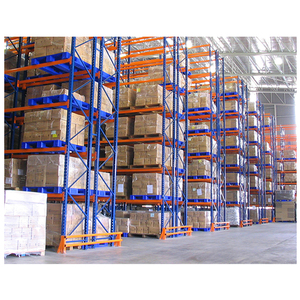
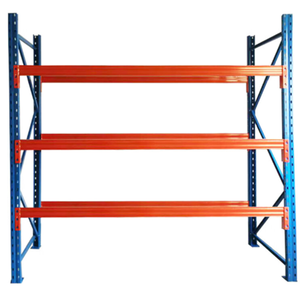
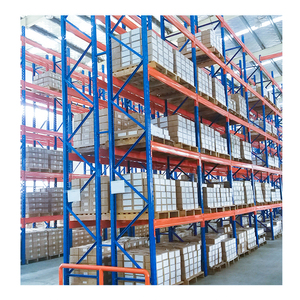
Selective Pallet Racking Q235B / Q355B Steel 100% Direct Access 1,000 - 4,500 kg 40% - 50% Mixed-SKU 3PL, FMCG & Retail Fulfillment
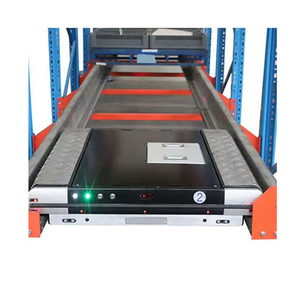
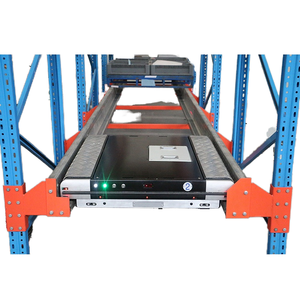
Radio Shuttle Racking Q355B High-Yield Alloy FILO / FIFO Automated 1,500 - 2,000 kg 80% - 85% Cold Storage, Food & Beverage, High Density
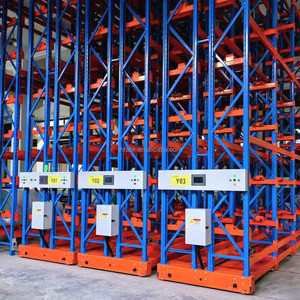
Electric Mobile Racking Q235B Heavy Structural 100% Selective when Open Up to 24,000 kg / Bay 85% - 90% High Land Cost Zones, Cold Storage, Pharma
Cantilever Racking Hot-Rolled Heavy H-Beam 100% Access to Arms 500 - 3,000 kg / Arm Custom Vertical Steel Pipe, Timber, Aluminum Extrusions
AGV / AMR Shuttle Systems Precision Machined Profile Automated System Guided 1,000 - 1,500 kg 90%+ Cubic Vol. Smart Automated Warehouses (AS/RS Integrations)

Future Purchasing Trends in Global Storage Systems (2025–2030)

Insights into how enterprise warehouse operators and global supply chain directors are evaluating next-generation storage infrastructure.

1. Accelerated Shift Towards Hybrid Automated Storage (AS/RS & AMR Integration)

Traditional static racking is rapidly giving way to hybrid infrastructure designed from day one to accommodate Autonomous Mobile Robots (AMRs), Automated Guided Vehicles (AGVs), and 2D/3D Pallet Shuttle carts. Purchasing managers are no longer buying structural steel in isolation; they require structural tolerances that allow robotic laser navigation, sensors, and rack-mounted charging channels. Racking systems are now active electromechanical hubs rather than passive storage shelves.

2. Height-Driven Expansion & High-Bay Steel Structures

With industrial real estate costs soaring across North America, Europe, and Latin America (especially near port hubs and free trade zones), logistics operators are expanding vertically. Demand is surging for high-bay clad-rack buildings where the racking structure itself supports the exterior building wall and roof panels. These structures reach heights up to 40 meters, requiring specialized engineering for dynamic wind shear, structural deflection limits, and severe seismic coefficients.

3. Decarbonization, Green Steel & ESG Compliance

Global corporations are under strict mandates to audit Scope 3 carbon emissions across their supply chains. B2B racking procurement now explicitly prioritizes manufacturers utilizing green electric arc furnace (EAF) steel, eco-friendly zero-VOC powder coatings, and localized manufacturing footprints that minimize transport carbon miles. OEM suppliers capable of delivering certified EPDs (Environmental Product Declarations) gain a decisive procurement advantage.

Warehouse Racking Industry Technological Development Trends

Key structural and digital innovations reshaping warehouse safety, structural longevity, and operational throughput.

IoT-Enabled Structural Health Monitoring (SHM)

Modern high-bay racking systems are increasingly equipped with embedded piezoelectric strain sensors and impact detectors. These IoT nodes track real-world forklift collisions, structural deflection, micro-fractures, and overloading events in real-time, alerting safety managers via cloud dashboards before catastrophic upright buckling occurs.

Advanced Ultra-High-Strength Steel Alloys

By transitioning from conventional structural mild steel to cold-rolled high-yield micro-alloyed steels (such as Q355B and advanced high-strength steels), manufacturers are reducing deadweight by 15-20% while increasing overall payload capacity. This results in lighter structural frames, lower shipping costs, and improved seismic resistance.

Enterprise B2B Procurement FAQ

Expert engineering answers to the standard questions asked by industrial buyers, structural engineers, and logistics executives.

Why is dynamic seismic engineering necessary for international warehouse racking projects? +
Warehouse racking systems act as multi-story steel structures supporting hundreds of tons of dynamic weight. In seismic regions (such as the Pacific Rim, Andean zones, and active fault areas), earthquake motions generate horizontal sway forces that can easily trigger structural frame buckling if not calculated correctly. Seismic design—incorporating specific baseplate anchor embedment depth, heavy-duty diagonal bracing, and high-tensile steel grades according to ASCE 7, EN 15512, or local building regulations like NSR-10—is essential to protect warehouse personnel and inventory assets.
What is the structural difference between Q235B and Q355B steel in racking manufacturing? +
Q235B steel offers a minimum yield strength of 235 MPa, making it an economical, highly ductile standard for medium-duty beams, shelving decks, and standard light-to-medium pallet racks. Q355B is a low-alloy, high-strength steel with a yield strength of 355 MPa (over 50% stronger than Q235B). Q355B allows for slimmer material gauges while maintaining higher load capacities, making it ideal for tall upright frames (over 8 meters), heavy-duty main beams, automated shuttle racks, and seismic bracing configurations.
When should a buyer specify Hot-Dip Galvanization (HDG) versus Epoxy Powder Coating? +
Epoxy powder coating provides an attractive, durable, cost-effective finish suitable for standard ambient-temperature warehouses, retail display racks, and dry e-commerce fulfillment centers. Hot-Dip Galvanization (HDG ISO 1461), where the steel is submerged in molten zinc, provides a thick metallurgical alloy barrier that protects both interior and exterior surfaces against extreme moisture, outdoor weather exposure, chemical fumes, and freezing condensation (-30°C cold storage facilities).
How do OEM custom beam profiles impact overall warehouse storage capacity? +
Custom-engineered beam profiles (such as interlocking box beams, step beams for wire decking, or custom open-C profiles) allow structural engineers to optimize the exact vertical profile height per level. By matching the beam depth (e.g., 80mm, 100mm, 120mm, or 140mm) and thickness directly to pallet weight specifications, warehouses can save critical inches per level. Across a 12-meter tall bay, this optimization can frequently add an extra full vertical level of pallet storage.
What documentation is required for B2B wholesale customs import and structural sign-off? +
Full enterprise shipments include structural calculation reports certified by professional structural engineers (PE), Mill Test Certificates (MTC per EN 10204 3.1) tracing raw steel heat numbers, CE certification documentation, ISO 9001 quality audit logs, factory powder coating thickness reports, container packing lists, knock-down (CKD) assembly blueprints, and floor slab anchoring specifications.
How does a Radio Shuttle Racking System compare to traditional Drive-In Racking? +
While Drive-In racking provides high density, it requires forklifts to physically drive inside narrow rack channels, leading to high collision risk, slow retrieval speeds, and structural damage. A Radio Shuttle system uses autonomous motorized carts to transport pallets along internal rails within deep channels. This eliminates forklift entry, dramatically speeds up pallet throughput by up to 200%, improves operator safety, and allows both LIFO and FIFO inventory operations.

Partner with a Global OEM/ODM Racking Manufacturer

Whether you require bulk wholesale pallet racking, custom structural engineering, or integration with automated robotics, our engineering office is ready to analyze your floor plans and deliver a zero-cost preliminary layout & RFQ within 24 hours.

Get a Quote