Heavy-Duty Longspan & Warehouse Racking Systems
Explore our structural steel storage modules, precision-rolled for industrial warehouses, fulfillment centers, and cold-storage operations worldwide.
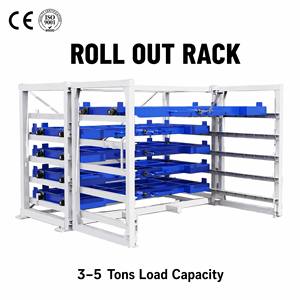
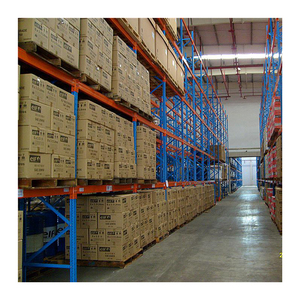
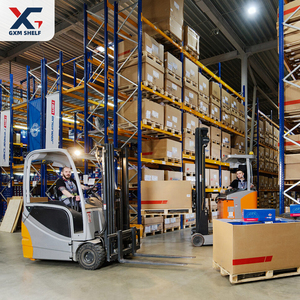
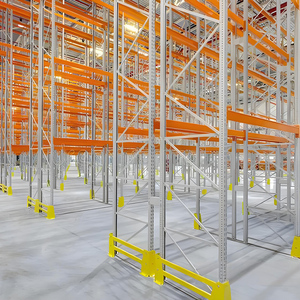
Enterprise Industrial Infrastructure at a Glance
The Mechanical Architecture of Industrial Longspan Racking
Engineering principles, structural steel grades, and load-bearing dynamics in modern high-density material handling systems.
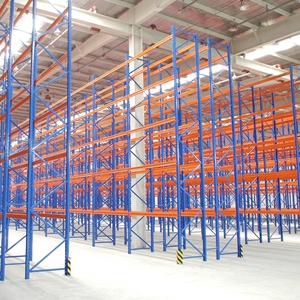
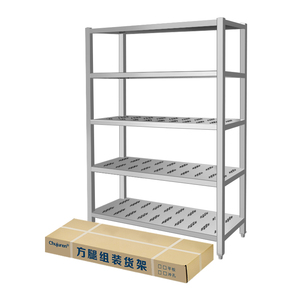
In modern industrial logistics, OEM/ODM Longspan Racking represents the crucial engineering link between light-duty manual shelving and full-scale structural pallet racks. Designed specifically for medium to heavy hand-loaded items, non-standard cartons, totes, and bulky industrial components, longspan shelving systems require rigorous structural calculations to ensure dimensional integrity under dynamic operating environments.
Unlike basic commercial shelving, true industrial longspan systems operate under high structural stress profiles. Frame column profiles are cold-roll-formed from high-yield structural steel grades—typically Q235B to Q355B (SS400 / S355JR equivalent)—yielding minimum yield strengths of 235 MPa to 355 MPa. The load-bearing beams utilize specialized step beam, Z-beam, or box-tube profiles engineered with high cross-sectional moments of inertia ($I_x$) to minimize vertical deflection ($\delta$) under full load constraints.
In high-grade industrial longspan racking systems, beam deflection under maximum allowable uniform distributed load (UDL) is strictly limited to $\delta \le L / 200$ (where $L$ is the clear span length). For automated or high-precision picking environments, deflection parameters are tightened further to $L / 300$ to prevent structural binding and maintain mechanical tolerances for robotic material handlers.
Key Structural Components of Heavy-Duty Longspan Systems
An optimized OEM/ODM longspan rack assembly relies on precise component synergy:
- Cold-Formed Perforated Uprights: Heavy-gauge upright frames featuring continuous drop-lock or hexagonal keyhole pitch (typically 50mm or 75mm adjustments), allowing flexible shelf height modification without compromising column buckling resistance.
- Structural Step Beams: Heavy-duty horizontal ties designed with inset step ledges to seat steel panels, wire mesh decks, or particle boards flush with the top beam surface, preventing snagging during high-frequency picking operations.
- Bracing Triangulation: Diagonal and horizontal frame bracing channels bolted with nylon-lock nuts to absorb lateral sway forces and shear stresses caused by manual impact or localized seismic vibrations.
- Heavy Baseplates & Anchor Bolts: Cold-stamped steel footplates fastened directly to concrete slabs using mechanical wedge anchors or chemical resin bolts, engineered to transfer axial column loads and uplift moments safely to the foundation.
OEM & ODM Customization Matrix for Global Wholesalers
How original equipment and design manufacturing tailors rack geometries for specialized industry demands.
As a global OEM/ODM longspan racking factory, customization extends far beyond basic dimensional scaling. B2B procurement managers and system integrators require exact tailored specifications to meet regional building codes, operational throughput rates, and specific environmental exposures.
Seismic Engineering (NSR-10 & AS4084)
Custom structural calculations factoring localized seismic zone coefficients, soil spectra, and building drift parameters. Frame columns, floor anchors, and top-ties are reinforced to prevent catastrophic lateral instability during seismic events.
Specialized Surface Coatings
Electrostatic TGIC-free polyester powder coating (80–120 µm thickness) for standard dry storage, hot-dip galvanizing (HDG per ISO 1461) for high-humidity coastal sites, and AISI 304/316 stainless steel for sterile cleanrooms.
Decking Deck & Panel Engineering
Modular selection between cold-rolled zinc-plated steel shelf panels, flame-retardant wire mesh decks (allowing in-rack sprinkler penetration), and high-density melamine board for smooth hand-assembly operations.
Comparative Technical Specifications Matrix
The table below summarizes standard OEM/ODM engineering parameters for industrial longspan racking platforms compared with alternative warehouse storage configurations:
| Racking Architecture | Typical Load Capacity (per level) | Standard Span Length ($L$) | Access Type | Optimal Application |
|---|---|---|---|---|
| OEM/ODM Longspan Shelving | 300 kg – 1,200 kg UDL | 1,200 mm – 3,000 mm | 100% Manual Picking | Medium-heavy cartons, retail fulfillment, spare parts |
| Heavy-Duty Pallet Racking | 1,000 kg – 4,500 kg UDL | 1,800 mm – 3,900 mm | Forklift / Reach Truck | Full palletized unit loads, FMCG bulk storage |
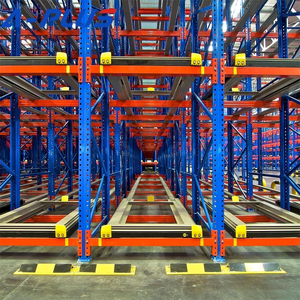
| Industrial Push Back Rack | 800 kg – 1,500 kg per pallet | LIFO Nested Carts (2-6 deep) | Forklift Dedicated | High-density medium SKU rotation, cold storage |
| Cantilever Rack System | 500 kg – 3,000 kg per arm | Continuous Arm Spans | Forklift / Overhead Crane | Long structural pipes, steel profiles, timber, sheet goods |
| Mezzanine Platform Racking | 350 kg – 1,000 kg / m² | Multi-Tier Grid Spans | Stairs / Freight Lifts / AGV | Vertical space expansion, multi-level order picking |
Future Procurement Trends in Industrial Storage (2025–2030)
Emerging technological shifts, ESG mandates, and automated robotics integrations redefining OEM/ODM manufacturing.
The global warehousing and logistics sector is undergoing an unprecedented structural transformation. As supply chain managers navigate volatile labor availability, rising urban industrial land costs, and strict corporate sustainability targets, procurement strategies for longspan racking and industrial shelving are pivoting rapidly toward four technological drivers:
1. Hybrid Racking Architecture for Autonomous Mobile Robots (AMRs) & AGVs
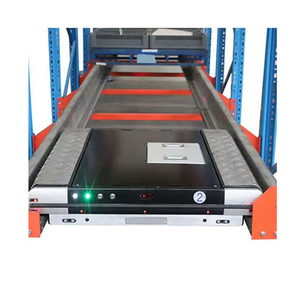
Traditional longspan racking was designed exclusively for human pickers operating in wide aisles. Future-ready OEM/ODM manufacturing now incorporates dual-purpose structural framing. Lower levels retain longspan pick shelves for fast-moving items, while upper tiers are integrated with rack-guided Autonomous Mobile Robots (AMRs), Goods-to-Person (GTP) automated shuttle bays, and Automated Guided Vehicles (AGVs).
This hybrid convergence demands micro-inch manufacturing tolerances. Standard roll-forming tolerances of $\pm 1.5\text{mm}$ are reduced to $\pm 0.3\text{mm}$ on beam hook engagement points and guide rails to ensure automated sensors can operate without mechanical collision risks.
2. Sustainable Steel & Decarbonized Factory Operations (ESG Integration)
Enterprise buyers across Europe, North America, and LATAM are demanding verifiable Scope 1, 2, and 3 emissions reports for warehouse installations. OEM/ODM racking factories are shifting toward green steel billets produced via Electric Arc Furnaces (EAF) powered by renewable energy, cutting embedded carbon dioxide emissions by up to 60% compared to traditional Blast Furnace-Basic Oxygen Furnace (BF-BOF) routes.
Factory powder-coating lines are transitioning to zero-VOC, heavy-metal-free thermosetting powders alongside closed-loop water recovery washing systems. Solar-powered manufacturing hubs—such as our facility utilizing 7,000 rooftop photovoltaic panels—enable wholesalers to meet stringent corporate ESG reporting requirements.
3. High-Bay Vertical Mezzanines in Free-Trade Logistics Hubs
With industrial rent in key logistics corridors (such as free trade zones near major international ports and metropolitan hubs) reaching record highs, horizontal warehouse expansion is economically unfeasible. Procurement is shifting heavily toward Multi-Tier Longspan Mezzanines.
By stacking 2 to 4 levels of longspan picking floors directly onto structural upright frames, facilities double or triple usable cubic foot floor space without expanding building footings. Modern OEM designs integrate integrated catwalk grating, automated pallet gates, and fire-suppression mesh decking engineered to pass local NFPA sprinkler codes.
A critical failure point in longspan procurement is under-specifying surface treatment in cold-storage (-30°C) and high-humidity coastal sites (e.g., Barranquilla, Cartagena, Houston, Hamburg). Condensation cycles cause rapid micro-pitting in standard powder coating. Superior OEM procurement specifies Pre-Galvanized Coil forming with organic clear sealers or Hot-Dip Galvanizing per ASTM A123, ensuring 25+ year structural lifespans without zinc flaking.
Why Global Wholesalers & Integrators Choose Our Manufacturing Hub
Decades of engineering legacy, rigorous quality assurance, and end-to-end supply chain transparency.
Automated Precision Production Lines
Equipped with continuous automated CNC cold-roll forming mills, robotic laser cutting cells, and Panasonic multi-axis welding robots. Every longspan beam and frame column exhibits flawless geometry, clean welds, and zero structural distortion.
Strict Quality Control & Testing
In-house mechanical testing laboratories perform tensile strength analysis, weld non-destructive testing (NDT), salt spray corrosion testing (ASTM B117 > 500 hours), and full-scale beam loading tests to failure to verify safety factors.
Global Logistics & Knock-Down Packing
Engineered flat-pack knock-down (KD) bundles designed to optimize 40ft High-Cube container ocean freight density. Comprehensive color-coded assembly drawings and installation video manuals supplied with every shipment.
By managing the complete lifecycle—from raw steel coil procurement and finite element analysis (FEA) modeling to automated fabrication, finishing, and global freight consolidation—our direct factory pricing gives wholesale distributors a decisive competitive margin in competitive tender bidding.
Frequently Asked Questions for B2B Racking Buyers
Clear engineering and commercial guidance from our senior structural engineering team.
Wire Mesh Decks: Mandatory in facilities with overhead fire sprinkler systems (NFPA 13 compliance), allowing water penetration while preventing dust accumulation.
Melamine / Particle Board: Cost-effective solution for dry, light-to-medium retail stockrooms, though sensitive to moisture.