Featured Industrial Racking & Shelving Systems
Precision-manufactured Q235B steel racking components engineered for high load-bearing capacity, modular scalability, and absolute warehouse safety.
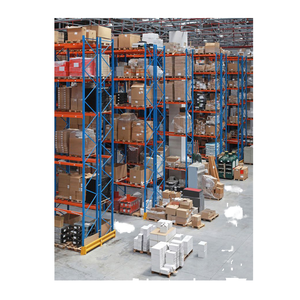
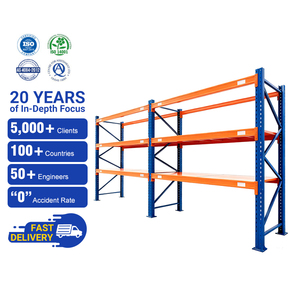
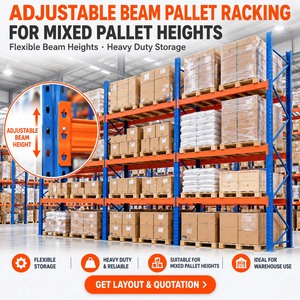
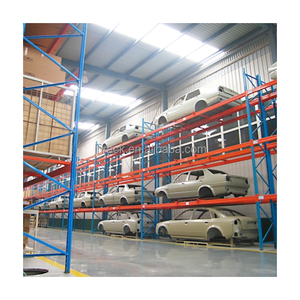
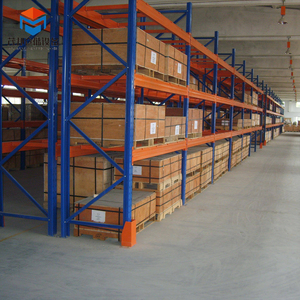
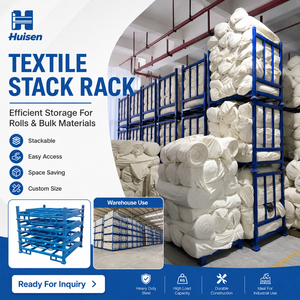
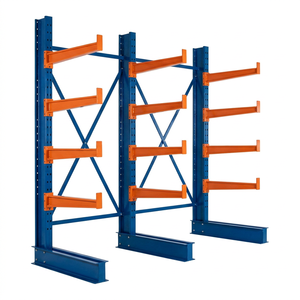
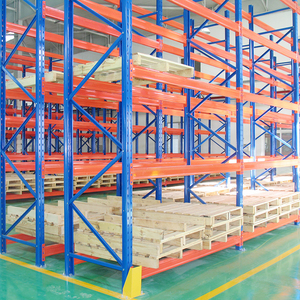
Engineering Principles & OEM/ODM Manufacturing Excellence
Understanding structural deflection, finite element analysis (FEA), and certified alloy selections for industrial-scale storage safety.
Structural Engineering Rigor & Global Compliance Frameworks
In modern high-density logistics fulfillment centers, industrial shelving units are far more than simple static storage structures. They represent structural load-bearing assets subjected to continuous dynamic forces, forklift impacts, live loading flexure, and localized environmental stresses. As a premiere OEM/ODM industrial shelving manufacturer, our structural engineering protocols are strictly predicated upon EN 15512 standards for cold-formed steel racking, coupled with localized seismic hazard mitigation requirements such as the NSR-10 seismic code framework applied across high-risk seismic corridors.
Every industrial shelving unit custom-fabricated across our 8 global production facilities undergoes advanced Finite Element Analysis (FEA). This computational modeling simulates multi-axial stress concentration points under extreme full-load capacity (up to 45,000 lbs per bay), allowing our engineering teams to optimize profile thickness, beam connector geometry, and upright punching patterns. By utilizing premium-grade Q235B and Q355B cold-rolled structural steel, we maintain uniform tensile strength (yield strength ≥ 235 MPa to 355 MPa) while preventing elastic deformation under static overload conditions.
Core Material Selection & Anti-Corrosion Surface Metallizing
Longevity in harsh industrial environments—ranging from sub-zero cold-storage facilities to highly saline, humid coastal port logistics hubs (such as Barranquilla or regional Free Trade Zones)—requires advanced anti-corrosion metallurgy:
- Thermosetting Epoxy-Polyester Powder Coating: Applied via electrostatic deposition at 180°C–200°C curing temperatures, creating a 60–80 μm protective barrier resistant to chemical abrasion, impact flaking, and ambient humidity.
- Continuous Hot-Dip Galvanization (HDG): Recommended for extreme humidity and cold chain applications, yielding a zinc coating weight of up to 275 g/m² (Z275) to provide self-healing sacrificial cathodic protection against steel oxidation.
- Seismic Baseplate & Anchor Engineering: Baseplate surface area, thickness (6mm to 12mm), and mechanical/chemical expansion anchor depth are customized according to site-specific concrete slab strength (f'c ≥ 25-30 MPa) and local seismic spectral acceleration indices.
Custom OEM/ODM Profiling
Tailor-made beam lengths, column profiles, pitch spacing (50mm, 75mm, 76.2mm), and shelf deck options (mesh decking, solid steel plates, or timber) configured to exact SKU dimensional profiles and forklift clearance margins.
Rigorous Structural QA
100% full-penetration robotic welding joints, ultrasonic non-destructive weld testing, and destructive load-to-failure testing ensure every manufactured rack exceeds standard safety factor margins (1.5 to 1.95 factor of safety).
Seismic-Aware Design
Engineered horizontal and vertical bracing systems optimized through structural dynamic analysis, preventing rack tipping, frame buckling, or beam dislodgement during seismic ground acceleration events.
Future Sourcing & Industrial Racking Development Trends (2026–2030)
Key macroeconomic vectors, technological convergence, and ESG imperatives reshaping global procurement strategies for enterprise buyers.
1. Convergence of Static Racking & Scalable Robotics (Movu & AMR Integration)
The traditional boundary between purely static rack structures and automated material handling equipment is rapidly dissolving. Modern supply chains are aggressively adopting 2D Pallet Shuttle Systems, Autonomous Mobile Robots (AMRs), and Goods-to-Person (G2P) automated bin storage. Sourcing directors must now evaluate industrial shelving suppliers based on their capability to manufacture high-precision tolerance racking (down to ±1.0mm profile straightness) that seamlessly interfaces with automated shuttle rails and laser-guided robotic navigation systems.
2. Transition to Nearshoring & Distributed Regional Manufacturing Capacity
Global logistics disruptions have exposed the vulnerabilities of single-source overseas manufacturing. Supply chain leaders are favoring OEM/ODM partners with multi-regional production footprints. Our newly expanded 240,000 sq ft production plant in Calhoun, Georgia, alongside established international plants, allows B2B buyers to compress lead times, reduce transpacific freight exposure, and pivot inventory strategies dynamically across the Americas, Europe, and Asia-Pacific markets.
3. Sustainable ESG Steel Manufacturing & Carbon Footprint Auditing
Scope 3 emissions accounting is becoming mandatory for Fortune 500 logistics operators and major enterprise distributors. Sourcing high-capacity steel shelving now mandates environmental auditing. Our corporate commitment integrates green manufacturing protocols:
| ESG Strategic Pillar | Enterprise Target | Procurement Impact for B2B Buyers |
|---|---|---|
| Solar Energy Integration | 7,000+ Roof Solar Panels Installed | Substantially reduces embodied carbon per metric ton of fabricated rack steel. |
| Logistics Fleet Electrification | 100% Fully Electric Fleet Target by 2028 | Decreases indirect transport emissions across primary distribution channels. |
| Waterway Freight Prioritization | Multi-Modal River & Ocean Logistics | Cuts diesel road transport emissions by up to 34% per container unit. |
| High-Yield Steel Recyclability | 100% Recyclable Scrap Steel Loop | Provides fully traceable circular-economy documentation for green building (LEED) compliance. |
4. Total Cost of Ownership (TCO) vs. Initial Capital Expenditure (CapEx)
Leading procurement managers are moving beyond baseline product price-per-kilogram. TCO models prioritize durability, reduced maintenance frequency, modular add-on availability, and damage mitigation accessories (such as floor-anchored steel upright protectors and rubber-cushioned end-of-row frames). Selecting high-tensile, certified steel racks dramatically minimizes operational downtime caused by forklift collisions and structural rack lockouts.
Why Global Wholesalers & EPC Contractors Partner With Us
Decades of manufacturing legacy, global logistics scalability, and end-to-end custom engineering support.
8 Global Manufacturing Plants
Operating state-of-the-art continuous roll-forming lines, automated laser cutting, and robotic welding cells across North America, Europe, and Asia to guarantee high-volume wholesale output and on-time delivery.
Full Lifecycle OEM/ODM Support
From initial site survey CAD layout generation and 3D structural simulation to custom branding packaging, knock-down (KD) flat-packing, and global logistics documentation handling.
Strict Quality & Safety Compliance
Certified to ISO 9001, ISO 14001, ISO 45001, and EN 15512 standards. Every racking batch is subjected to raw material spectrometry and weld integrity testing.
Frequently Asked Questions for B2B Sourcing & Engineering Teams
Detailed answers to common questions regarding structural specifications, custom ODM orders, seismic calculation standards, and bulk export logistics.