Flagship Cantilever & Heavy Storage Systems
Custom OEM/ODM structural solutions designed to FEM 10.2.09, EN 15512, and ANSI/MH16.2 standards
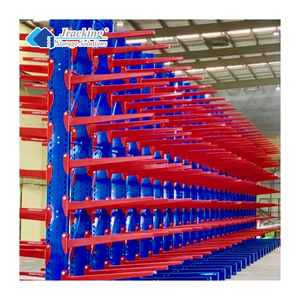
CE-Certified Industrial Warehouse Storage Shelves Heavy-Duty Cantilever Racking System for Cold Storage Pipe Storage
View System Specs →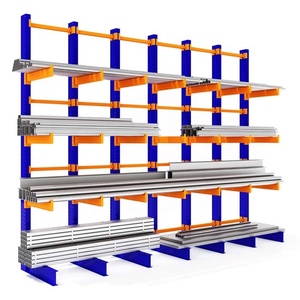
Industrial Plant Material Storage Racking System Cantilever Aluminium Pipe Storage Rack
View System Specs →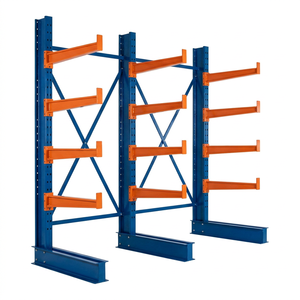
Double Sided Powder Coated Steel Cantilever Racking System for Industrial Timber Tubing PVC Pipe Storage Shelving Units
View System Specs →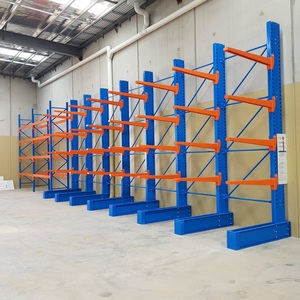
High Quality Heavy Duty Steel Cantilever Salvage Racking Vehicle Storage for Cars Stackable Rack
View System Specs →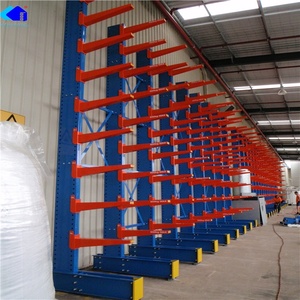
Jracking CE Certified Vertical Storage Rack Shelves Cantilever Warehouse Racking System for Steel Tube Management
View System Specs →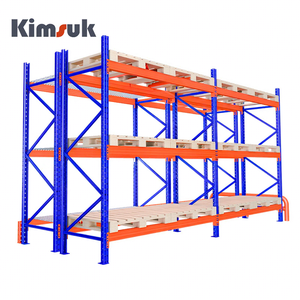
Warehouse Shelves Industrial Heavy Duty Boltless Shelf Steel Warehouse Powder Coating Metal Cantilever Racking
View System Specs →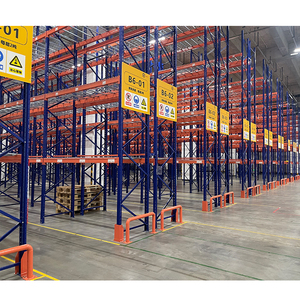
Latin America Warehouse Storage Solution Heavy Duty Steel Racking System Pallet Rack
View System Specs →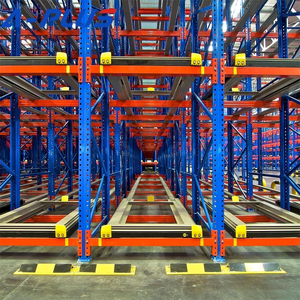
Low Cost Industrial Storage Racking System LIFO Rack Shelving Warehouse Push Back Rack
View System Specs →Why Global Logistics & Industrial Distributorships Partner With Us
Precision-engineered structural racking backed by tier-1 steel supply chains and rigorous load certification
High-Grade Structural Steel
Manufactured exclusively from certified Q235B and Q355B structural steel profiles, IPE beams, and hot-rolled columns engineered to withstand extreme point-loads and dynamic stresses.
Custom OEM/ODM Engineering
Full 3D CAD analysis, Finite Element Analysis (FEA) simulations, and tailored arm/column dimensions to accommodate non-standard loads such as steel pipes, automotive chassis, and timber.
Seismic & Environment Adaptability
Fully compliant with regional seismic building codes (including NSR-10, Eurocode 8, and ASCE 7). Offering C5-M grade hot-dip galvanization for marine and highly humid environments.
1. The Mechanical Physics & Structural Engineering of Modern Cantilever Systems
Cantilever racking systems are unique structural engineering solutions designed to eliminate the vertical front-upright constraints common to conventional selective pallet racking. Unlike traditional bay structures that distribute loads across four corner posts, cantilever racks rely on central vertical columns connected to a heavy-duty base, with extended horizontal arms engineered to handle linear dynamic flexure, eccentric loading, and torsional moments.
The primary advantage of cantilever racking lies in its unhindered horizontal access. This makes it the standard specification for storing long, continuous, or irregular loads such as structural steel I-beams, extruded aluminum tubing, PVC pipes, wooden planks, sheet metal bundles, and automotive chassis. However, the absence of front columns demands sophisticated load distribution calculations during both OEM manufacturing and site-specific structural integration.
Key Engineering Rule (FEM 10.2.09 / EN 15512): Arm deflection under maximum allowable load must not exceed 1/200th of the arm length ($L/200$). Furthermore, column-to-base moment connections must be designed using full-penetration welding or high-tensile Grade 8.8 / 10.9 structural bolting to prevent fatigue failure under cyclic loading.
Structural Profiles: Cold-Formed vs. Hot-Rolled Steel Columns
When engineering customized cantilever systems, procurement directors and logistics engineers must select between cold-formed roll-formed steel and heavy-duty hot-rolled structural steel (such as IPE, HEA, or H-profiles):
| Structural Attribute | Cold-Formed Cantilever Racking | Hot-Rolled Structural Cantilever Racking |
|---|---|---|
| Manufacturing Process | Continuous roll-forming of high-tensile sheet coil (Q235/Q355) | Hot-extruded I-beams and HEA/HEB structural profiles |
| Typical Load Profile | Light-to-medium loads (up to 800 kg per arm) | Ultra-heavy industrial payloads (up to 5,000+ kg per arm) |
| Impact Resistance | Moderate; susceptible to forklift damage if unshielded | Exceptional; withstands severe industrial equipment collisions |
| Ideal Applications | Plastic piping, lightweight timber, retail extrusions | Steel mills, auto salvage stacks, heavy pipe manufacturing |
| Cost Efficiency | Lower initial material and freight cost | Higher initial capital investment; superior 30-year ROI |
2. Custom OEM/ODM Capabilities & Structural Tailoring Workflow
As a global OEM/ODM manufacturer backed by 8 state-of-the-art production plants and an annual turnover exceeding €1.0 Billion, our engineering teams provide complete end-to-end customization services for global distributors, EPC contractors, and end-user warehouse operators.
1. Finite Element Analysis (FEA) & Stress Simulation
Every non-standard cantilever system undergoes rigorous computer-aided FEA modeling before production. We simulate real-world static loads, dynamic forklift placement impact, wind load coefficients for outdoor installations, and ground excitation during seismic events. This process guarantees that yield strength ($f_y$) margins adhere strictly to regional safety codes.
2. Column, Arm, and Base Pin-Locking Innovation
Our proprietary arm-to-column connection mechanism utilizes a specialized vertical wedge-pin or heavy-bolt locking pattern. Arms are easily height-adjustable in increments of 50mm or 75mm, allowing warehouses to rapidly recalibrate rack height as inventory profiles change without compromising structural integrity or introducing arm sag.
3. Material Finishing & Surface Treatment Options
Depending on the operating micro-climate, we apply tailored surface protection technologies:
- Automated Electrostatic Powder Coating: Utilizing epoxy-polyester thermosetting powders cured at 200°C for smooth finish, superior scratch resistance, and aesthetic color-coding (RAL shades).
- Hot-Dip Galvanization (ISO 1461): Complete immersion of structural steel into liquid zinc at 450°C. Recommended for outdoor yard storage, coastal cold-storage installations, and environments exposed to corrosive chemicals (saline, coastal moisture, acid-rain exposure).
3. Specialized Industrial Applications & Specialized Racking Configurations
Standard pallet racks fail when subjected to non-uniform or continuous linear materials. Below are the primary specialized configurations engineered in our facilities:
A. Cold Storage & Heavy Pipe Storage Cantilever Racks
Cold-storage logistics hubs operate under sub-zero temperatures (down to -30°C), where low-grade carbon steel can suffer from hydrogen embrittlement and catastrophic brittle failure. We utilize impact-tested fine-grain steel alloys with specialized low-temperature toughness profiles, combined with high-density layouts to maximize expensive refrigerated cubic space.
B. Multi-Tier Vehicle Salvage & Automobile Storage Racks
Auto recyclers and salvage yards require extreme load capacity to safely stack end-of-life vehicles (ELVs). Our specialized salvage cantilever racks feature oversized H-beam columns, extended heavy-duty arms with integrated end-stops, and reinforced base plates capable of supporting 3 to 5 levels of full-sized motor vehicles stacked vertically.
C. Vertical Cantilever Racks for Tubing & Profile Management
When warehouse floor space is limited, vertical cantilever systems organize aluminum extrusions, conduits, and light steel pipes in a vertical orientation. Divided by adjustable arms and floor dividers, operators can manually pick individual lengths quickly and safely without needing heavy material handling machinery.
4. Future Procurement Trends & Technological Evolution (2026–2035)
The global warehousing and logistics ecosystem is transitioning rapidly toward automated material handling, green-building certification, and data-driven inventory management. Procurement managers evaluating long-term infrastructure investment must consider four macro trends shaping cantilever storage design:
1. Automated Cantilever AS/RS & AMR Integration
Traditional forklift-operated cantilever yards are being upgraded to Automated Storage and Retrieval Systems (AS/RS). Automated stacker cranes and Heavy-Payload Autonomous Mobile Robots (AMRs) interface directly with precision-machined cantilever arms, utilizing laser positioning sensors to store 12-meter pipe bundles with millimeter accuracy.
2. IoT Strain Gauge & Smart Deflection Sensors
Next-generation cantilever systems are increasingly outfitted with embedded strain gauges and optical load-monitoring sensors. These IoT devices send real-time alerts to the Warehouse Management System (WMS) if an arm experiences overload, improper weight balancing, or structural deformation caused by impact.
3. Decarbonized Steel & Scope-3 ESG Compliance
In accordance with corporate ESG benchmarks, our manufacturing network is committed to a zero-carbon logistics roadmap. We utilize green-electric arc furnace (EAF) steel, clean solar energy across our 7,000-panel factory installation, and inland waterway transit options to drastically reduce embedded carbon footprints for our global partners.
5. Seismic Engineering & Global Compliance Frameworks
In regions with high seismic activity (such as coastal South America, Japan, California, and the Mediterranean), racking systems must be engineered as dynamic structural frameworks capable of absorbing ground motion acceleration without collapsing or dropping un-bundled loads.
Our engineering division evaluates site-specific soil coefficients ($S_s, S_1$), structural response modification factors ($R$), and base-plate floor anchor shear strengths according to international standards:
- NSR-10 Code Compliance: Specialized structural calculations tailored for Latin American seismic hazard zones.
- FEM 10.2.09 & EN 15512: European structural design standards for industrial cantilever steel racking.
- ANSI/MH16.2 / RMI Guidelines: American standard for the design, testing, and utilization of industrial steel cantilever racks.
- ISO 9001 & ISO 14001 Certification: Fully audited quality assurance and environmental management systems across all 8 production facilities.
Frequently Asked Questions by Industrial Buyers
Essential guidance for logistics managers, structural engineers, and procurement directors
Ready to Optimize Your Structural Warehouse Infrastructure?
Contact our senior structural engineering team today to receive a comprehensive technical CAD proposal, FEA load simulation, and factory-direct quotation tailored to your operational specifications.
Send an Inquiry