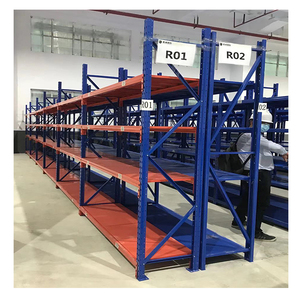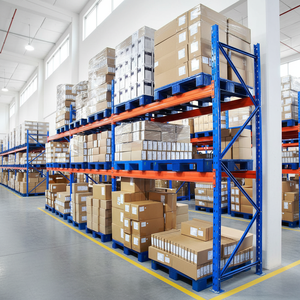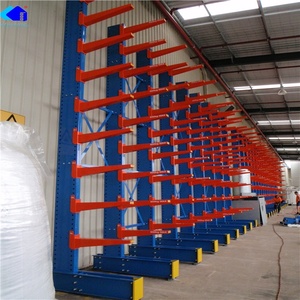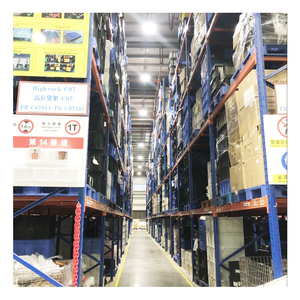
China Wholesale Warehouse Shelving & Racking Factory & Exporter

Engineering-Led High-Density Heavy Duty Storage Systems | Direct Factory Pricing | EN 15512 & RMI Certified

Industrial Product Portfolio

High-Performance Storage Racking & Shelving Systems

Direct from China's leading manufacturing hub. Custom structural design, precision roll-forming, and high-tensile cold-rolled steel solutions tailored for global distribution centers.

Factory Footprint & Scale

Why Enterprise Procurement Teams Partner with Our China Factories

Combining world-class steel fabrication efficiency with international structural engineering standards. We provide OEM/ODM racking solutions across 60+ countries.

2,000+
Skilled Personnel & Engineers
8
Global Manufacturing Plants
€1.0Bn+
Annual Production Value
60+
Countries Exported To
Strategic Procurement Whitepaper

Future Procurement Trends in Industrial Warehouse Racking (2025–2030)

As global supply chains navigate shifting economic landscapes, warehouse infrastructure procurement has evolved from simple cost-per-pallet position evaluations to integrated, dynamic engineering investments.

1. Convergence of Racking with Autonomous Robotics (AMR / Shuttle Systems)

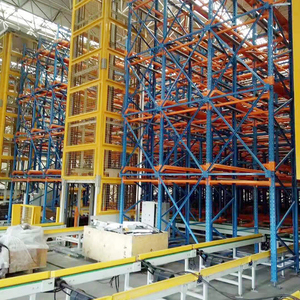
Traditional static pallet racking is rapidly transitioning toward automated integration. Multi-directional 4-way pallet shuttle systems and Autonomous Mobile Robot (AMR) compatibility now dominate high-density storage specs. Buyers are prioritizing structural racks engineered with tighter installation tolerances (±1.5mm) to accommodate robotic sensor arrays and automated guided vehicles (AGVs).

2. High-Tensile Steel Optimization (Q355B & Micro-Alloyed Grades)

Modern racking factories are shifting from standard Q235 steel profiles to advanced cold-rolled Q355B and high-yield micro-alloyed structural steel. This material evolution reduces total rack frame deadweight while enhancing total structural elasticity, seismic force absorption, and payload capacity by up to 28% without increasing shipping volume costs.

3. Site-Specific Seismic & Climate Adaptation Engineering

Regulatory oversight demands site-specific structural verification under seismic codes (such as NSR-10, AS4084-2023, and RMI MH16.1). Global importers must ensure their China racking exporter calculates custom baseplate dimensions, heavy-duty anchors, and horizontal/vertical bracing ratios specifically tailored to local ground acceleration data and soil classifications.

E-E-A-T Technical Analysis: Quality Assurance in Chinese Racking Manufacturing

When sourcing heavy-duty warehouse racking and industrial shelving direct from Chinese export facilities, verification of manufacturing methodology is paramount for operational safety and risk mitigation. Our technical evaluation framework centers on three non-negotiable engineering pillars:

  • Steel Chemistry & Mill Certificates (MTC): Raw coil steel must be sourced directly from tier-one steel mills (such as Baosteel or Shougang Group) with full ISO 10204 3.1 Traceability. High yield strength (minimum 235–355 MPa) ensures structural integrity under continuous maximum loading.
  • Automated Roll-Forming Precision: Upright profiles require multi-stage continuous roll-forming lines to prevent micro-fracturing along bend lines. Laser-guided hole punching guarantees vertical pitch precision (50mm, 75mm, or 76.2mm) across 12-meter single-section upright towers.
  • Surface Treatment & Corrosion Protection: Powder coating lines utilizing automatic electrostatic spray tunnels deliver a uniform 60–80 micron thermo-set epoxy resin layer. For cold-storage environments (below -25°C) and coastal hubs, hot-dip galvanizing to BS EN ISO 1461 standards prevents sub-surface zinc-iron alloy degradation.

By enforcing continuous non-destructive weld testing (NDT), beam connector load-deflection verification (governed by EN 15512 safety factors of 1.4 for dead load and 1.5 for live load), our wholesale supply chain minimizes field installation errors and long-term structural fatigue.

R&D & Innovation

Evolution of Industrial Racking Technology

Discover how modern manufacturing technology is reshaping structural storage performance, spatial efficiency, and total cost of ownership (TCO) for global distribution hubs.

1. Modular Boltless Assembly Architecture

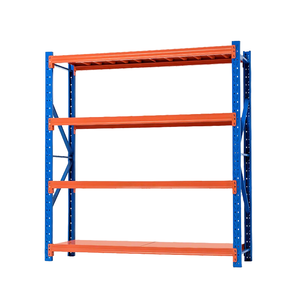
Legacy storage systems relied heavily on field welding or complex bolting hardware, which slowed installation timelines and increased labor overhead. Next-generation industrial shelving and medium-duty racks utilize precision-stamped teardrop, diamond, or speedlock connector hooks that lock securely into place under gravity load. This reduces warehouse setup time by up to 60% while allowing facile level adjustment as inventory packaging dimensions change.

2. Advanced Surface Treatment: Nanotechnology & Anti-Microbial Coatings

Industrial racking systems exposed to pharmaceutical products, fresh food processing, or high-humidity marine zones require advanced surface passivation. Leading Chinese manufacturers are now incorporating zirconium-based conversion coatings and anti-microbial silver-ion additives into automated powder-coating lines. This innovation prevents localized oxidation, inhibits bacterial proliferation, and doubles salt-spray resistance performance under ASTM B117 testing standards.

3. Real-Time Structural Health Monitoring (RACK-SHM)

In high-bay automated warehouses (ASRS) reaching heights of 25 to 40 meters, accidental forklift impact can compromise entire structural bays without immediate detection. Modern intelligent racking systems integrate IoT vibration sensors and optical strain gauges embedded directly within the lower upright frame columns. These devices transmit real-time deflection alerts to warehouse management software (WMS), preventing catastrophic structural collapse and streamlining preventive maintenance routines.

Sourcing Intelligence

Frequently Asked Questions for Global Racking Procurement

Direct answers from our structural engineering and export logistics team to help you navigate specifications, custom clearance, load testing, and direct factory procurement.

What international engineering standards do your warehouse racking systems comply with? +
Our racking systems are fully engineered, tested, and manufactured in accordance with major international structural standards, including European EN 15512, FEM 10.2.02, American RMI (MH16.1), Australian AS 4084-2023, and ISO 9001:2015 quality management benchmarks. Full structural calculations and third-party test reports (TÜV / CE) are supplied upon request.
How do you determine the correct upright frame and beam profile for custom pallet weight loads? +
Our engineering team conducts Finite Element Analysis (FEA) based on four critical factors: maximum pallet weight (kg), pallet dimensions (WxDxH), clear rack height, and forklift clearance requirements. We verify that maximum beam deflection under full load never exceeds L/200 (where L is beam length), ensuring complete structural safety under rated conditions.
Can your warehouse racking factory manufacture custom colors and OEM brand specifications? +
Yes. As a direct wholesale manufacturer and exporter, we offer complete OEM and ODM services. Upright frames, load beams, and mesh decking can be customized in any RAL color code (popular options include RAL 5015 Blue, RAL 2004 Orange, and RAL 7035 Grey). We can also laser-engrave component part numbers or private-label branding tags.
What anti-corrosion protection is recommended for cold storage or high-humidity warehouses? +
For sub-zero cold rooms (down to -30°C) or coastal humid regions, we recommend continuous hot-dip galvanizing (HDG) to BS EN ISO 1461 standards, which provides a durable zinc coating of 60–80 μm. Alternatively, double-coat zinc-rich epoxy primer topped with heavy-duty powder coating can be specified for ambient wet-storage facilities.
How are heavy-duty racking components packed and secured for ocean freight shipping? +
All upright frames, beams, and shelf panels are bundled using steel banding, protective corner guards, and heavy-duty plastic wrap to prevent transit scratch damage. Bundle dimensions are engineered specifically to maximize space utilization inside 40ft High Cube (40HC) sea containers, reducing your ocean freight cost per pallet position.
What technical documentation is provided to support local installation and building permits? +
We provide complete AutoCad layout drawings, 3D structural elevation views, installation manuals, bolt anchor torque specs, and stamped structural calculation sheets signed by qualified structural engineers to support your municipal building permits and safety inspections.
Factory Advantage

End-to-End Manufacturing & Global Export Competence

Partner directly with a qualified Chinese racking exporter offering complete engineering design, precision production, strict QA, and international project support.

Full Supply Chain Control

From raw cold-rolled steel coil slit processing to automated robotic welding lines (OTC Japan) and multi-pass powder coating tunnels, every manufacturing step is conducted under one roof, guaranteeing strict quality compliance and reliable lead times.

Custom Architectural Engineering

No two warehouses are identical. Our engineering department uses Advanced BIM modeling and structural FEA software to optimize bay layouts around building columns, sprinkler headers, lighting grids, and specific material handling equipment (MHE).

Rigorous Quality Auditing

Every production batch undergoes destructive tension tests, weld penetration ultrasonic testing, powder adhesion cross-hatch inspections, and dimensional tolerance checks prior to packaging, ensuring 100% field assembly compliance.

Ready to Optimize Your Warehouse Storage Capacity?

Request a complete engineering layout proposal, structural load calculation, and competitive factory-direct wholesale pricing quote for your next logistics project.