Engineered Industrial Storage Systems
High-Density Heavy-Duty Pallet Racks, Cantilever Structures & Boltless Workshop Shelving Solutions
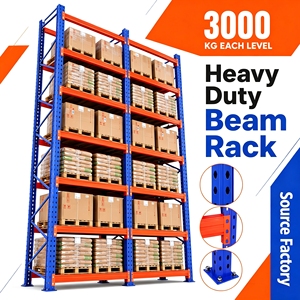
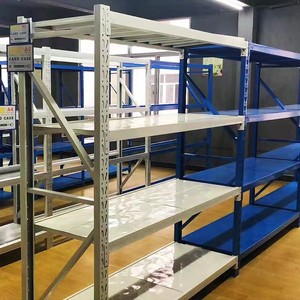
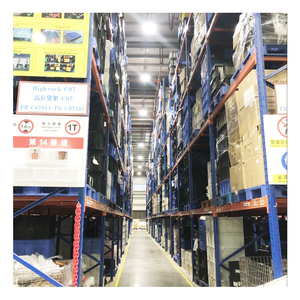
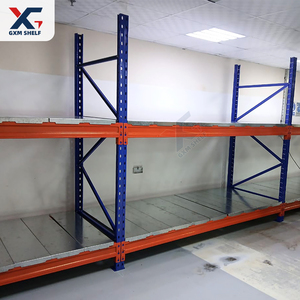
1. Enterprise Manufacturing Infrastructure & Structural Engineering Capabilities
As a leading China rack storage shelves exporter, our engineering paradigm is rooted in metallurgical precision, mechanical compliance, and advanced structural finite element analysis (FEA). Modern industrial warehousing demands far more than basic structural steel assembly; it requires rigorous strain analysis, structural elasticity evaluations, and precise load-displacement modeling under dynamic operating stresses.
Our manufacturing matrix utilizes high-tensile hot-rolled and cold-formed structural steel grades including Q235B, Q355B, and high-yield SS400 alloys. Upright frames are engineered via multi-stage cold-roll forming mills featuring up to 26 rolling passes, producing continuous omega (Ω) profile geometries that maximize the radius of gyration while minimizing structural dead weight. This geometric optimization yields exceptional axial load resistance and buckling stability across tall vertical configurations exceeding 15 meters in clear height.
Finite Element Structural Analysis
Every frame configuration undergoes non-linear FEA simulation to evaluate flexural torsional buckling, beam-to-column connector rigidity, and localized plate deformation under ultimate limit states (ULS) and serviceability limit states (SLS).
Automated Robotic Arc Welding
Beam connectors and structural footplates feature continuous pulsed robotic MIG welding complying with ISO 3834-2 standards. Weld seams are subjected to non-destructive ultrasonic testing (NDT) to prevent fatigue cracking under cyclic load operations.
Seismic Hazard Engineering
Designed in alignment with EN 15512, RMI (ANSI MH16.1), and NSR-10 seismic safety codes. Structural baseplates incorporate dual anchor bolt arrays engineered to withstand seismic shear forces and vertical uplift accelerations.
2. Comparative Specifications of Industrial Storage Shelving Systems
Selecting the appropriate industrial storage topology requires evaluating storage density, stock-keeping unit (SKU) selectivity, pallet throughput dynamics, and capital expenditure constraints. Below is a comprehensive engineering specification matrix detailing our export-grade storage architectures:
| Storage System Type | Structural Steel Grade | Max Load Capacity (Per Level) | Selectivity Rate | Optimal Industry Application | International Standards Compliance |
|---|---|---|---|---|---|
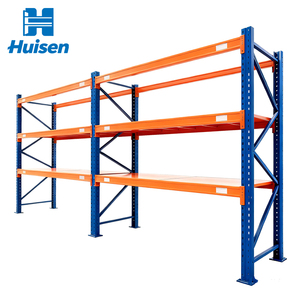
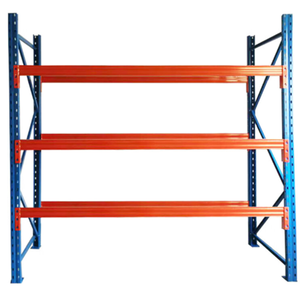
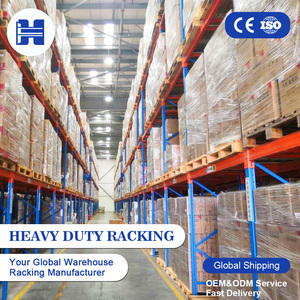
| Selective Pallet Racking | Q235B / Q355B Cold Formed | 1,000 kg – 4,500 kg | 100% Direct Access | 3PL Warehouses, FMCG, E-Commerce Fulfilment | FEM 10.2.02, EN 15512, RMI, AS4084 |
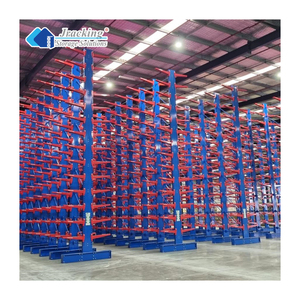
| Heavy-Duty Cantilever Racking | Hot Rolled H-Beam / Structural Steel | 800 kg – 3,000 kg (per arm) | 100% Linear Access | Aluminum Profiles, Steel Pipes, Timber, Sheet Metal | ISO 9001, CE, AS4084 Structural Code |
| High-Density Drive-In Racking | Q355B Heavy Structural Profile | 1,000 kg – 2,000 kg | 20% – 30% (FILO) | Cold Storage, Food & Beverage, Bulk Homogeneous Goods | FEM 10.2.07, ANSI MH16.1 |
| Radio Pallet Shuttle System | Q355B High-Yield Alloy | 1,500 kg (Shuttle Payload) | Semi-Automated (FIFO/FILO) | Deep-Lane High Density Storage, Frozen Logistics | CE Machinery Directive, EN 15512 |
| Multi-Tier Mezzanine Platform | Structural Steel Beam & Floor Plate | 300 kg – 1,200 kg / m² | 100% Manual/Picks | Spare Parts Distribution, Apparel Picking Centers | EN 1993 Eurocode 3, BS 5950 |
| GXM Stainless Steel Racking | SUS304 / SUS316 Stainless Steel | 500 kg – 2,000 kg | 100% Direct Access | Pharmaceutical Cleanrooms, High-Humidity Coastal Facilities | GMP Cleanroom Grade, ISO 14644 |
3. Global B2B Procurement Trends in Heavy-Duty Rack Storage (2025–2035)
The global warehousing landscape is experiencing a paradigm shift driven by e-commerce expansion, rising industrial land acquisition costs, and strict ESG (Environmental, Social, and Governance) compliance mandates. Global buyers sourcing from China storage rack exporters are no longer merely seeking low unit costs; they are demanding end-to-end engineering integrity, decarbonized production chains, and smart automation compatibility.
A. Transition to Vertical High-Bay Expansion & Cubic Optimization
As urban logistics hubs face escalating price per square meter, warehouse architects are prioritizing vertical storage height over horizontal building footprints. High-bay selective racking and automated self-supporting rack-clad buildings (where racking serves as the building's structural skeleton) are rapidly replacing traditional single-story layouts. This trend requires exporters to provide ultra-precise tolerance control (upright straightness deviation under 1/1000 of total length) to prevent structural swaying and ensure seamless crane operation in automated storage and retrieval systems (ASRS).
B. Integration of Semi-Automated & Autonomous Robotic Systems
Traditional static storage racks are increasingly being retrofitted or replaced with shuttle-guided channels and Autonomous Mobile Robot (AMR) top-running platforms. Procurement managers must verify that rack exporters supply ultra-flat dynamic run-rails with minimal deflection gaps. Modern shuttle systems demand rail level tolerances under ±1.5 mm across multi-span aisles to prevent shuttle positioning errors and sensor misalignments.
C. Sustainable Steel Sourcing & Lifecycle ESG Accounting
European and North American enterprise buyers are actively implementing Carbon Border Adjustment Mechanisms (CBAM) and Scope 3 emissions reporting. Premium Chinese manufacturers are leading this transition by integrating photovoltaic solar generation across production rooftops, adopting zero-VOC electrostatic powder coating systems, and utilizing recycled scrap steel in electric arc furnace (EAF) smelting processes to deliver verified Environmental Product Declarations (EPD).
4. Structural Engineering Trends & Metallurgical Innovations
To sustain heavy loads under seismic vibrations, high humidity, and sub-zero temperatures, structural storage rack design has evolved significantly over the past decade.
Nanocomposite Powder Coatings
Advanced thermosetting epoxy-polyester powder formulations provide superior salt-spray corrosion resistance exceeding 500 hours (ASTM B117), essential for port-adjacent warehouses in saline coastal environments.
Self-Locking Beam Connector Safety Clamps
Automatic safety locks engineered into beam end-connectors prevent accidental beam displacement caused by forklift driver impact or upward vertical load surges, complying with OSHA 1910.176 requirements.
Modularity & Boltless Fast-Assembly Architecture
Innovations in pitch adjustment (e.g., 50mm, 75mm, 76.2mm pitch slots) allow quick beam height customization without structural teardown, significantly lowering total cost of ownership (TCO) during facility reconfigurations.
5. Procurement FAQ: Essential Guide for Global Buyers
Q: What structural documentation should international buyers demand from China racking exporters?
A: Procurement teams should require comprehensive structural calculation reports certified by independent structural engineers, mill test certificates (MTC) verifying steel yield and tensile strengths (ISO 6892-1), ISO 9001 factory audits, CE certificates, and third-party load test validation reports according to FEM 10.2.02 or ANSI MH16.1 specifications.
Q: How do seismic calculations affect racking footprint and component costs?
A: Seismic design factors (such as spectral response accelerations SDS and SD1) determine upright column profile thickness, bracing layout frequency, anchor bolt diameter, and footplate surface area. In high-seismic zones (e.g., Pacific Rim or Andean regions), heavy-duty seismic baseplates and upgraded footplate anchoring increase steel mass by approximately 8% to 15%, ensuring structural survivability during earthquake events.
Q: How are shipping container space and freight logistics optimized for heavy steel racking export?
A: Premium exporters utilize specialized CAD loading software to bundle upright frames in nested configurations and interlock box beams, maximizing 40ft High Cube (40HC) container weight capacity up to 26,000 kg. Component packaging includes steel strapping, corner protectors, and moisture-absorbent desiccant packs to prevent transit corrosion during ocean voyages.
Q: What is the operational lifespan of heavy-duty pallet racking in cold-storage environments?
A: In cold-storage or freezer warehouses (-30°C), steel toughness must be evaluated to prevent low-temperature brittle fracture. High-yield Q355B steel coated with hot-dip galvanizing (HDG per ISO 1461) or specialized cold-resistant powder coatings maintains structural integrity for over 25 years with minimum maintenance.
Q: Can Chinese rack storage systems integrate with existing European or American forklift fleets?
A: Yes. Standard pallet racking systems engineered in China strictly adhere to international pallet size conventions (such as ISO pallets, EURO pallets 800x1200mm, and GMA pallets 48x40 inches). Aisle widths are custom-calculated during layout design to accommodate reach trucks, VNA (Very Narrow Aisle) turret trucks, or standard counterbalanced forklifts with appropriate safety clearances.
6. Why Global Procurement Leaders Partner With Us
With over four decades of engineering heritage, our manufacturing facilities represent the pinnacle of industrial racking production. Operating from 8 advanced manufacturing bases equipped with automated continuous roll-forming lines, state-of-the-art laser cutting cells, and robotic welding stations, we deliver customized storage solutions to over 60 countries across North America, Europe, Latin America, and Southeast Asia.
Our engineering team works directly with logistics consultants, warehouse managers, and general contractors to provide full-lifecycle support—from initial 3D CAD layout design and structural FEA calculations to container loading supervision, on-site installation oversight, and post-installation safety inspection certification. Whether you require standard selective pallet racking, heavy cantilever systems for industrial metals, or custom stainless steel cleanroom shelving, we deliver unmatched structural reliability, strict international compliance, and factory-direct cost efficiencies.
Ready to Engineer Your High-Density Warehouse Storage Solution?
Contact our senior structural engineering team today to receive a customized CAD layout design, static structural calculations, and competitive factory-direct pricing for your next warehouse project.
Contact Us