Engineering-Grade Heavy Duty Push Back Racking Systems
As a premier Chinese OEM/ODM manufacturing authority, we integrate cold-rolled structural steel engineering (Q235B & Q355B), finite element dynamic testing, and seismic-compliant racking frameworks to deliver high-density warehouse storage systems for global distribution networks.
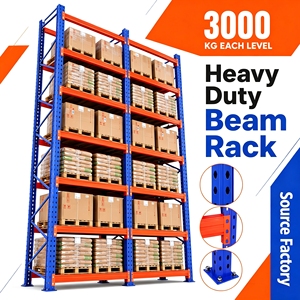
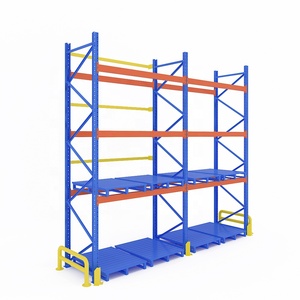
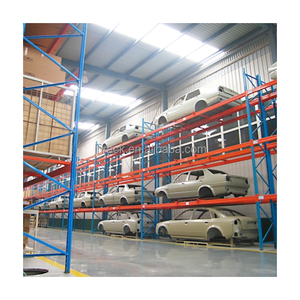
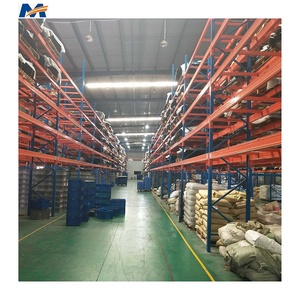
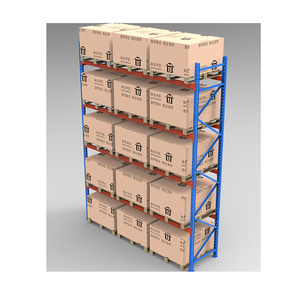
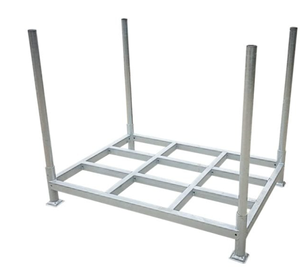
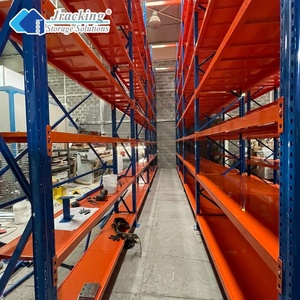
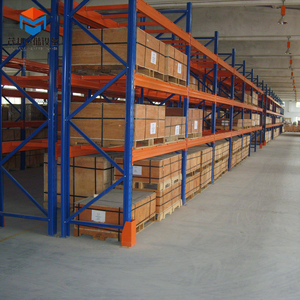
Featured Industrial Steel Racking & Storage Systems
Direct factory export configurations engineered for high-bay logistics, palletized bulk loads, and cold-chain operations.
Technical Deep Dive: The Kinematic Architecture of Push Back Racking
Push back pallet racking systems represent the apex of high-density Last-In, First-Out (LIFO) warehouse dynamic storage technology. Designed to store pallets 2 to 6 deep while maintaining single-aisle access, push back systems dramatically increase storage footprint utilization compared to traditional selective pallet racking, while eliminating the driver entry hazards inherent in drive-in racking designs.
Core Kinematic Principle: Push back racking utilizes a series of nested, inclined carts riding on structural steel rails. When loading, the forklift pushes the first pallet back onto its nested cart, exposing the second cart beneath. Subsequent pallets push the preceding load upward along a 1.5° to 3° pitch incline. Upon extraction, gravity gently propels remaining pallets forward to the picking face, governed by kinetic friction dampening controls.
Nested Cart Mechanics vs. Continuous Gravity Roller Systems
When selecting a supplier from top Chinese rack manufacturers, global buyers must evaluate the mechanical structural difference between Nested Cart Push Back Systems and Incline Gravity Roller Track Push Back Systems:
| Engineering Criteria | Nested Cart Push Back System | Gravity Roller Track System |
|---|---|---|
| Structural Depth | 2 to 6 Pallets Deep (Optimal for 2-5 deep) | 2 to 9 Pallets Deep (High-density continuous flows) |
| Pallet Quality Requirement | Tolerant of damaged, non-standard, or broken bottom boards | Requires pristine pallet bottoms to prevent roller jamming |
| Maintenance & Jamming Risk | Extremely Low (Heavy-duty sealed bearings, low component count) | Moderate (Requires individual dynamic brake rollers) |
| Cold Storage Performance (-30°C) | Exceptional (Low-viscosity arctic grease + stainless bearings) | Requires anti-freeze roller bearings & condensation shields |
| Vertical Clear Height Loss | Minimal stack height (Low-profile telescoping carts) | Slightly higher vertical beam spacing needed for pitch slope |
Steel Grade Selection & Structural Load Distribution
Structural reliability in push back systems hinges on material yield strength and cross-sectional profile geometry. Premium Chinese manufacturers utilize high-tensile Q235B and Q355B structural steel grades with cold-rolled profile forming techniques. Uplift protection locks and anti-pop-out safety hooks are integrated into cart assemblies to prevent derailments during rapid loading cycles.
- Upright Frames: Cold-rolled omega-section uprights (80mm to 120mm width profile) with 50mm or 75mm pitch adjustability. FEA structural modeling guarantees minimum deflection under ANSI MH16.1 and EN 15512 static load conditions.
- Structural Beams: Box beams or step beams featuring 3 or 4-hook heavy-duty welded connectors with automatic safety locks to resist dynamic dynamic impacts.
- Guide Rail System: Precision-tapered structural angle rails coated with low-wear epoxy coatings to maintain steady cart trajectory across hundreds of thousands of duty cycles.
Why Partner with China's Premier Racking Manufacturers?
Navigating global procurement requires more than competitive OEM pricing—it demands verified engineering credentials, transparent material traceability, robust manufacturing bandwidth, and rigorous international quality compliance.
Robotic Precision Fabrication
Automated continuous roll-forming lines, fiber laser cutting centers, and robotic welding cells ensure frame tolerances within ±0.5mm, eliminating structural twist and uneven track pitch.
Certified Quality Management
Full adherence to ISO 9001:2015, ISO 14001 environmental safety standards, CE safety marks, and compliance testing aligned with Australian AS4084-2012 and US RMI guidelines.
Seismic Engineering Capability
Custom baseplate thickness calculations, seismic tie-ins, and anchor bolt stress validation designed for high-seismic zones (such as South America's NSR-10 standards and US Zone 4 specifications).
Global Procurement Trends: The Next Era of Push Back Warehousing
As supply chain operations transition toward higher volumetric automation, ESG sustainability mandates, and aggressive cold-chain expansion, push back racking systems are evolving beyond passive storage into intelligent dynamic nodes.
1. Cold Chain BTU Efficiency & High-Density Space Optimization
With electricity costs soaring globally, refrigerated and deep-freeze facilities (-25°C to -30°C) cannot afford wasted cubic space. Push back racking reduces non-productive aisle footprint by up to 60% compared to standard selective racks, maximizing cubic thermal conservation. Advanced Chinese manufacturers now supply customized anti-frost cart bearings and specialized low-temperature powder coatings designed to resist thermo-hygrometric degradation and micro-cracking.
2. Hybridization with AGVs and Autonomous Mobile Robots (AMR)
While traditional push back systems rely on human-driven reach trucks, 2025-2030 procurement trends highlight AGV-Integrated Push Back Systems. Laser-guided automated guided vehicles (AGVs) equipped with specialized force sensors load push back carts with precision-calibrated thrust vectors. This eliminates cart impact wear caused by aggressive manual driving while boosting throughput in 24/7 dark warehouses.
3. Carbon Neutrality, Green Steel & EPD Certifications
North American and European enterprise buyers increasingly require Environmental Product Declarations (EPDs). Leading Chinese racking wholesalers are incorporating green-produced steel coils, zero-VOC electrostatic powder coating lines, and solar-powered factory operations to assist global clients in achieving Scope 3 carbon reduction goals.
Strategic Procurement Tip: When issuing RFQs for large-scale rack installations, request raw material steel mill certificates (MTC), salt-spray corrosion test reports (ASTM B117 standard 500+ hours), and Finite Element Analysis (FEA) deflection simulations under peak structural payload.
Comparative Analysis: Push Back vs. Alternative High-Density Systems
Evaluating warehouse storage systems requires analyzing initial capital expenditure (CapEx) against long-term operational expenditure (OpEx), forklift accessibility, and pallet turnover speeds.
| System Type | Storage Density | Selectivity | Forklift Risk | Relative Cost / Pallet | Ideal SKU Profile |
|---|---|---|---|---|---|
| Push Back Racking | High (75-80%) | Medium (LIFO per lane) | Very Low (No entry inside lanes) | Moderate-High | Medium SKUs, 2-6 pallets per SKU |
| Selective Pallet Racking | Low (40-50%) | 100% Direct Access | Low | Low (Baseline) | High SKU counts, low batch volumes |
| Drive-In Racking | Very High (85%) | Low (LIFO block) | High (Drivers enter rack structures) | Moderate | Very few SKUs, mass bulk storage |
| Pallet Flow (Gravity) | Maximum (90%) | High (FIFO flow) | Low (Separate load/pick faces) | High | Perishables, high-turnover FMCG |
| Automated Radio Shuttle | Maximum (90%+) | High (FIFO/LIFO adjustable) | Zero (Automated shuttle movement) | Very High | High-volume automated operations |
Frequently Asked Procurement Questions (FAQ)
Technical and operational insights directly from our senior rack design engineers.
Optimize Your Warehouse Density with Custom Push Back Engineering
Connect with our senior logistics structural engineers today to request CAD layout design, static FEA load testing reports, and competitive direct-factory wholesale pricing.