Industrial-Grade Warehouse Storage Products
Precision-engineered selective pallet racks, automated mobile shelving, and heavy-duty structural steel systems designed for high-bay logistics centers and high-density distribution hubs.
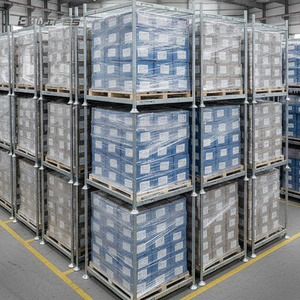
Sturdy Structure Mild Steel Q235 Heavy Duty Steel Detachable Type Stacking Post Pallet Rack
Built with high-yield Q235 steel, this modular stacking post rack features a detachable structure designed for flexible bulk storage and dynamic warehouse layouts.
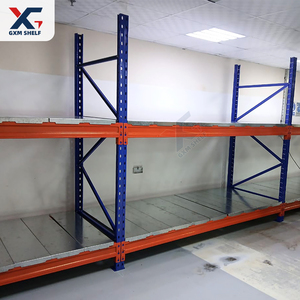
GXM Adjustable Stainless Steel Pallet Rack System Boltless Rack Storage Warehouse Heavy Duty Shelving
Corrosion-resistant boltless stainless steel racking engineered for cold-chain storage, chemical warehousing, and pharmaceutical cleanroom environments.
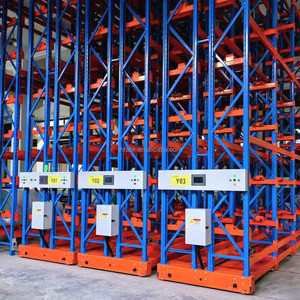
Industrial Heavy Duty High Efficiency Warehouse Electric Mobile Storage Shelf Automatic Mobile Racking System Pallet Rack
Motorized mobile racking mounted on guided floor rails, doubling storage density by eliminating fixed service aisles for maximum volumetric utilization.
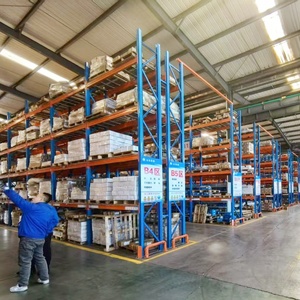
Industrial Warehouse Storage Rack Adjustable Custom 800-3000kg/Level Load Capacity Heavy Duty Selective Pallet Racking System
Versatile selective pallet racking offering 100% direct pallet accessibility, adjustable beam levels, and customized load capacities from 800kg up to 3000kg per level.
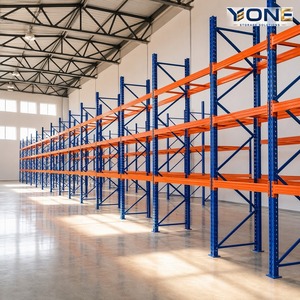
Steel Storage Rack Heavy Duty Pallet Racking Q235B Steel Selective Racking for Racks Industriales Warehouse Storage
Standard industrial selective racking manufactured using cold-rolled Q235B structural steel, finished with high-durability electrostatic powder coating.
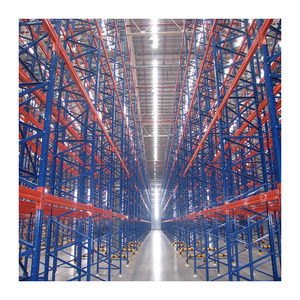
Mracking Heavy Duty Industrial Palletized Racking with a Capacity of 1000-4000kg Industrial Storage Racking
Ultra-heavy-duty beam racking rated for extreme load thresholds between 1000kg and 4000kg per level, optimal for machinery parts, metals, and heavy manufacturing inventory.
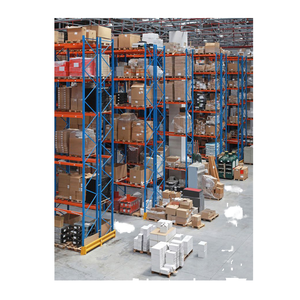
Factory Storage Heavy Duty Steel Detachable Pallet Racking Shelving for Industrial
Modular factory storage shelving designed for rapid assembly and tear-down, providing exceptional structural flexibility for seasonal fulfillment nodes.
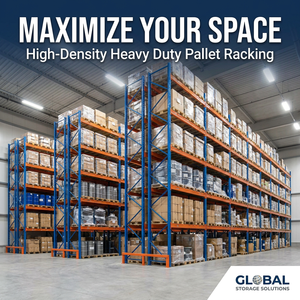
Top Rated Heavy Duty Steel Rack Customized Heavy Duty Racking System for Large Scale E-commerce Logistics Warehouse
Customized high-bay racking systems optimized for fast-paced e-commerce sorting hubs, integrated pick modules, and high-throughput automated conveyances.
China Top Industrial Shelving Manufacturing Blueprint: Engineering, Quality Control & Enterprise Capabilities
As modern global logistics operations scale toward higher volumetric density and automated velocity, selecting an enterprise-grade industrial shelving and rack manufacturer in China requires looking beyond basic price-per-kilogram metrics. Leading Chinese racking mills have undergone a monumental transition from basic fabrication workshops into advanced automated engineering plants utilizing continuous continuous-roll forming lines, robotic laser welding, and automated powder coating systems.
The core structural integrity of industrial warehouse racking relies on chemical composition and mechanical yield strength. Top Chinese manufacturers exclusively source prime cold-rolled coil steel such as Q235B and Q355B grade structural steel (equivalent to ASTM A36 and ASTM A572 Grade 50). Q355B steel offers superior yield strength (≥355 MPa), enabling upright frames to absorb substantial dynamic dynamic loading, seismic vibration, and fork-truck impact forces without catastrophic deformation.
Automated Manufacturing Excellence & Structural Precision
Leading storage racking production facilities in China employ continuous 18-to-24-stage cold roll forming machines that shape upright posts with pinpoint dimensional accuracy. Slot pitch tolerances are maintained within ±0.5mm across 12-meter single-piece columns. This microscopic precision ensures seamless connector engagement, eliminating micro-wobbles and residual stress points during full-rack loading scenarios.
Robotic Laser Welding
Automated Panasonic and ABB dual-arm welding cells execute 360-degree full-penetration welds on beam claw connectors, eliminating human error and structural fatigue points.
Pre-Treatment & Powder Coat
An 8-stage automatic immersion pre-treatment process includes silane degreasing and zinc phosphating prior to electrostatic powder deposition, ensuring 80–120μm coating thickness.
Compliance Standards
Fully compliant with international engineering benchmarks: European FEM 10.2.02, American RMI (ANSI MH16.1), Australian AS4084-2012, and ISO 9001/14001 certification.
Future Procurement Trends in Global Industrial Racking & Storage Supply Chains
Global procurement directors and supply chain executives face unprecedented demands: warehouse space rental rates continue to escalate globally, labor costs for manual order picking are rising, and ESG (Environmental, Social, and Governance) compliance requires supply chains to document carbon emissions throughout equipment life cycles. Procurement strategies for warehouse racking from top Chinese factories are evolving rapidly in response to these macroeconomic forces.
1. The Shift Toward Modular Hybrid Systems & ASRS Integration
Modern distribution centers are moving away from purely static pallet storage. Procurement managers are increasingly specifying hybrid racking systems—combining standard selective pallet racking on lower levels with automated bin shuttles, AGV (Automated Guided Vehicle) runways, or 2D Pallet Shuttle channels in high-density upper bays. Leading Chinese manufacturers now offer factory-fitted sensor brackets, rack-integrated busbars, and high-flatness guide rails designed specifically for seamlessly hosting Autonomous Mobile Robots (AMR).
2. Sustainability, Decarbonization & Circular Design
European and North American enterprise buyers are enforcing strict Scope 3 emissions reporting. Steel production accounts for a substantial proportion of embedded carbon in industrial facilities. Consequently, top Chinese racking mills are integrating electric arc furnace (EAF) recycled steel, implementing solar-powered factory roofs, and switching from solvent-based paints to 100% recyclable powder coatings. Modular detachable racking structures—such as detachable stacking post racks—allow companies to disassemble, transport, and reconfigure storage assets without scrap waste during facility relocations.
3. Nearshoring Complementarity & Direct-from-Factory OEM Customization
While regional nearshoring hubs handle immediate maintenance stock, high-volume capital spending projects rely directly on tier-1 Chinese factories for heavy structural fabrication. By sourcing engineered-to-order (ETO) racking systems directly from China, logistics developers achieve 30% to 45% savings on capital expenditures (CapEx), allowing them to reinvest capital into warehouse automation software, WMS platforms, and robotic material handling devices.
Technological Evolution & Material Innovations in Industrial Racking Systems
Industrial storage has evolved far beyond rudimentary angle-iron shelving. Today's high-bay logistics centers demand precise structural response modeling, earthquake resistance design, and intelligent health monitoring embedded directly inside racking columns.
Seismic Engineering & Structural Health Monitoring (SHM)
In high-seismic active zones (such as South America's Andean corridor, the US West Coast, or Southeast Asia), racking systems must absorb lateral dynamic ground acceleration without collapsing. Modern Chinese racking engineering teams utilize dynamic response spectrum analysis to simulate seismic shockwaves under maximum payload capacity. Key structural adaptations include:
- Heavy-Duty Baseplate Anchor Arrays: Enlarged footplates with dual anchor points engineered to distribute uplift tension directly into the underlying floor slab.
- High-Ductility Beam Connections: Patented 4-claw and 5-claw beam connectors that dissipate rotational energy during seismic sway.
- IoT Structural Strain Sensors: Micro-sensors installed on critical uprights transmit real-time deflection data to facility managers, triggering automated maintenance alerts if a forklift collision compromises structural stability.
Advanced Surface Metallurgy: Hot-Dip Galvanizing vs. Electrostatic Powder Coating
For cold-storage environments operating at sub-zero temperatures (-25°C to -30°C) or coastal port logistics warehouses exposed to salt spray air, traditional painted coatings risk micro-cracking and rust creep. Chinese manufacturing leaders utilize hot-dip galvanizing (HDG) per ASTM A123 standards. Submerging structural steel components in molten zinc at 450°C creates a multi-layer metallurgical alloy bond that provides self-healing sacrificial corrosion protection for decades.
Strategic Sourcing FAQ: Buying Industrial Racking & Storage Systems from China
Essential guidance from senior structural engineers and procurement specialists to ensure compliance, structural safety, and efficient cross-border procurement.
How do I verify the load-bearing capacity and steel quality of Chinese racking systems?
Are Chinese heavy-duty pallet racks compliant with local seismic building codes (e.g., US, EU, LATAM)?
What is the typical production lead time and container packing efficiency for bulk orders?
How does hot-dip galvanizing compare to electrostatic powder coating for warehouse racking?
What technical information is required to receive a customized racking engineering proposal?
Transform Your Warehouse Storage Efficiency Today
Connect directly with senior structural racking engineers in China. Get custom CAD warehouse layout designs, finite element load analysis, and competitive factory-direct pricing within 24 hours.
Get Catalog