Heavy-Duty Industrial Storage Systems
Discover certified, high-load warehouse racking configurations engineered for maximum spatial optimization, structural durability, and seamless forklift accessibility.
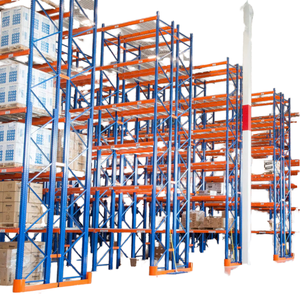
Logistics Center Pallet Rack OEM Q235B Steel 4000kg Capacity Custom Storage Rack
- Load Capacity: Up to 4,000 kg / level
- Material: High-Yield Q235B Cold-Rolled Steel
- Surface: Epoxy Powder Coating (ISO 9227)
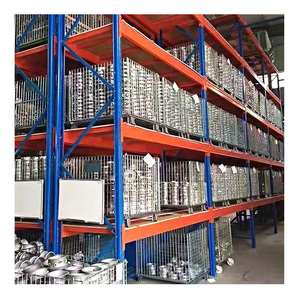
Pallet Racking Warehouse Storage Heavy Duty Narrow Aisle Selective Rack System
- Aisle Width: 1,600mm - 1,800mm (VNA)
- Floor Utilization: Reaches 85%+ spatial density
- Compliance: FEM 10.2.02 & EN 15512
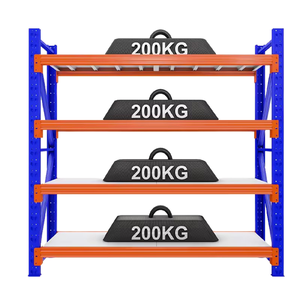
Industrial Heavy Duty Selective Storage System 1000-5000kg Capacity Corrosion-Resistant
- Load Range: 1,000kg - 5,000kg per tier
- Finish: Anti-Corrosion Zinc / Powder Coating
- Adjustability: 50mm / 75mm pitch beam adjustability
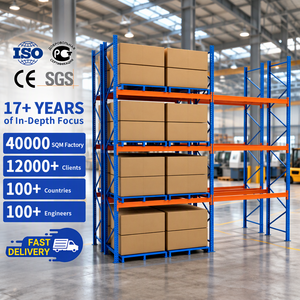
Heavy Duty Multi-Level Metal Shelves Unit Warehouse Steel Selective Pallet Racking
- Structure: Multi-tier high bay integration
- Beam Profile: Heavy box beam design with safety pins
- Option: Steel decking, wire mesh, or pallet support bars
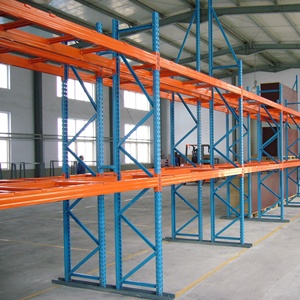
Adjustable Heavy Duty Pallet Rack Shelf Two Levels Custom Industrial Storage System
- Design: Modular boltless frame assembly
- Application: Manufacturing raw materials & heavy goods
- Safety Factor: 1.55 to 1.65 structural load rating
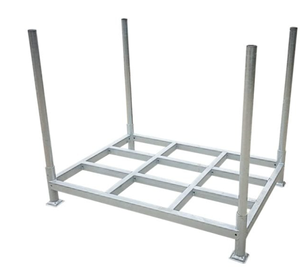
Customized Stackable Steel Post Pallet Racks Factory Mobile Warehouse Stacking Racks
- Stackability: 4 to 6 units high static loading
- Mobility: Forklift-transportable modular frame
- Space Savings: Demountable posts reduce return freight
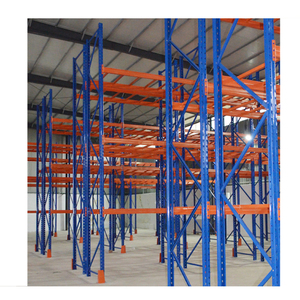
Heavy Duty Narrow Aisle Selective Warehouse Rack System for High-Density Fulfillment
- Height Potential: Up to 15 meters clear height
- Guidance: Floor-mounted rail or wire-guided AGV compatible
- Access: 100% direct pallet accessibility
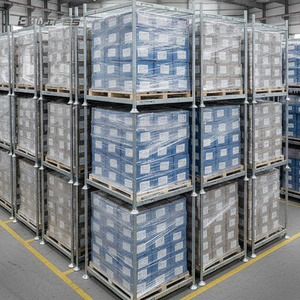
Sturdy Structure Mild Steel Q235 Heavy Duty Detachable Stacking Post Pallet Rack
- Construction: Heavy welded steel tube base
- Versatility: Cold storage & bulk chemical bag handling
- Durability: Galvanized or thermosetting powder finish
Why Global Enterprise Logistics Leaders Partner with Us
Combining advanced cold-roll metalworking engineering, stringent material quality assurance, and end-to-end turnkey OEM customization.
Certified Prime Steel Metallurgy
We exclusively procure certified Q235B and Q355B structural grade cold-rolled steel from tier-one state steel mills (BaoSteel, Shougang Group). Every steel coil undergoes mill test verification (MTC) to guarantee consistent tensile yield strength (up to 355 MPa) and superior structural ductility under dynamic load fatigue.
Precision Automated Manufacturing
Our smart manufacturing facility houses continuous multi-station cold-roll forming lines, high-precision CNC punching presses, and robotic welding cells. Automated cold-rolling ensures microscopic tolerance accuracy (±0.5mm) across continuous upright column profiles up to 15 meters in continuous length.
Seismic & FEM Engineering Design
Racking engineering is executed in strict adherence to European FEM 10.2.02, EN 15512, Australian AS4084-2012, and American RMI (MH16.1) codes. Our structural engineers calculate seismic coefficients, floor slab point loading, and deflection limits (L/200) tailored to specific geographic coordinates and hazard zones.
Automated Surface Treatment
Components undergo a pre-treatment process including 6-stage chemical degreasing, zinc-phosphate conversion coating, and high-voltage electrostatic thermosetting powder coating. This delivers a uniform 60–80μm protective skin that withstands 500+ hours of continuous salt-spray testing per ISO 9227 standards.
3D BIM & Revit Integration
We support general contractors, industrial architects, and intralogistics system integrators with parametric 3D BIM models (Autodesk Revit, AutoCAD, Navisworks). Visual collision detection and structural simulation eliminate site installation conflicts prior to fabrication.
Turnkey Global Export Packaging
Export logistics are meticulously structured to maximize container loading density (20GP, 40HQ) while safeguarding against ocean transit damage. Beams and uprights are bundled with steel strapping, heavy protective corner guards, and corrosion-inhibiting VCI plastic wrapping.
Future Procurement Trends in Global Industrial Pallet Racking (2025–2035)
An executive analysis on structural steel specification shifts, supply chain resilience, automation readiness, and decarbonization imperative for enterprise buyers.
As modern warehousing transitions from static storage facilities to dynamic, high-throughput intralogistics ecosystems, global procurement strategies for industrial pallet racking are undergoing a paradigm shift. Enterprise supply chain executives, industrial real estate developers, and warehouse operations directors must look beyond initial capital expenditure (CapEx) per pallet position and evaluate total cost of ownership (TCO), dynamic load safety margins, structural modularity, and environmental sustainability.
1. Transition to High-Yield Micro-Alloy Steel Grades (Q355B & Q460)
Historically, global pallet racking manufacturing heavily relied on standard structural mild carbon steel (Q235B / S235JR). However, the modern procurement trend is rapidly gravitating toward high-yield cold-formed micro-alloyed steels, such as Q355B (S355JR) and Q460. Utilizing higher yield strengths allows structural engineers to reduce wall thicknesses without compromising load-bearing capacities or structural deflection limits (L/200).
Strategic Benefit: Reducing structural weight per upright and beam unit lowers raw material steel consumption by 12% to 18%, yields substantial reductions in ocean freight logistics costs, and lowers embedded carbon metrics (Scope 3 GHG emissions) for corporate sustainability audits.
| Steel Grade Standard | Minimum Yield Strength (ReH) | Tensile Strength (Rm) | Primary Application in Racking Systems |
|---|---|---|---|
| Q235B (GB/T 700) / S235JR | 235 MPa | 370 - 500 MPa | Standard Selective Beams, Light/Medium Uprights, Baseplates |
| Q355B (GB/T 1591) / S355JR | 355 MPa | 470 - 630 MPa | Heavy-Duty High-Bay Uprights, Long-Span Beams, Seismic Frames |
| Q460 High-Strength Steel | 460 MPa | 550 - 720 MPa | AS/RS Clad-Steel Structure Uprights, High-Density Shuttles |
2. Hybrid Automation Readiness and Modular Retrofitting
The global surge in e-commerce fulfillment and severe labor shortages across regional logistics hubs are driving demand for "Automation-Ready" racking infrastructure. Forward-thinking buyers are rejecting purely manual, static selective rack systems in favor of modular designs capable of seamless conversion into Automated Guided Vehicle (AGV), Autonomous Mobile Robot (AMR), or Radio Pallet Shuttle systems.
Precision manufacturing tolerance is the critical vector here. Standard manual racking tolerates profile deviations of ±2.0mm. Conversely, automated pallet shuttle systems and high-speed stacker cranes demand tight tolerances of ±0.5mm across vertical alignment and beam horizontal leveling. Procuring racking from manufacturers with certified cold-rolling precision eliminates costly field rework when retrofitting automation modules in subsequent operational phases.
3. ESG, Carbon Footprint, and Green Steel Manufacturing
Under expanding multinational regulatory frameworks—such as the European Union's Carbon Border Adjustment Mechanism (CBAM) and Corporate Sustainability Reporting Directive (CSRD)—procurement officers are mandated to quantify the environmental impact of physical warehouse assets. Industrial pallet racks represent a major structural steel footprint in modern distribution centers.
Top-tier Chinese manufacturers are leading this green transformation by implementing closed-loop zero-discharge chemical pre-treatment plants, shifting toward zero-VOC electrostatic powder coatings, and sourcing steel billets produced via Electric Arc Furnace (EAF) technology powered by renewable energy. Corporate buyers now actively require Environmental Product Declarations (EPD) and ISO 14064 Carbon Footprint Certifications during B2B supplier pre-qualification.
Technological & Industry Development Trends
Exploring structural health monitoring, high-bay verticality, and extreme environment cold-chain metallurgic adaptations.
IoT Structural Health Monitoring (SHM)
Next-generation industrial racking incorporates embedded wireless strain gauge sensors, optical deflection meters, and piezoelectric shock sensors along critical upright columns. This smart sensory grid continuously transmits structural load dynamics and forklift impact alerts to facility managers via cloud dashboards, preventing catastrophic collapse accidents.
Ultra-High Bay Verticality (Up to 30M)
Driven by skyrocketing industrial land costs near major port hubs and metropolitan corridors, rack structures are reaching heights exceeding 30 meters. These rack-supported buildings (where the racking framework serves as the structural envelope for walls and roofing) demand advanced finite element analysis (FEA) to withstand high wind loads and dynamic crane accelerations.
Cold-Chain Cryogenic Metallurgy
Deep-freeze storage facilities operating down to -30°C present severe risks of low-temperature steel embrittlement. Modern structural engineering employs specialized low-alloy steel chemical compositions rich in Nickel and Manganese, preventing brittle fracture impacts and maintaining structural ductility in pharmaceutical and food-grade cold stores.
Frequently Asked Questions (FAQ)
Expert technical responses to critical engineering, safety compliance, and manufacturing queries raised by global industrial racking buyers.
Q: What structural steel standards and safety factors do your pallet rack systems comply with?
Our industrial pallet racking systems are custom-engineered in full compliance with major global structural codes: European FEM 10.2.02 and EN 15512 standards, American Rack Manufacturers Institute (RMI MH16.1), and Australian Standard AS4084-2012. We maintain a minimum safety coefficient factor ranging from 1.50 to 1.65 for structural steel load yield calculations, ensuring safety under static maximum load capacity and normal dynamic handling vibrations.
Q: How do I determine whether to specify Selective, Very Narrow Aisle (VNA), or Drive-In Pallet Racking?
System selection depends on your SKU diversity, required access speed, and warehouse footprint limits. Selective Pallet Racking offers 100% immediate pallet access and low capital cost, ideal for high-SKU operations. VNA Racking reduces aisle widths to ~1.6m–1.8m, boosting floor space utilization to 85% while preserving 100% access (requires specialized VNA turret trucks). Drive-In Racking maximizes volume for low-SKU, high-density bulk goods (FILO), but provides lower selective accessibility.
Q: What raw material steel grades are utilized, and how is material authenticity verified?
We exclusively utilize certified prime cold-rolled steel coils, predominantly Q235B (yield strength ReH ≥ 235 MPa) for standard structural components and Q355B (yield strength ReH ≥ 355 MPa) for heavy-duty high-bay upright columns and long-span beams. Every raw material delivery is accompanied by Mill Test Certificates (MTC) verifying chemical composition (Carbon, Manganese, Silicon, Phosphorus) and mechanical tensile testing per ISO 6892-1.
Q: How are beam deflection limits controlled under heavy industrial loading?
Under standard FEM and RMI guidelines, maximum allowable vertical beam deflection must not exceed L/200 (where L is the clear span length of the beam). For example, on a 2,700mm beam under its maximum rated 3,000kg load, the maximum permitted deflection at center-span is 13.5mm. All our beam profiles undergo finite element stress testing and physical batch deflection testing to verify deflection limits prior to shipment.
Q: What anti-corrosion surface finishes are available for harsh or humid warehouse environments?
For standard ambient warehouses, we apply an electrostatic thermosetting epoxy-polyester powder coat (60–80μm thick) cured at 200°C. For coastal, high-humidity, or chemical facilities, we provide Hot-Dip Galvanizing (HDG) conforming to ISO 1461, delivering a zinc coating thickness of 60–100μm that protects steel against rust for up to 25+ years.
Q: Can your manufacturing plant support custom OEM dimensions, beam profiles, and color schemes?
Yes. As a direct manufacturer, over 80% of our production consists of tailored OEM/ODM configurations. We roll-form custom upright profiles (80, 90, 100, 120, 140, 160 mm widths), varied steel gauges (1.5mm to 3.0mm thickness), specialized beam connector claw configurations (3, 4, or 5-hook connectors), and custom RAL powder coat color combinations to align with corporate branding.
Q: What safety locking mechanisms prevent accidental beam dislodgement by forklifts?
Every beam-to-upright connection is equipped with automatic spring-steel safety locks or galvanized safety pins. These locks automatically engage into the column perforation when the beam connector is seated, requiring a minimum upward vertical force of 5 kN to dislodge, preventing dangerous accidental dislodgement during forklift loading.
Q: How is seismic anchoring engineered for earthquake-prone installation zones?
In seismic hazard regions (e.g., California, South America, Japan, Southeast Asia), we engineer heavy-duty structural baseplates featuring multi-anchor hole layouts. Anchor bolts (heavy-duty expansion or chemical adhesive anchors) are calculated based on concrete slab compressive strength (≥ C25/C30) and local seismic spectral acceleration factors, incorporating dynamic diagonal and horizontal frame bracing.
Q: What is the typical lead time for manufacturing, quality inspection, and ocean export shipping?
Standard manufacturing lead time is 14 to 21 working days for full container load (FCL) orders up to 500 tons. Quality control inspections (dimensional checks, weld non-destructive testing, powder thickness measurement, assembly trial) require 2–3 days. Ocean transit time varies by destination port (e.g., 12–16 days to US West Coast, 22–28 days to Europe, 14–20 days to Australia).
Q: Do you provide installation guidance, structural drawings, and post-sales maintenance support?
Yes. Every delivered racking project includes complete CAD assembly drawings, structural component lists, floor anchoring layouts, and detailed step-by-step installation manuals. For large-scale logistics centers, we can dispatch senior installation engineers or certified installation teams onsite to supervise construction, verify vertical plumbness tolerances, and issue structural commissioning sign-offs.
Optimize Your Warehouse Storage Capacity Today
Partner with China's leading heavy-duty industrial pallet rack manufacturer. Contact our engineering team for free CAD layout design, structural load calculations, and competitive OEM factory pricing.