Featured CE Certified Storage Rack Systems
Explore our ISO & CE compliant heavy-duty storage equipment designed for extreme static and dynamic loads across worldwide supply chains.
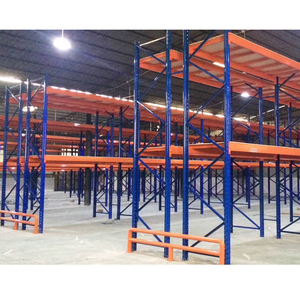
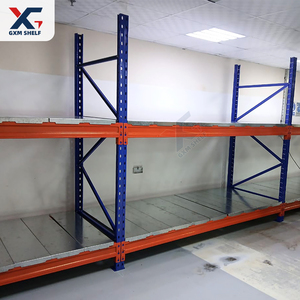
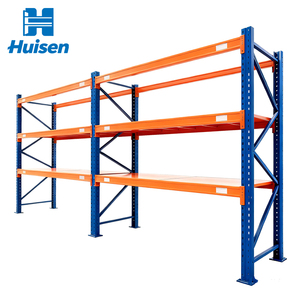
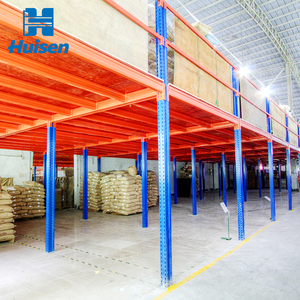
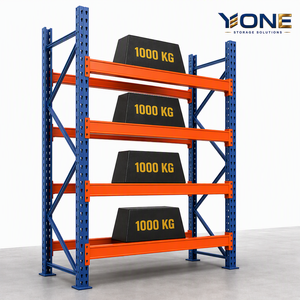
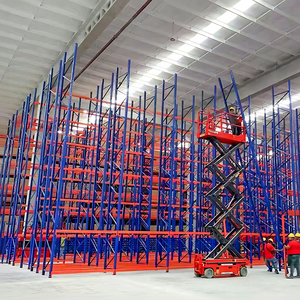
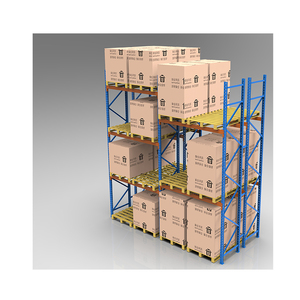
CE Certification Compliance Architecture & Structural Rigor
Technical Engineering Whitepaper for Supply Chain ExecutivesIn modern industrial logistics, static and dynamic storage safety cannot rely on non-verified, generic metal fabrications. Achieving genuine CE Certification for warehouse pallet storage rack systems demands full compliance with rigorous international engineering standards, primarily European Norm EN 15512 (Steel static storage systems - Adjustable pallet racking systems - Principles for structural design), FEM 10.2.02, and relevant RMI (Rack Manufacturers Institute) guidelines.
When enterprise buyers source heavy-duty rack components globally, CE compliance guarantees that material yield strength, beam deflection limits ($L/200$), upright frame column buckling tolerances, and connection hook lock safety factors undergo rigorous finite element analysis (FEA) and physical stress testing. certified manufacturers supply mill test certificates according to EN 10204 3.1, confirming high-tensile cold-rolled steel grades such as Q235B, Q355B, S355, or S420MC.
Structural Design Standards
Engineered to EN 15512, FEM 10.2.02, ANSI MH16.1, and NSR-10 seismic safety coefficients.
Material Traceability
High-grade structural steel with EN 10204 3.1 Mill Test Certificates guaranteed for every production heat.
Safety Coefficient
Minimum 1.5x structural safety factor against ultimate yield strength and connection lock dislodgement.
Enterprise Manufacturing Capabilities & Global Infrastructure
Proven Legacy, Unmatched Production Scale & Localized EngineeringBacked by over four decades of racking and automation innovation dating back to 1977, our manufacturing ecosystem combines European technical heritage with localized global deployment capabilities. Operating 8 state-of-the-art production facilities worldwide—including our massive 240,000 sq ft facility in Calhoun, Georgia, and extensive European plants—our global footprint generates over €1.0 Billion+ in annual revenue and employs more than 2,000 skilled engineering and logistics specialists.
This extensive manufacturing framework empowers us to supply CE Certified pallet storage rack systems to over 60+ countries across North America, Latin America (including seismic-sensitive logistics corridors in Colombia such as Bogotá, Medellín, Cali, and Barranquilla), Europe, and the Asia-Pacific region. Key structural advantages of our corporate engineering framework include:
- Seismic Load Engineering (NSR-10 / ASCE 7): Customized frame calculations accounting for site-specific horizontal seismic response acceleration ($S_s, S_1$), soil class classifications, and concrete slab thickness.
- Advanced Environmental Surface Treatment: Fully automated epoxy powder coating lines providing ISO 12944 C3 to C4 corrosion protection, alongside hot-dip galvanizing options compliant with ISO 1461 for cold storage chambers down to -30°C and coastal port regions.
- Agile Supply Chain Footprint: Strategic raw material sourcing agreements with leading international steel mills guarantee predictable lead times and price stability for multi-thousand pallet position installations.
- Integrated ESG Commitment: Transitioning toward a fully electric logistics fleet by 2028, backed by 7,000+ factory-roof solar panels and low-emission inland waterway freight routing to minimize Scope 3 carbon footprint for enterprise clients.
Future Procurement Trends in Warehouse Storage Systems (2025–2030)
Strategic Guidance for Chief Supply Chain Officers & Procurement DirectorsThe global industrial storage landscape is undergoing a paradigm shift driven by urban land inflation, labor availability constraints, real-time inventory management imperatives, and net-zero sustainability mandates. Procurement teams evaluating enterprise warehouse racking suppliers must align their strategic sourcing roadmaps with four critical macroeconomic and technological shifts:
1. Shift from Pure Static Storage to Automated High-Density Systems
While traditional selective pallet racking remains the foundation for multi-SKU distribution, industrial real estate pricing in hub corridors (such as free trade zones and metropolitan logistics parks) makes building upward significantly more economical than building outward. Procurement is rapidly shifting toward hybrid systems incorporating 2D Radio Pallet Shuttles, Autonomous Mobile Robots (AMRs), and Automated Bin Storage. Modern CE-certified rack frames must be pre-engineered with tighter dimensional tolerances ($\pm 1.0\text{ mm}$) to seamlessly integrate automated shuttle rails and robot guide tracks without structural binding.
2. Carbon-Neutral Steel Sourcing & Lifecycle ESG Accounting
Enterprise procurement protocols now mandate Scope 3 carbon footprint tracking. Leading suppliers are adopting "Green Steel" produced via Electric Arc Furnaces (EAF) powered by renewable energy, reducing embodied carbon by up to 60% compared to traditional Blast Furnace-Basic Oxygen Furnace (BF-BOF) routes. Racking systems featuring modular, boltless assembly reduce field welding, lower transport volumes via optimized nested profile designs, and ensure 100% steel recyclability at end-of-life.
3. Seismic Resilience & Slab Dynamics Micro-Modeling
With global distribution hubs expanding into active seismic regions (such as the Andean belt, Pacific Rim, and Mediterranean zones), buyers are abandoning generic off-the-shelf racking catalogs. Future-proof procurement requires site-specific Finite Element Modeling that calculates dynamic interaction between soil profile, anchor bolt shear forces, baseplate load distribution, and rack structure flexibility under seismic acceleration loads.
4. Nearshoring & Regionalized Manufacturing Networks
Geopolitical supply chain disruptions have underscored the severe risks of single-source overseas manufacturing. Future-ready procurement strategies prioritize tier-1 suppliers maintaining dual-regional production hubs across Europe, North America, and localized technical assembly centers, ensuring rapid delivery of replacement parts, rack upright protection guards, and row extensions.
Industry & Product Development Trends in Heavy-Duty Racking
Next-Generation Engineering Innovations & IoT IntegrationProduct innovation in warehouse static and dynamic storage systems has moved beyond structural steel geometry into smart monitoring, hybrid material design, and thermal optimization:
IoT Structural Health Sensors
Embedded strain gauges and wireless impact sensors installed on aisle uprights alert facility operations in real time when forklift impacts compromise column structural capacity.
Ultra-High Yield Steel Profiles
Development of cold-formed micro-alloyed steels allowing thinner wall profiles with higher load capacity, reducing total steel weight without sacrificing beam deflection resistance.
Thermal Optimization for Cold Chain
Airflow-optimized rack geometry for automated deep-freeze distribution centers, reducing refrigeration compressor power consumption by facilitating uniform airflow distribution.
Furthermore, standard selective racking systems are increasingly designed with multi-tier mezzanine compatibility. Heavy-duty teardrop and box-beam connections now feature automated dynamic locking pins that visually indicate proper engagement, preventing human error during installation and subsequent reconfiguration.
Frequently Asked Questions (FAQ) for Global Procurement
Technical and commercial answers to guide structural engineers, warehouse managers, and sourcing teams.
What specific engineering standards define CE certification for warehouse racking?
CE certification for industrial pallet racking relies primarily on European structural standards EN 15512, EN 15620 (tolerances, deformations, and clearances), EN 15629 (specification of storage equipment), and EN 15635 (application and maintenance of storage equipment). If the racking incorporates semi-automated components, shuttle carts, or motorized lifters, it must also satisfy the Machinery Directive 2006/42/EC and carry official Declaration of Conformity documentation.
How do seismic building codes (such as NSR-10, EN 1998 / Eurocode 8, ASCE 7) impact racking design?
In seismic zones (e.g., western South America, Mediterranean Europe, US West Coast), seismic forces generate massive horizontal shear loads and overturning moments. Racking engineered for seismic regions incorporates heavier gauge cold-rolled upright profiles, cross-aisle and down-aisle X-bracing frames, enlarged baseplates with heavy-duty chemical expansion anchors, and dynamic beam-to-column locking connectors designed to dissipate kinetic energy without catastrophic structural dislodgement.
Which coating finish should be specified for humid, coastal, or cold-storage environments?
For standard ambient warehouses, electrostatically applied epoxy-polyester powder coating (60-80 microns) provides excellent abrasion and impact resistance. However, for high-humidity coastal port locations (such as Barranquilla, Rotterdam, or Dubai) or sub-zero cold-storage facilities (-30°C), Hot-Dip Galvanizing (HDG) to ISO 1461 or pre-galvanized high-tensile steel components are required to prevent subsurface oxidation, flaking, and structural steel breakdown.
What critical warehouse information is required to perform a certified rack engineering load calculation?
To deliver an accurate, CE-certified project proposal, our structural engineering team requires:
1. Architectural warehouse CAD layout including clear height under joists and column grid locations.
2. Concrete slab specifications (compressive strength $f'c$, thickness, reinforcement mesh, and maximum allowable floor point load).
3. Pallet data: Exact dimensions ($W \times D \times H$), maximum weight per load unit, and pallet entry orientation.
4. Material handling equipment (MHE) specs: Forklift turning radius, maximum reach height, and mast tilt allowances.
5. Environmental factors: Geographic city/location (for seismic and wind loads) and operating temperature range.
When does a warehouse transition from Selective Pallet Racking to a Pallet Shuttle System become financially viable?
The economic tipping point typically occurs when warehouse floor land costs are high, SKU counts are relatively low per total pallet volume (high-volume FMCG, beverage, or cold-chain operations), or when operating multi-shift facilities. Semi-automated 2D Pallet Shuttle systems achieve up to 85% cubic space utilization (versus 40-50% in standard selective racking) by eliminating forklift access aisles, yielding ROI payback cycles of 18 to 30 months through labor savings, reduced fork truck fleet maintenance, and decreased energy consumption per pallet position.
What are the safety inspection frequencies mandated under EN 15635 for enterprise rack installations?
European standard EN 15635 requires warehouse operators to maintain a systematic inspection regimen. This includes weekly visual checks by an internal Safety Officer, documented monthly internal audits, and an annual formal inspection conducted by an independent, qualified Racking Inspector. Any components categorized under "Red Risk" damage levels must be unloaded immediately and replaced with original manufacturer parts to preserve CE structural certification validity.
Request an Engineering Site Study & Technical Quotation
Connect with our senior structural racking engineers today. Receive custom CAD layouts, seismic load calculations, and competitive direct factory export pricing for your global warehouse expansion projects.